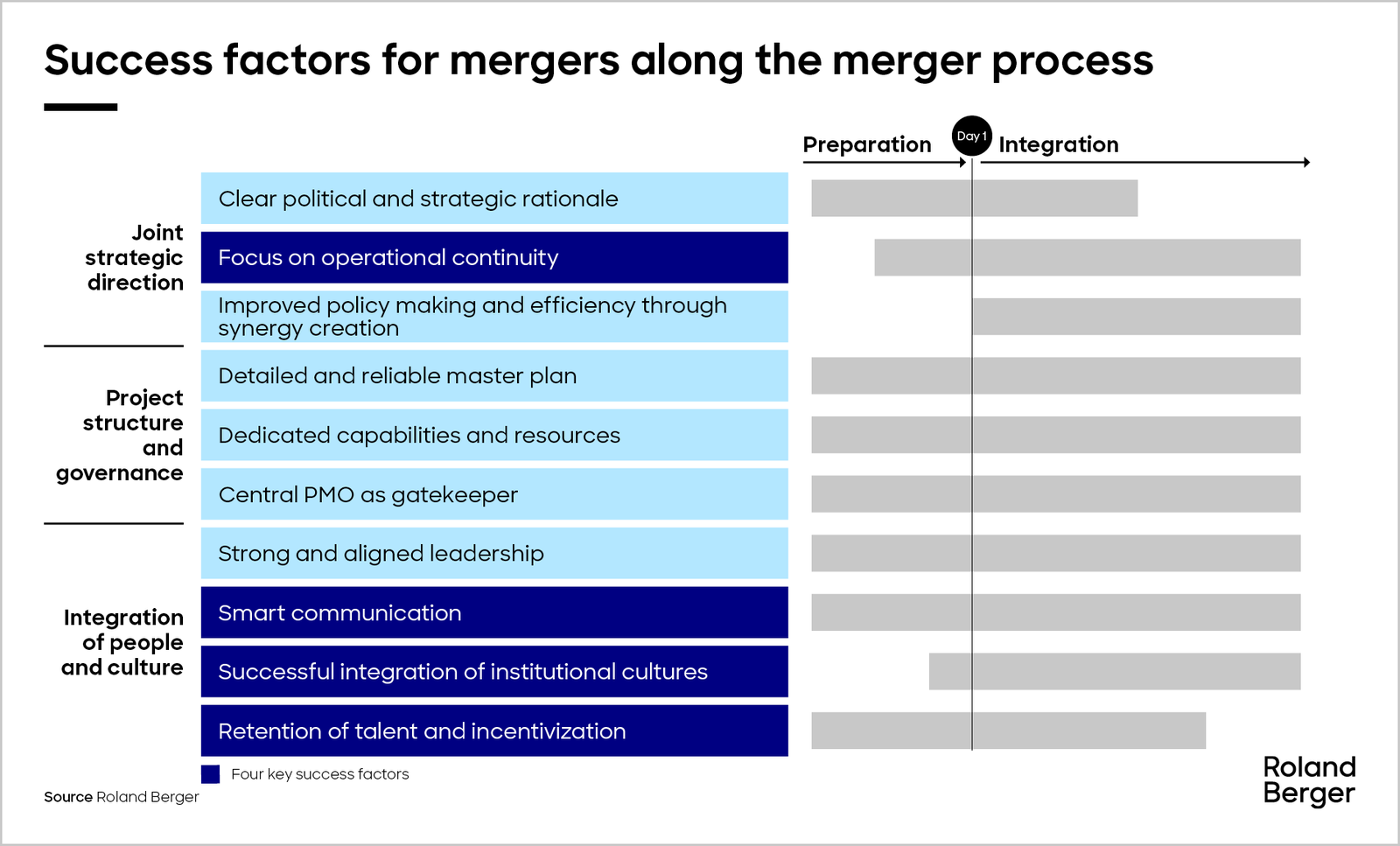
The first key success factor in a public merger context is staying focused on operational continuity. Whatever changes are taking place at an organizational or technological level, service to the public – in some cases in the interests of national security or emergency service provision – must proceed seamlessly and without interruption. Our new paper explores how this critical goal can be achieved amid the complexities of a merger project.
The second – a factor all too frequently overlooked or belittled – is to get the communication right. Change inevitably brings fears and uncertainties, so leadership needs to keep all stakeholder groups in the loop and make sure two-way dialogue is enabled rather than one-way edicts.
Third, it is vital to merge not just the organizations but the underlying cultures of the units involved. Differences are normal, but must be encouraged to complement each other rather than work against each other and potentially undermine any hoped-for gains from a
“merger of equals”.
Lastly, especially at a time when top talent is at a premium, a clear strategy to retain talent and incentivize people is absolutely essential. That said, since success is often measured differently at public administrations, the new paper advocates alternative incentives to the primarily financial rewards that often characterize corporate fusions.