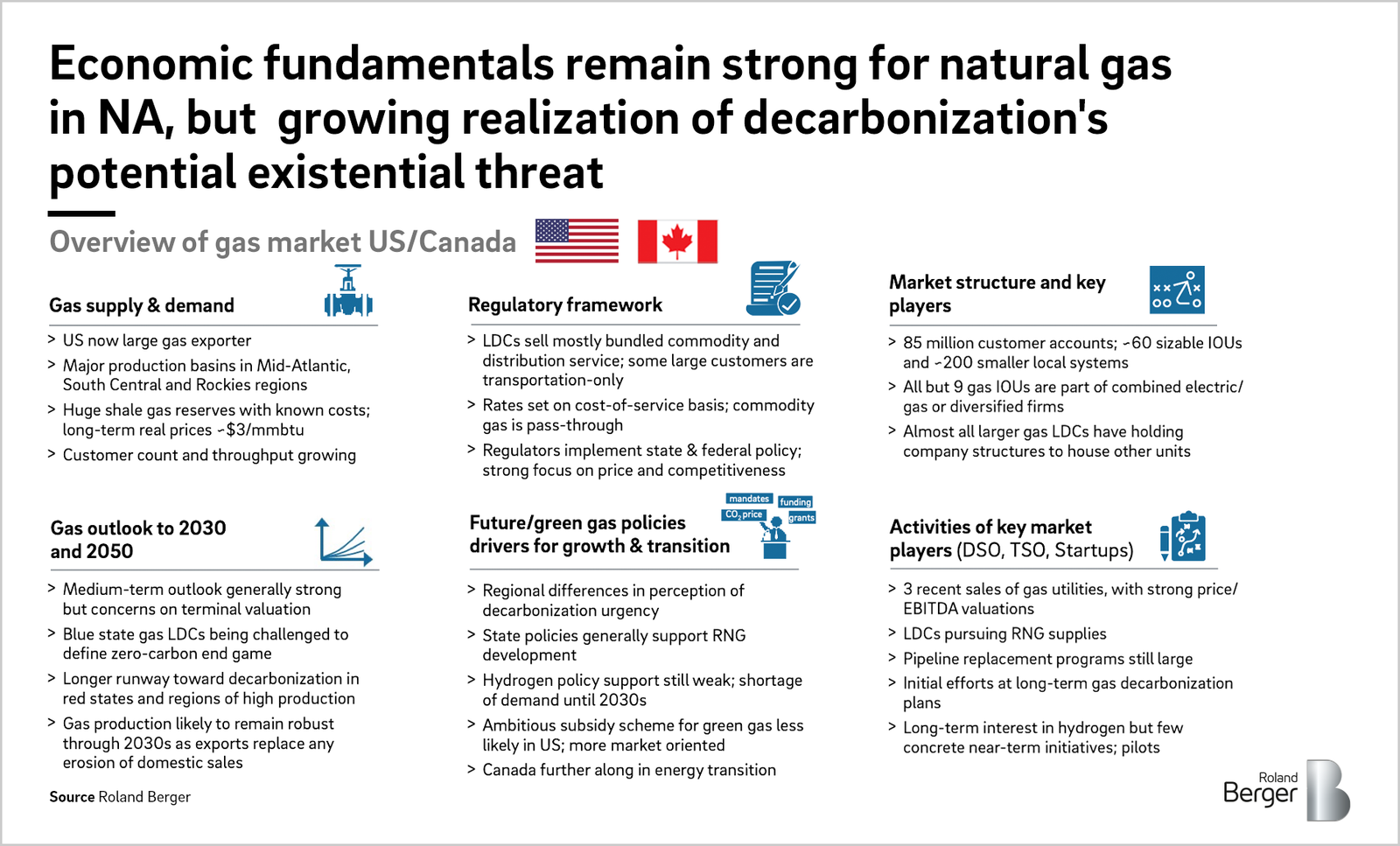
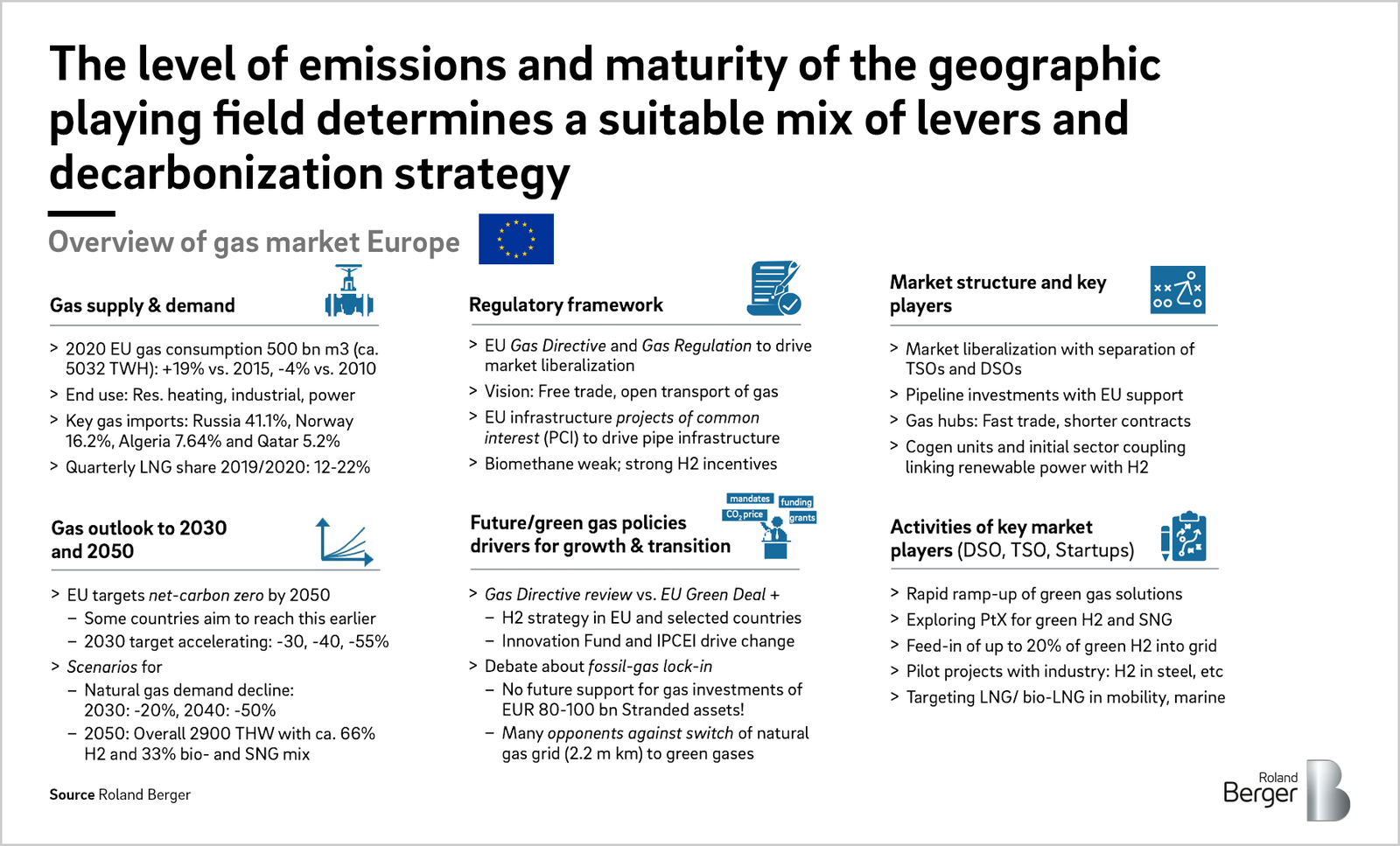
When it comes to policy, it is misleading to say that all of Europe is ahead of the US on gas decarbonization policy. Policies in some parts of the US (Northeast, West Coast) are more advanced than the policies in Eastern Europe, for example. On the other hand, in many conservative states US policy makers seem to be lagging significantly behind local market developments. As a result, it is difficult to enlist regulatory support for policies to promote new
low-carbon sources
. Distribution system operators (DSOs) are developing new partnerships with local governments, farms, universities and even
private equity
investors to support RNG. Regulators still do not recognize the value of today's natural gas infrastructure, and it is difficult for them to see the importance of gas networks in tomorrow's decarbonized energy systems. Intense energy demands in summer and winter peak periods are difficult and very expensive to supply with renewable electricity alone. 100% electrification of energy supplies would cost much more and deliver slower decarbonization results than a mixed solution involving green electricity and green gas.
In terms of business models for
decarbonization
, many investor-owned DSOs have created holding company structures to house both regulated and unregulated business (e.g. energy services, pipeline construction, perhaps hydrogen or biogas transmission/distribution in the future). DSOs intend to maintain a focus on "moving molecules" by pipe, which is their core business. There is not much near-term appetite for going into substantially different business models. Developing new or repurposed infrastructure for hydrogen delivery is a particular challenge for companies in regions with lower demands for heating or industrial energy. The demand and willingness to pay for green gases is currently limited to early adopters within the residential and corporate customer base but should broaden as costs come down.