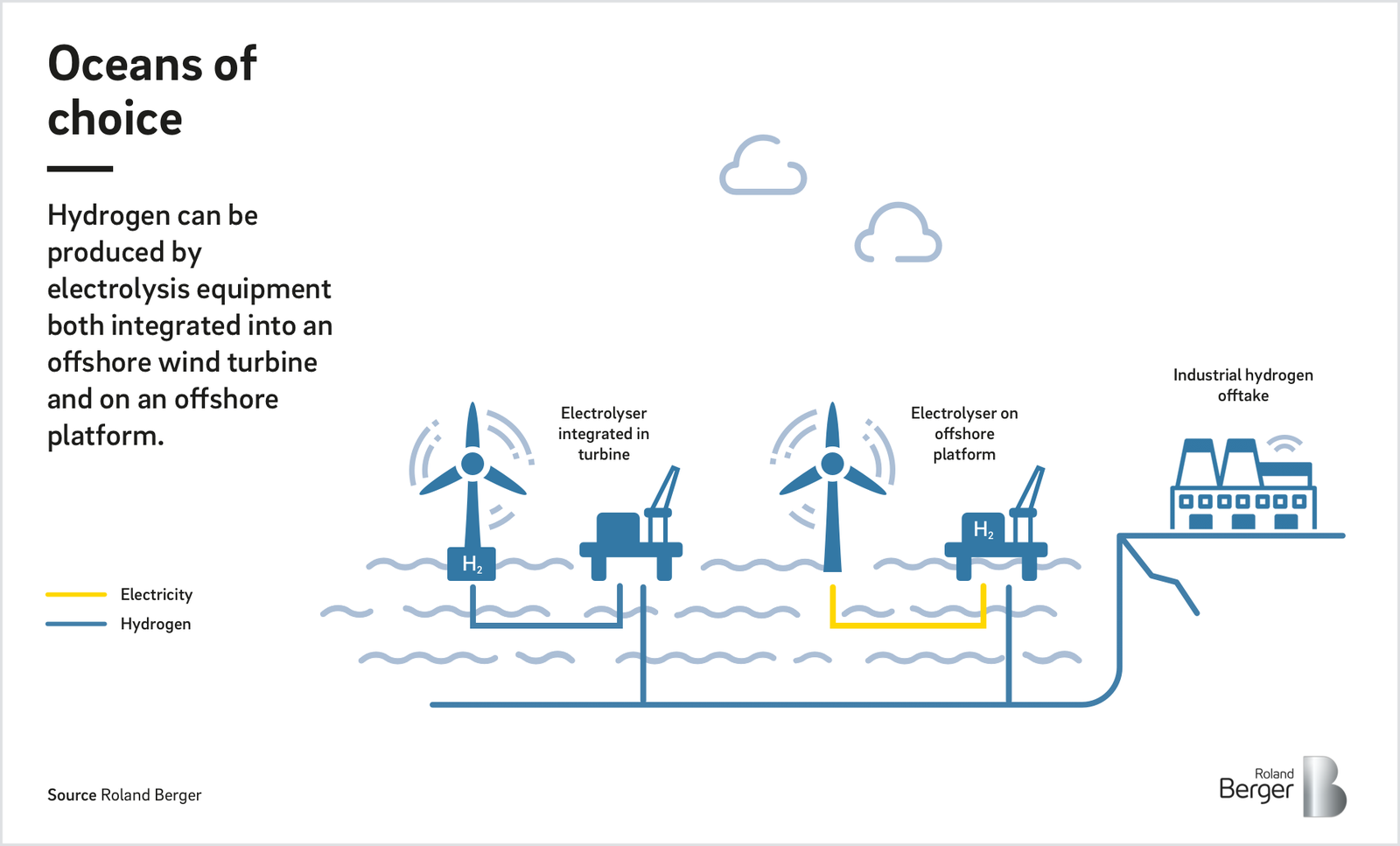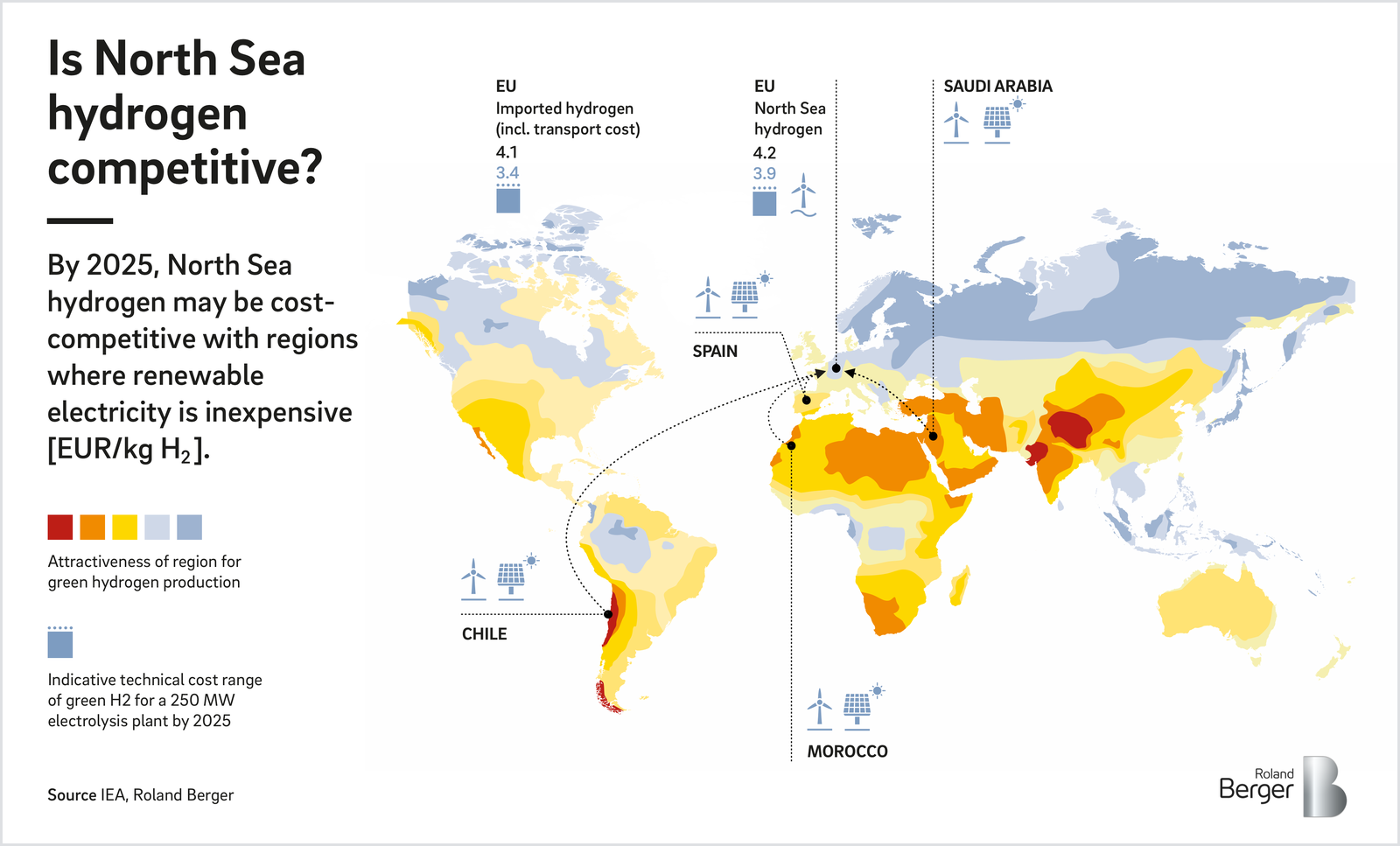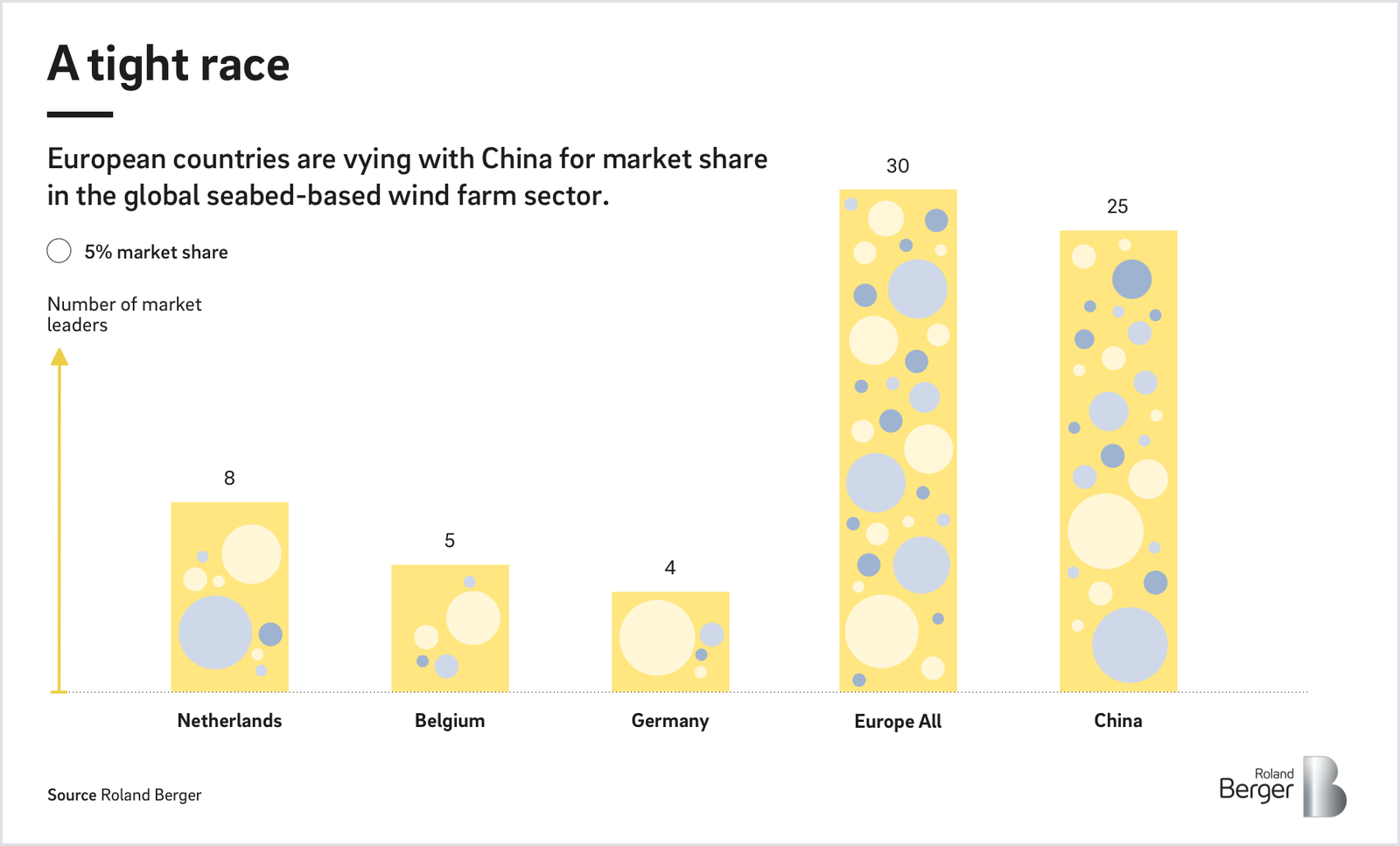
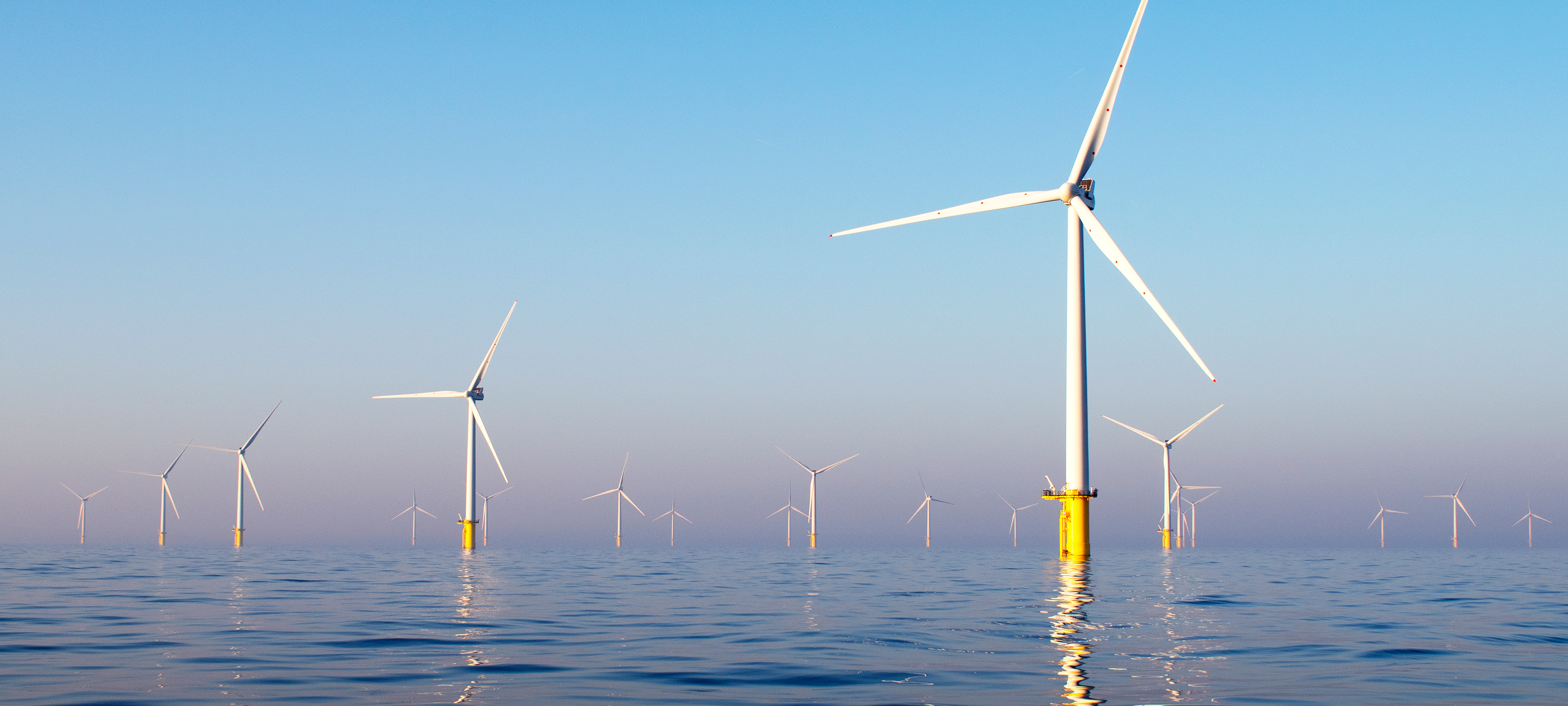


The use of offshore wind energy (OWE) is seeing a tremendous rise. This once immature and expensive technology is now cost-competitive with electricity from fossil sources; enabling many countries to meet their decarbonization goals faster and at lower cost. Europe currently dominates, but global competition is rising. To maintain its market leadership, the European OWE sector must target advancements such as converting OWE to hydrogen and developing floating OWE technology to allow for deep water offshore wind farms.
A key pillar for decarbonization
A decade ago, OWE technology was considered immature and costly. Hefty financing costs, driven by the sector's high-risk status, combined with serious problems in offshore construction and operation, had pushed up the levelized cost of electricity (LCOE) from offshore wind in Europe to around EUR 190 per megawatt-hour (MWh).
In a bid to address the issue, the industry agreed on a cost target of EUR 115/MWh by 2020. Developments moved faster than expected. In 2016, a wind farm in the North Sea off the Dutch coast, published a strike price of EUR 87/MWh, significantly lower than the 2020 target. Subsequent projects announced even lower strike prices. Now, prices as low as EUR 49/MWh have been achieved, and zero-subsidy tenders have been successful in the Netherlands and Germany.
As a result of this unexpected progress, ambitions for OWE capacity have risen sharply. Many governments now see OWE as a key pillar of meeting decarbonization goals set by the UN Paris Agreement of 2015. The European Union, as an example, wants to develop 300 GW of OWE capacity by 2050 and make it a core component of Europe's energy system.