A challenging climate
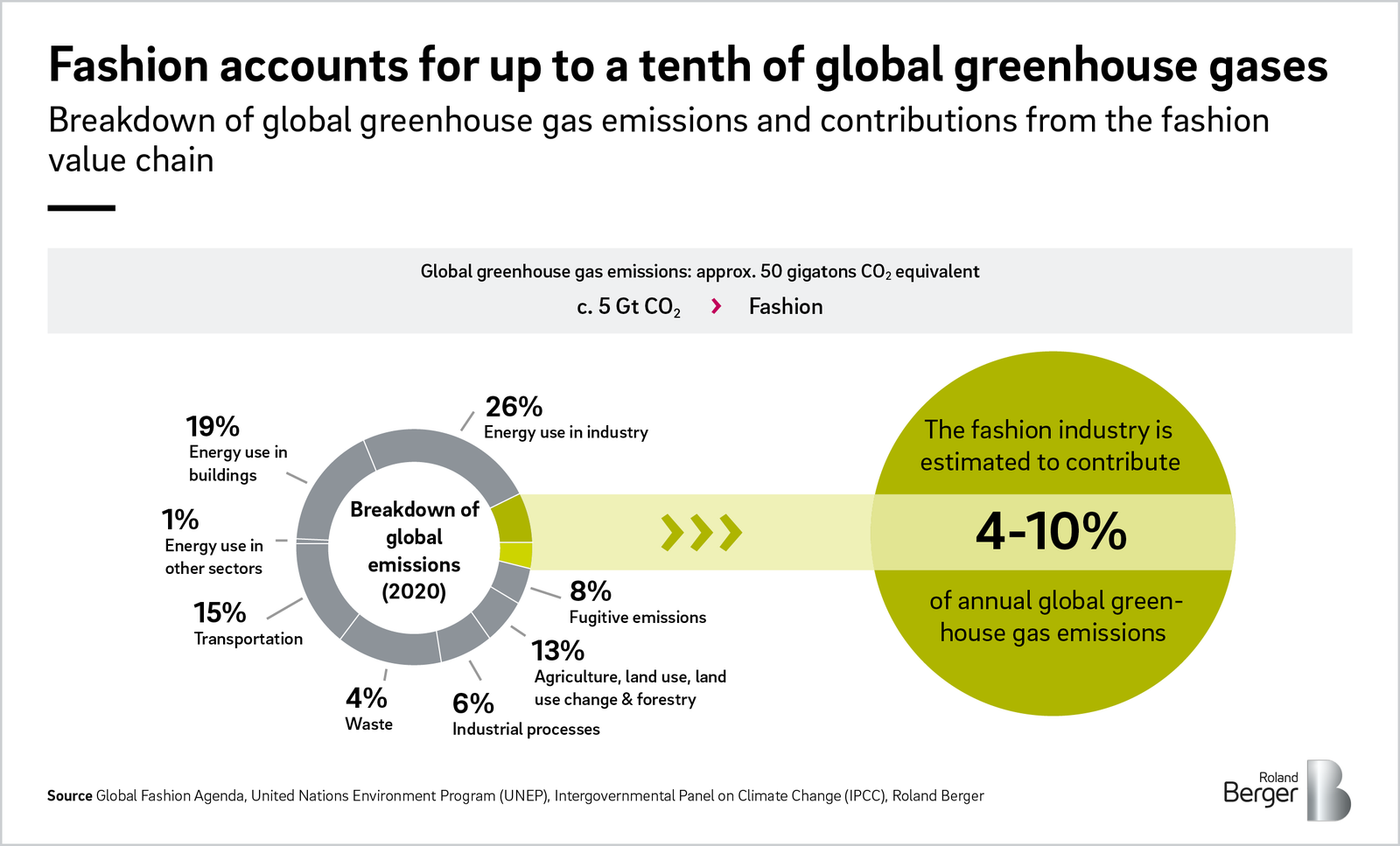
As environmental awareness has grown over the past few years, especially when looking at the fast fashion industry, the fashion industry has been forced to address its pollution problem and tack towards more sustainable fashion. This has created multiple new markets and business models, moving away from fast fashion toward so-called slow fashion. Besides this, online clothes rental, vintage markets and made-to-order products have grown in popularity in the last years. We also see a large shift towards eco-friendly and fair-trade raw materials, such as organic natural fibers (including organic cotton). These changes have helped, but the industry needs to up its game to become more sustainable.
First steps into a sustainable future
A major step in the right direction is the UN-backed Fashion Industry Charter for Climate Action. It aims for the textile industry to achieve net zero emissions by 2050, and involves companies voluntarily committing to sustainability goals. These include monitoring and reporting their environmental impact and switching to renewable energy sources. So far, 125 companies and 41 supporting organizations, including major global
fashion brands
, have signed up.
One more concrete step is the just recently published EU Strategy for Sustainable and Circular Textiles from the European Commission, which includes specific sustainability regulations for all textile products placed on the EU market. While it is only a regulatory framework so far, it will become European law soon and all companies along the whole fashion lifecycle need to get ready to transform their whole business toward complying with this regulation.
Companies need to take action now
The latest climate data suggests that the pathway to limit global warming to 1.5C (the goal agreed at the UN COP21 climate summit in Paris in 2015) and achieve net zero by 2050 is becoming increasingly unrealistic. So what practical steps can fashion companies take to tackle
global warming
?
First up, companies need to organize themselves so that all corporate functions are working towards the same goal, becoming sustainable as quickly as possible. This starts at the C-level, with, for example, CEOs setting out a clear climate action vision and CFOs identifying the necessary financing. But it’s also important that all employees buy in to the sustainability transformation. The article shows what every corporate function should be doing to become a sustainable fashion company.
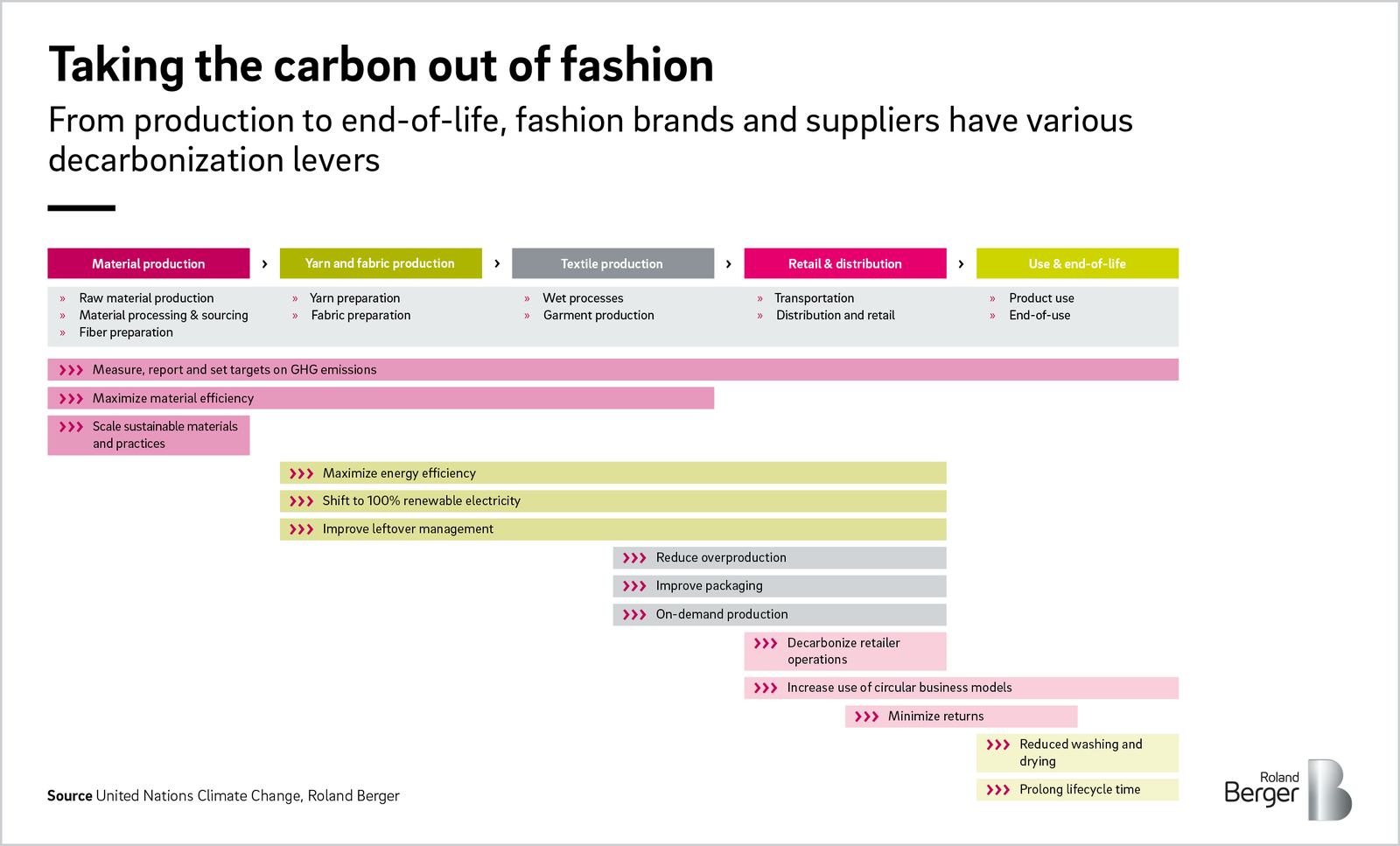
Then comes decarbonization itself. Various climate action levers are available to fashion brands and suppliers. A key first step is to set up a system to define and measure GHG reduction targets. Next, fashion companies need to take action to reduce GHG emissions. They can do this by, for example, implementing programs aimed at boosting energy efficiency and the use of renewable electricity among suppliers and limiting overproduction. Not to forget the end-of-life use, for which clothing brands need to enable a circular fashion approach, with more materials to reuse and recycle.