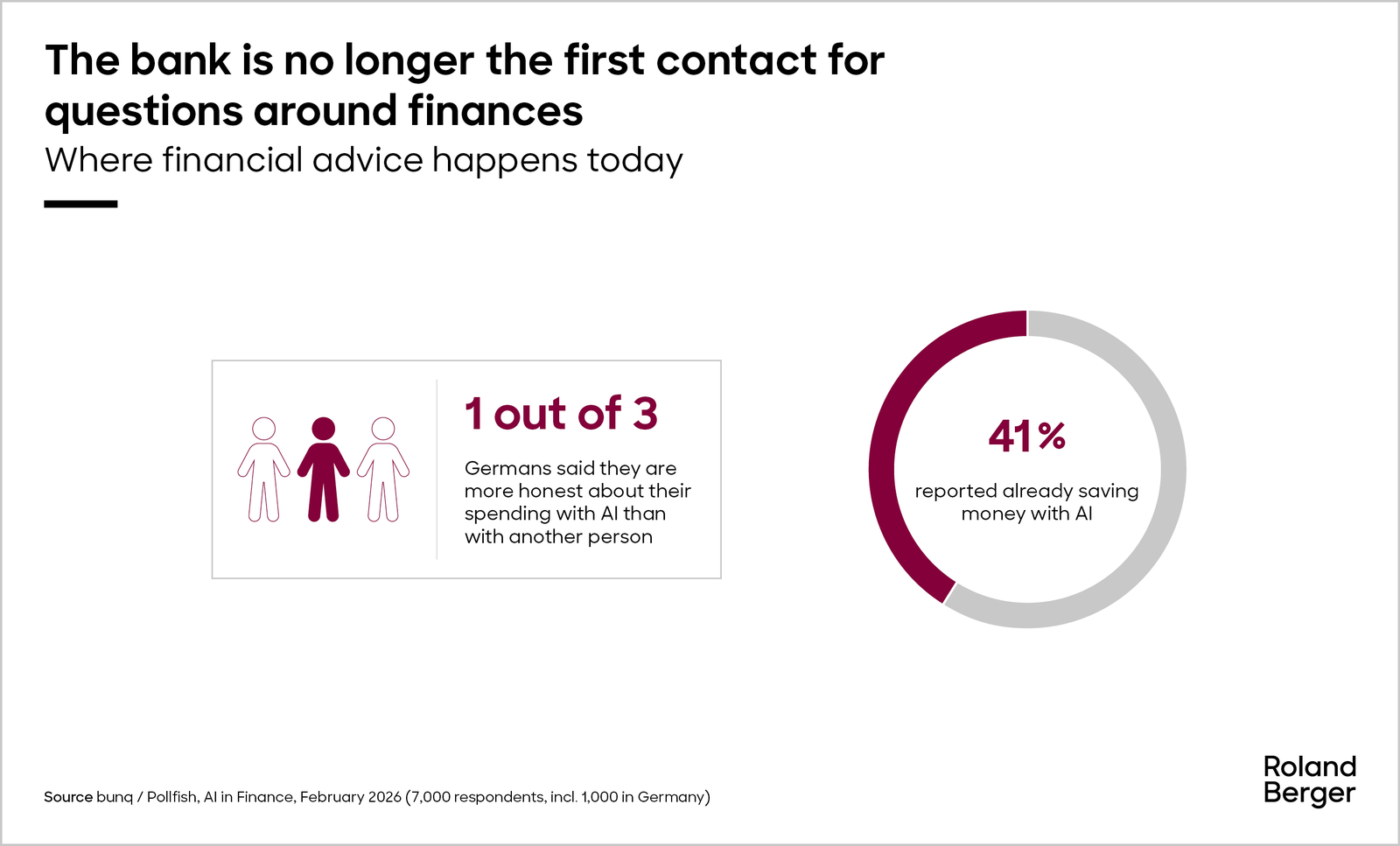
Becoming that trusted financial intelligence raises an obvious question: how does a bank build it? Here the common framing is the wrong one — that this is a decision about the AI model itself. Some banks will train sector-specific or proprietary-data models, and for control, compliance and data residency that can be a sound operational choice. It is a weak strategic one if mistaken for the source of advantage. No European bank will build a frontier model to rival the global technology firms, and a domain model, however good, sits in the layer commoditising fastest — where capabilities converge, each advantage is matched within a cycle, and the cost recurs. Sector-wide, AI spending has so far produced more activity than profit.
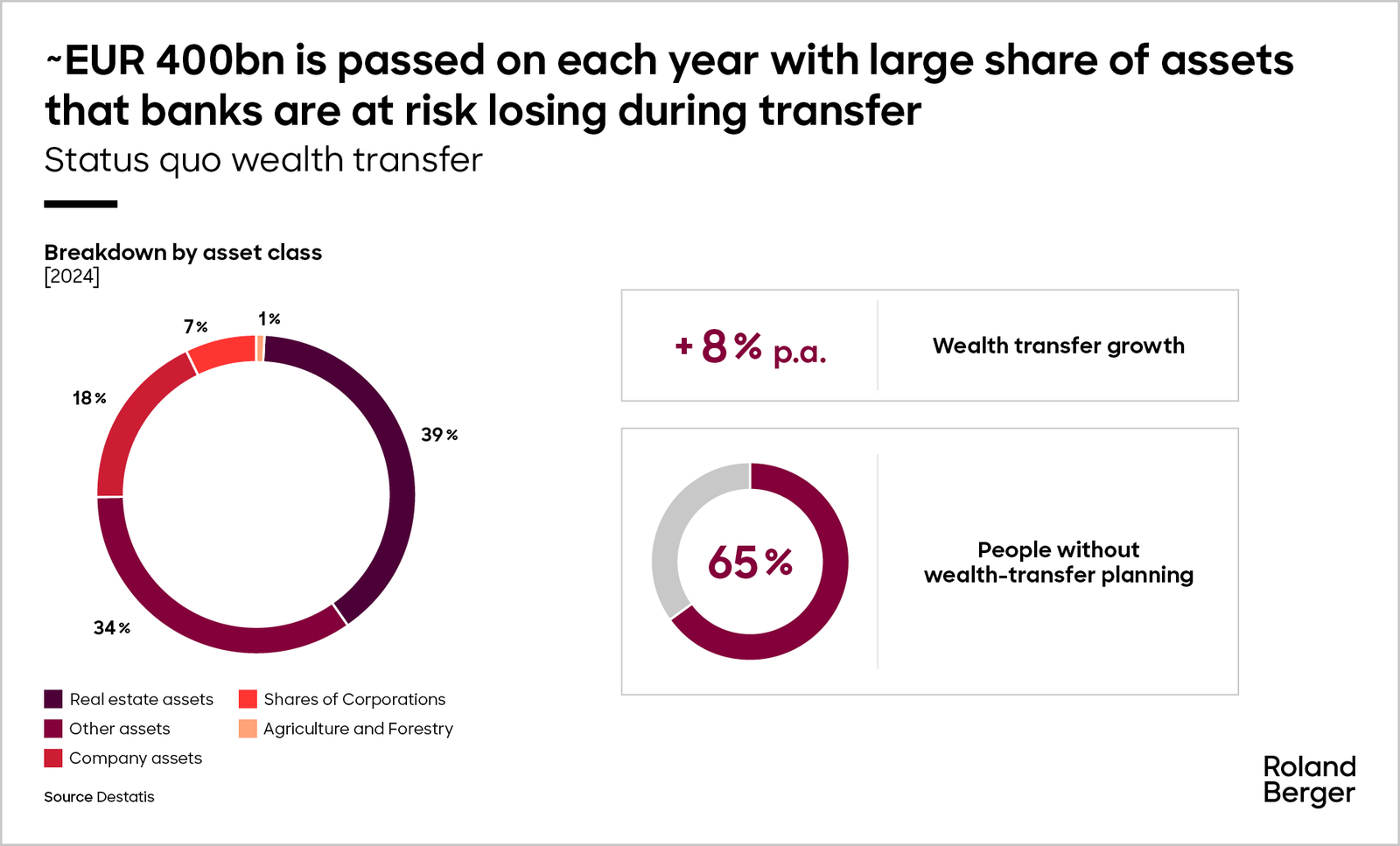
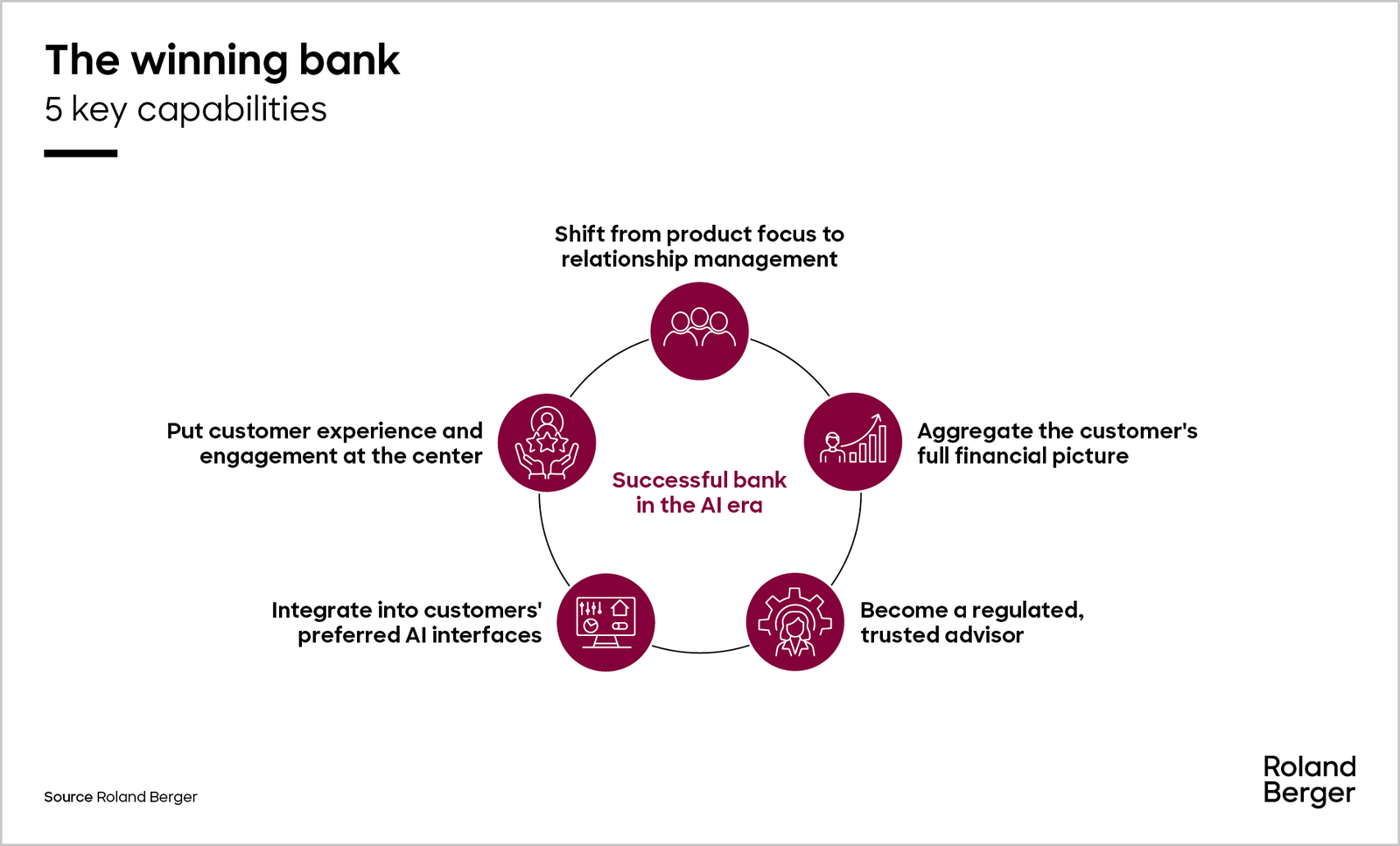
The advantage lies a layer up — though not in the way banks tend to assume. A bank does not, today, hold the whole of a customer's financial life: the salary flows out, the investing happens elsewhere, the picture is scattered across providers, as we have seen. But of all the players, the bank is the one best placed to be permitted to assemble it. A general-purpose assistant reasons from what the customer chooses to type into it, and answers with guidance that carries no licence and no liability. The bank can do what the assistant cannot: with the customer's consent and the access open banking already provides, it can normalise the scattered record into a verified, whole view — and give regulated advice on it, advice for which it is accountable. Here the weight of regulation, usually the incumbent's burden, becomes its moat. The model is a commodity input; the standing to assemble the customer's whole picture and the licence to advise on it are not.
The stakes rise further as these systems move from advice to action — initiating payments, moving balances, executing investments on the customer's behalf. The interface then becomes the point where transactions originate, not merely where questions are asked. A bank absent from it does not only lose the conversation; it watches its own balance sheet put to work through an interface it has no part in.
From distribution to relationship
The required shift is, in the end, a shift in business model. For two decades banks optimised the distribution of products. The task now is the opposite: to become the customer's trusted financial intelligence — to make a function within the bank accountable for the whole of a customer's financial life, and to compete on the quality of that understanding rather than the reach of distribution. The revenue logic follows the same path, from product margin towards the value of a sustained advisory relationship — including value that does not convert into a product sale within the same quarter. It is a less comfortable model than the one it replaces, and a more durable one.