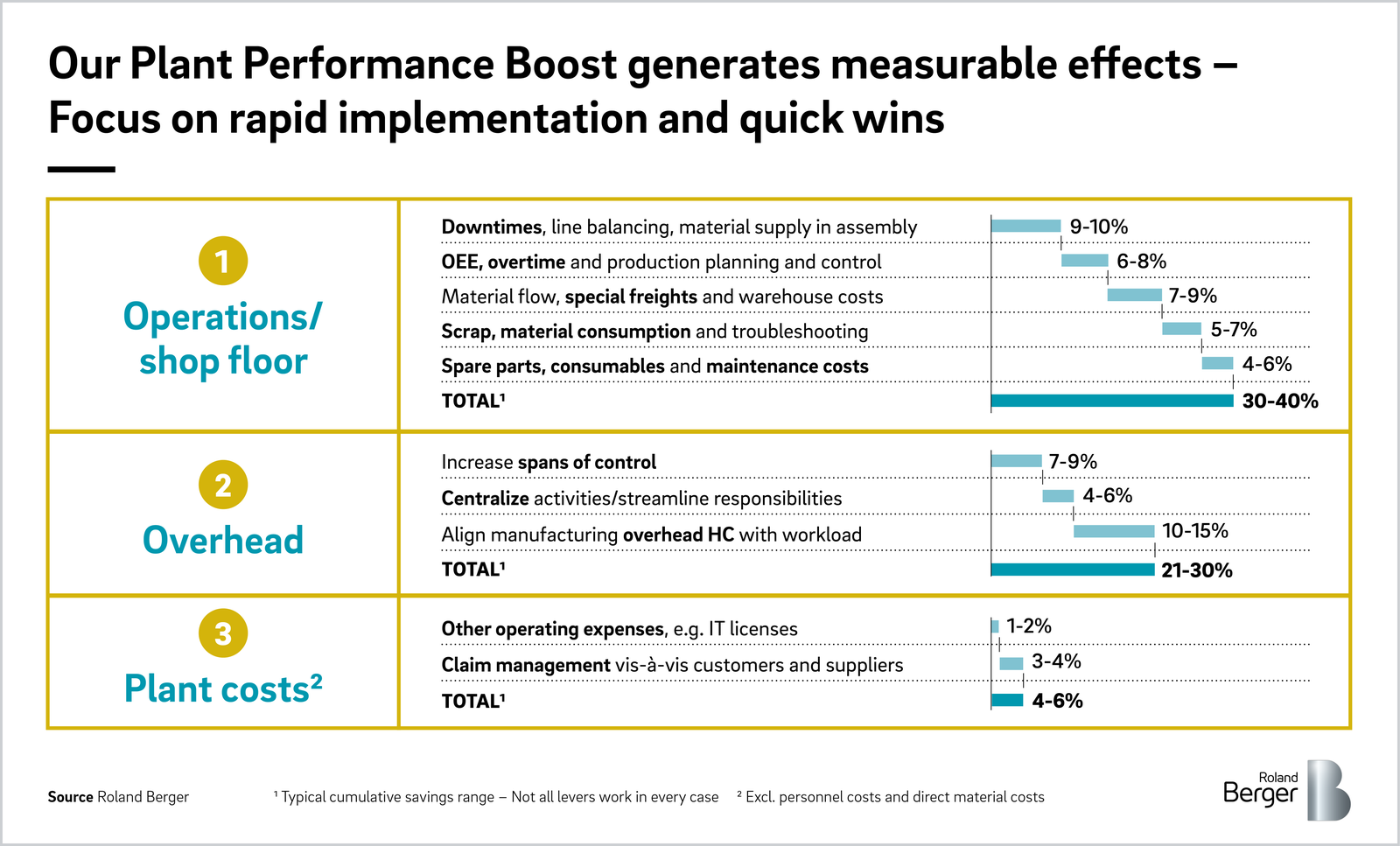
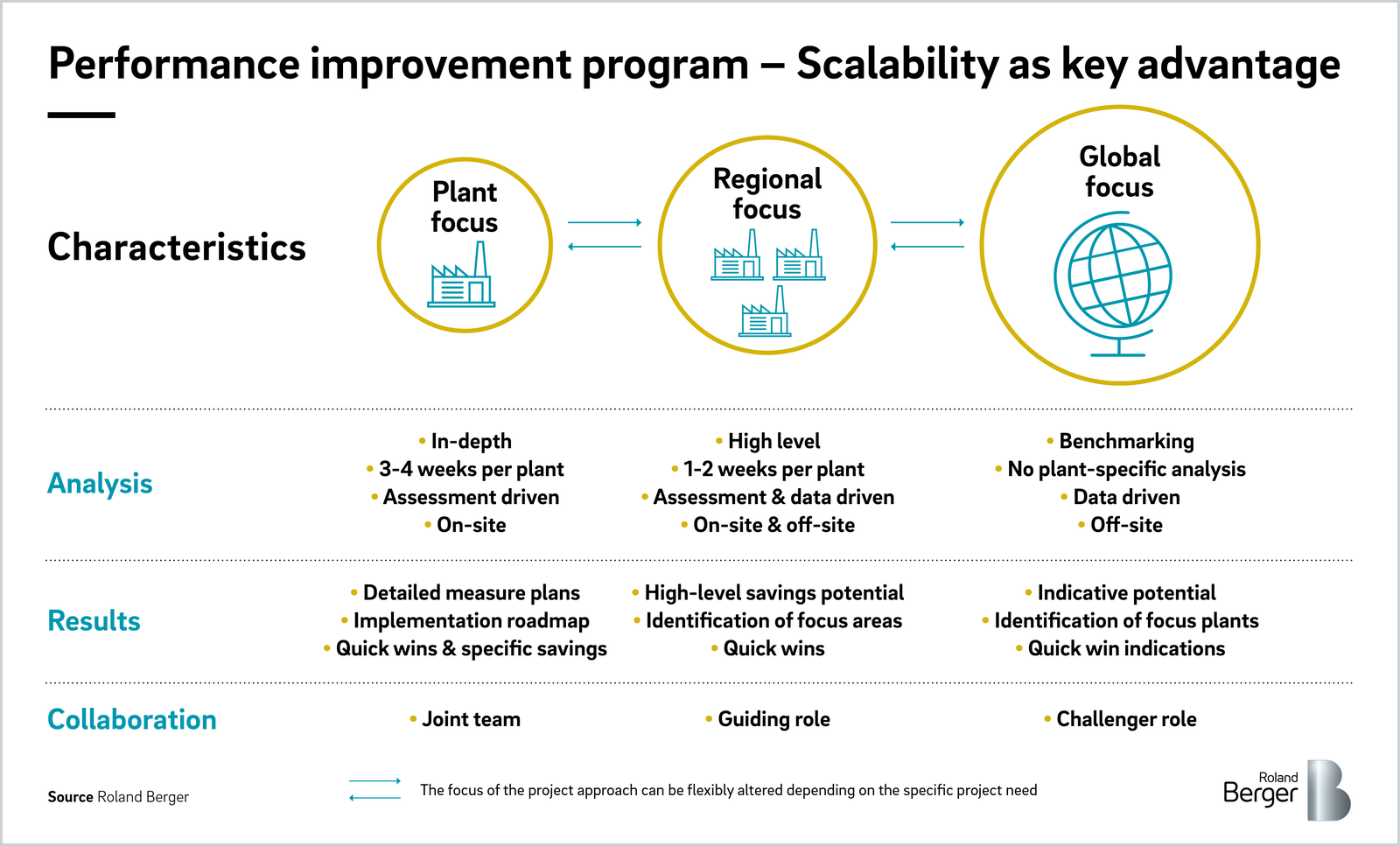
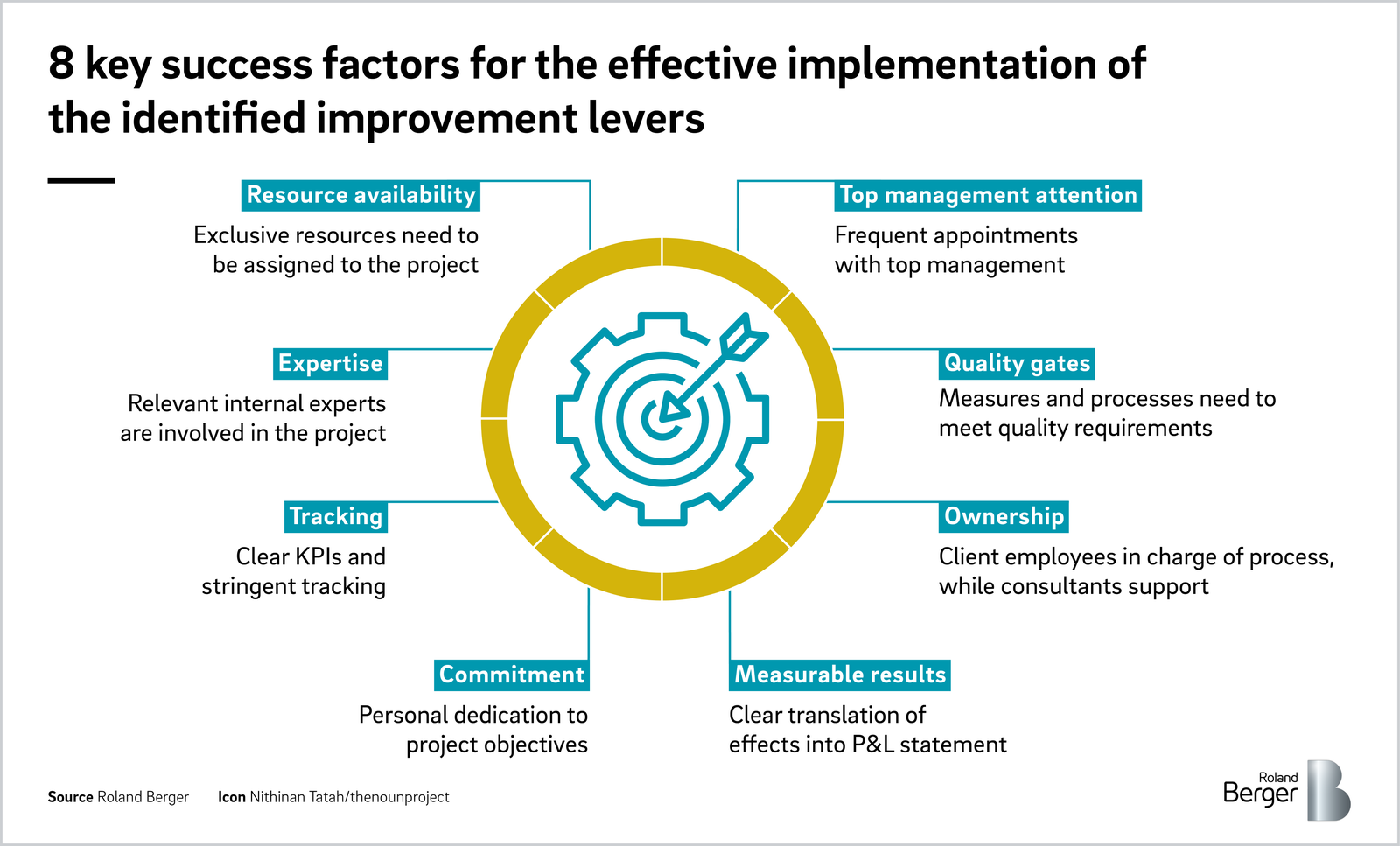
Just four weeks ago, the automotive supplier industry thought that adjusting to the new mobility landscape and managing the associated capital requirements was its biggest challenge. But suddenly the world is different. Covid-19 reshuffled the pack. Finding ways to generate savings is the dictate of the moment. Efficient plant operations may well be a matter of survival for companies. Roland Berger’s new tool targeting plant inefficiencies can help here.
These are more than tough times for the automotive industry . After a decade of record results, global production volumes had already fallen by around 5% in 2018 and 2019. The rise of electric vehicles, disruptive mobility players, stricter CO2 regulations and trade disputes were considered to be the top challenges. Companies had to find ways to deal with the rapid transformation the industry was undergoing. Suppliers, in particular, felt the pinch. They were being squeezed by automotive manufacturers who were defending their margins by reducing purchasing prices, while they simultaneously had to look for partners to develop new mobility technologies and share capital risks.
Looking back to the end of 2019, these topics now seem to be but minor concerns. Since then, Covid-19 has shattered the global economy and shocked the automotive markets. Bad enough that volumes in China dropped in February by more than 80% year on year. But what seemed to be a local issue has rapidly become a global one. OEMs are shuttering their operations in Europe and the US and suppliers have to follow suit. Wherever possible, employees have been asked to work from home to protect them against becoming infected with the coronavirus. At this point in time, no one can judge whether the markets will recover in the medium term or whether the global economy is heading for a longer recession.