A severe blow to GDP growth
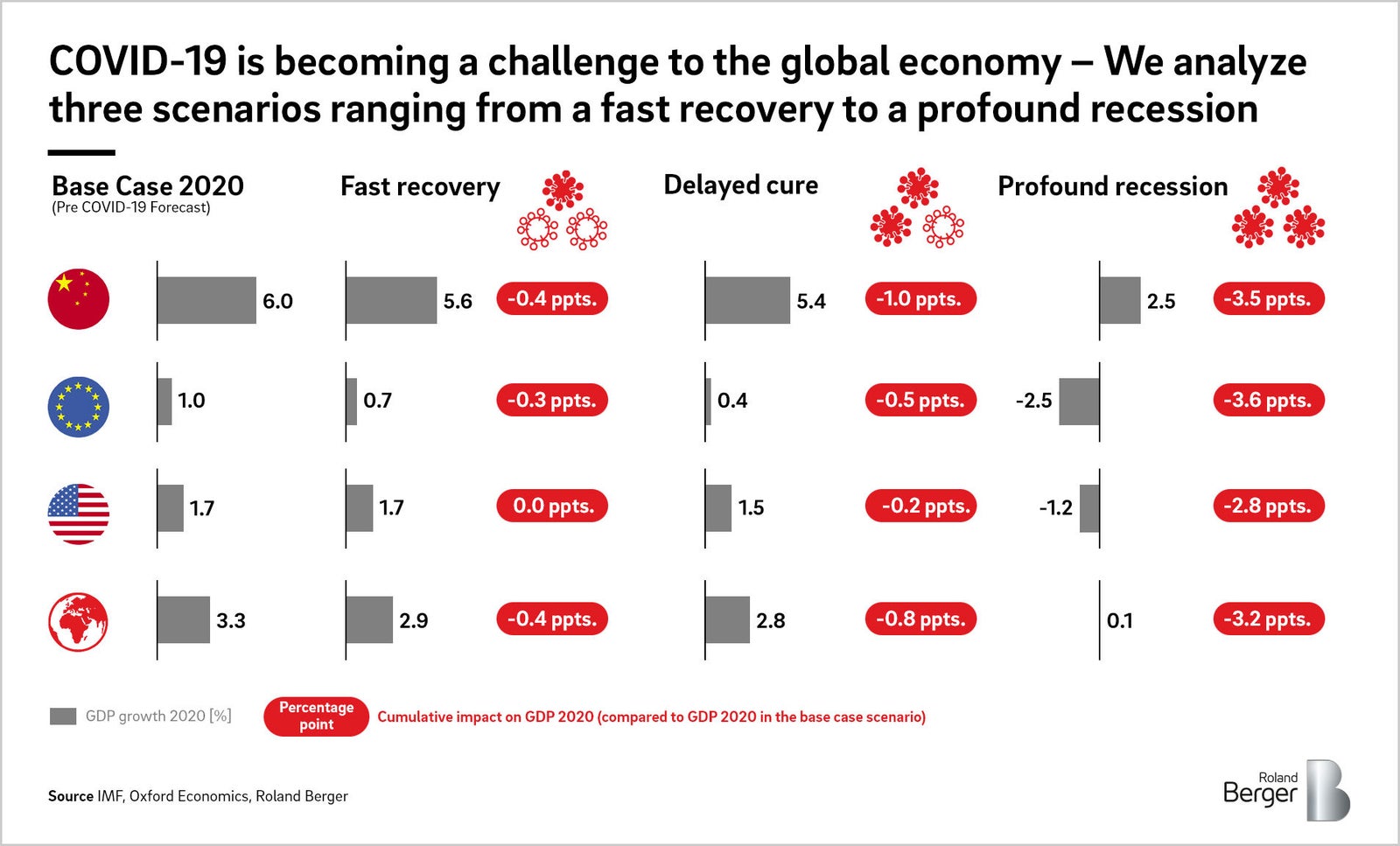
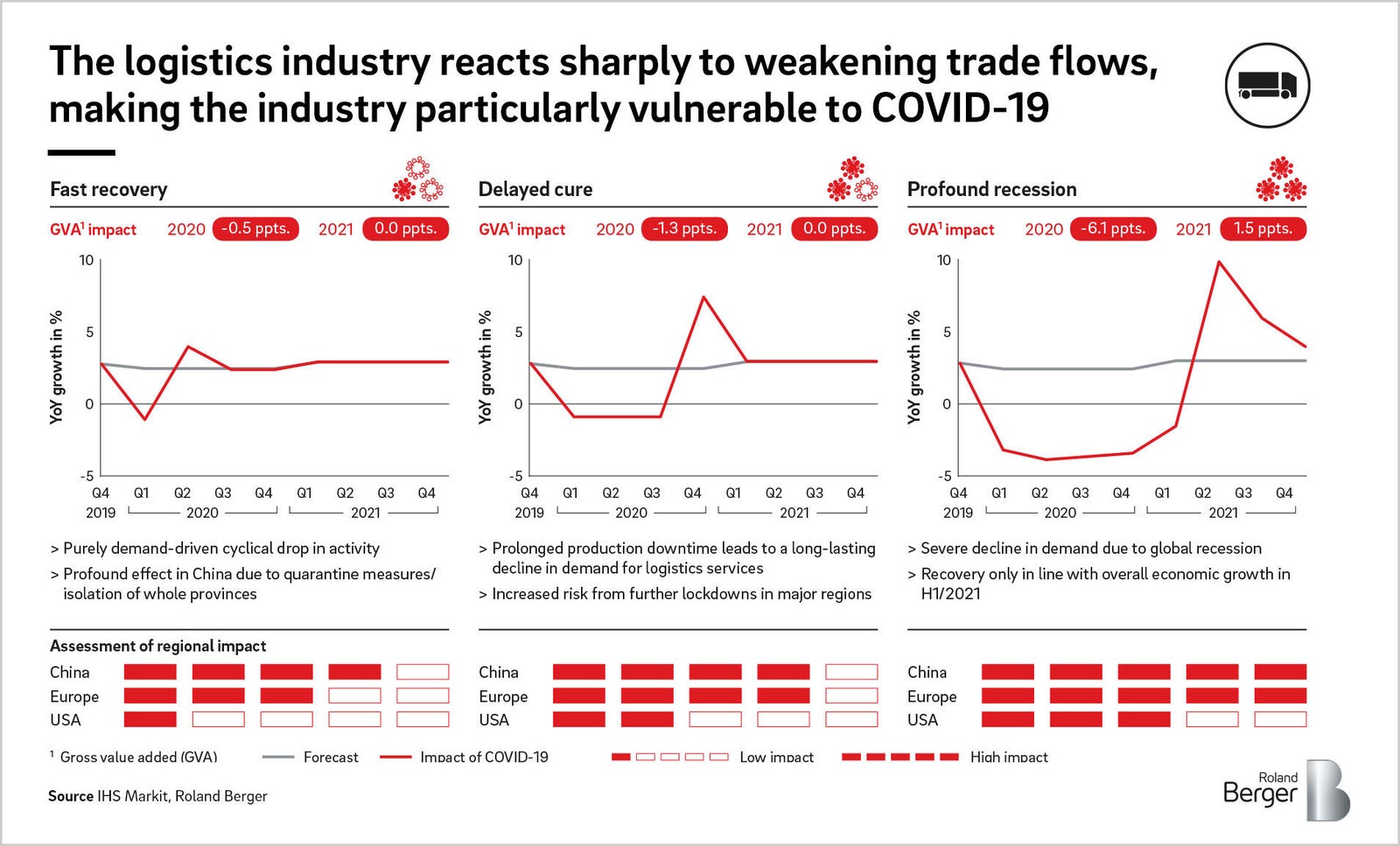
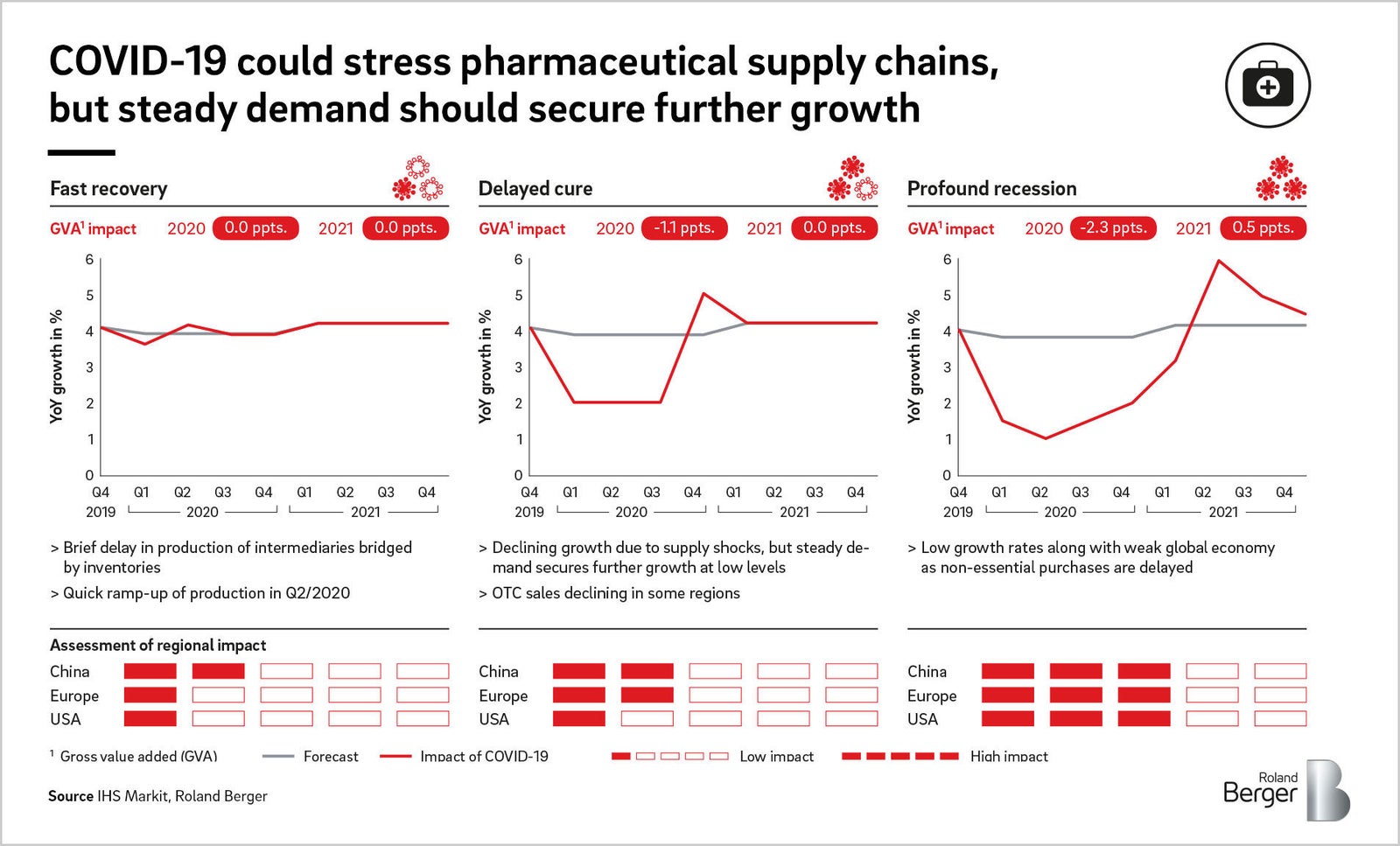
In China, the focal point of the coronavirus outbreak, we forecast that GDP growth could drop as much as 3.5 percentage points in 2020 in a worst-case scenario. Our "Profound Recession" scenario further foresees a second wave of the outbreak in early 2021, with new flare-ups outside the Hubei province and quarantine measures extended to other regions. Supply will be severely disrupted, with factories remaining closed and numerous bankruptcies, while fiscal and monetary policy responses will not start pushing growth until Q3 2020. In our more moderate "Delayed Cure" scenario, the number of new infections will slow down but quarantines will remain in place, causing bottlenecks in supply and a downturn in domestic demand and exports. In our most optimistic, "Fast Recovery" scenario, the Chinese government's measures would be effective, quarantines quickly lifted and production soon return to normal, leading to just a short-term dip in demand.
Europe, as the world's biggest trading block, could be particularly hard hit by an extended corona outbreak. Our worst-case scenario foresees full containment not being achieved until 2021. The
healthcare system
will experience capacity shortages, and production in several industries will be disrupted. In the Delayed Cure scenario, supply chains from Asia to Europe, particularly important for pharmaceutical raw materials and electronics, will be in jeopardy and crucial supply chains within Europe will also start to break down. We will see a temporary decline in consumption and investments. In the optimistic Fast Recovery scenario, disruptions will only occur in specific sectors, the supply shock will be less strong, domestic production will only be impacted in Italy and demand will fall in just a few industries, such as travel and tourism.
With its strong focus on the domestic market and orientation towards services, the United States economy is not likely to be as badly affected as other regions. True, our worst-case scenario foresees a strong impact on NAFTA supply chains and a drop in consumption, with a resulting decline in GDP of 1.2 percent in 2020. But in our moderate scenario, supply chains are interrupted in selected industries only and fiscal and monetary stimulus are likely, given that this is an election year. In the best-case scenario, we see no slowdown in GDP growth, with domestic demand stable and business largely continuing as usual.