Three key challenges
Despite the various external factors pressuring CPG companies to act fast on sustainable packaging, companies face various challenges when pursuing more sustainable product containers:
1. The business case for sustainable packaging is often unclear, resulting in executive hesitancy and delays.
2. The sustainability trend can disrupt existing supply chains and vendor requirements.
3. Sustainable packaging can exacerbate the already limited supply of raw (feedstock) materials (which could become more constrained and expensive), and seems contrary to the increased volume of packages expected to come from emerging consumer trends such as e-commerce and need for convenience.
From all those challenges, Roland Berger believes companies should pay particular attention to the risk of a global supply gap of feedstock supply for sustainable packaging, which is a factor that companies usually have little to no control. For example, post-consumer recycled supply is anticipated to not meet demand by 2025, given commitments, limiting the ability of CPG companies to reach their goals in a profitable way. Estimates show that the supply needed to hit brands’ recycled plastic goals may not be available near-term according to current reprocessing capacity.
The switch to sustainable packaging is thus not an easy one. With its unclear business case in select segments, major supply chain and operations implications, and raw material complications, CPG leaders are understandably hesitant to commit. Changing packaging often involves new designs, new suppliers, changes to lead times, changes in feedstock and potentially performance, new manufacturing processes and/or capital expenditure, and different forecasting, pallet, and durability models. It also affects shipping configurations, UPCs (Unique Product Codes), customer awareness and brand identity.
In other words, sustainability targets are harder to hit as the market evolves. Thus, sustainability needs to be constantly balanced with emerging consumer trends to optimize benefits.
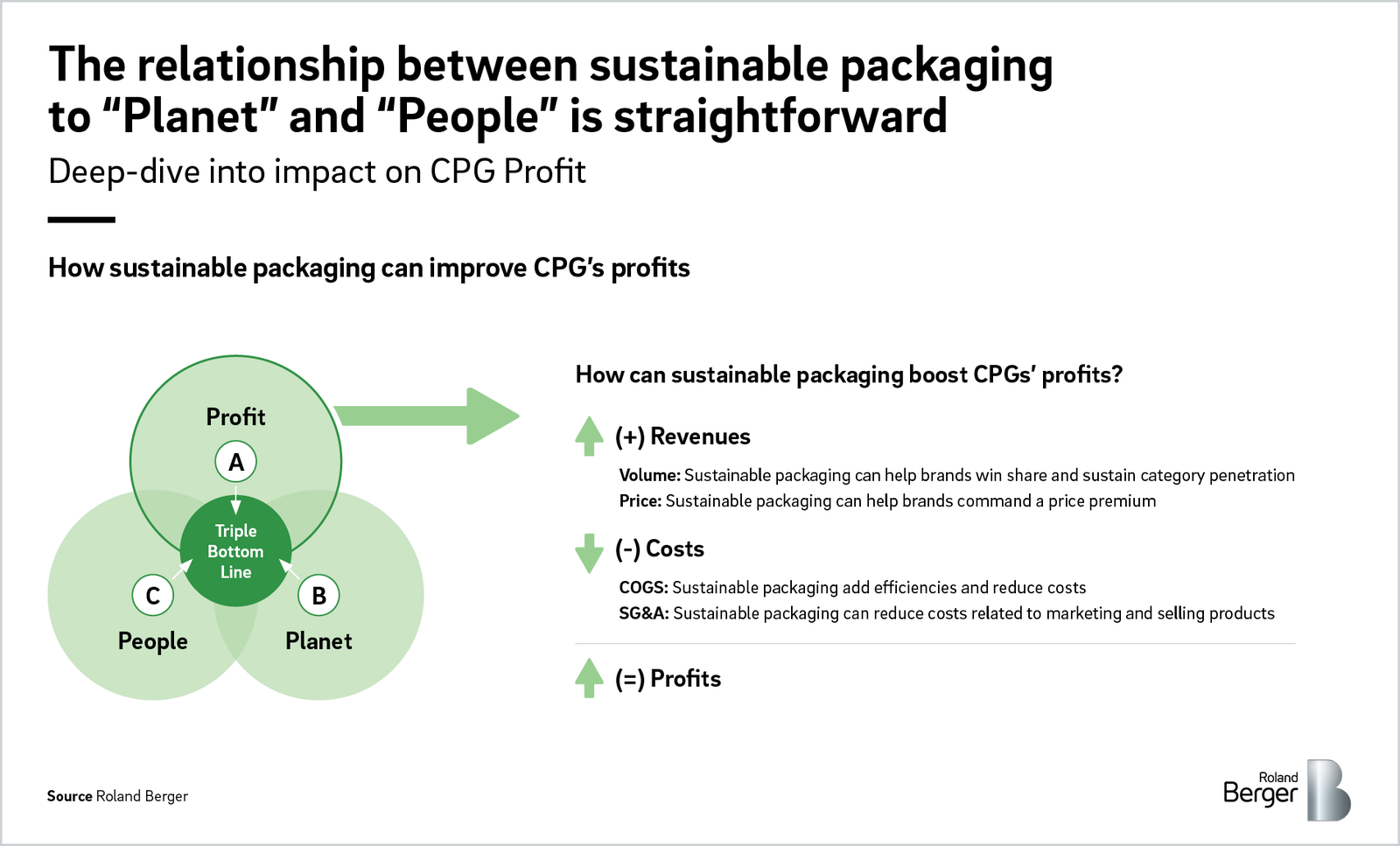
Roland Berger recognizes the challenges of pursuing more complex sustainable packaging. But we have also observed real substance to the movement. More specifically, sustainable packaging can demonstrably improve CPG revenues, market share, segment penetration, and premium pricing—this is in addition to the straightforward benefits that sustainable packaging innately has on “people” and the “planet” (aka Triple Profitability).
The move towards sustainable packaging forces companies to rethink the design, manufacture, distribution, usability, and post-purchase experiences of the products they sell, which creates newfound efficiencies in production, marketing, and selling. The transition is clearly not an easy one, but the benefits will have an industry-wide effect over the coming decade.
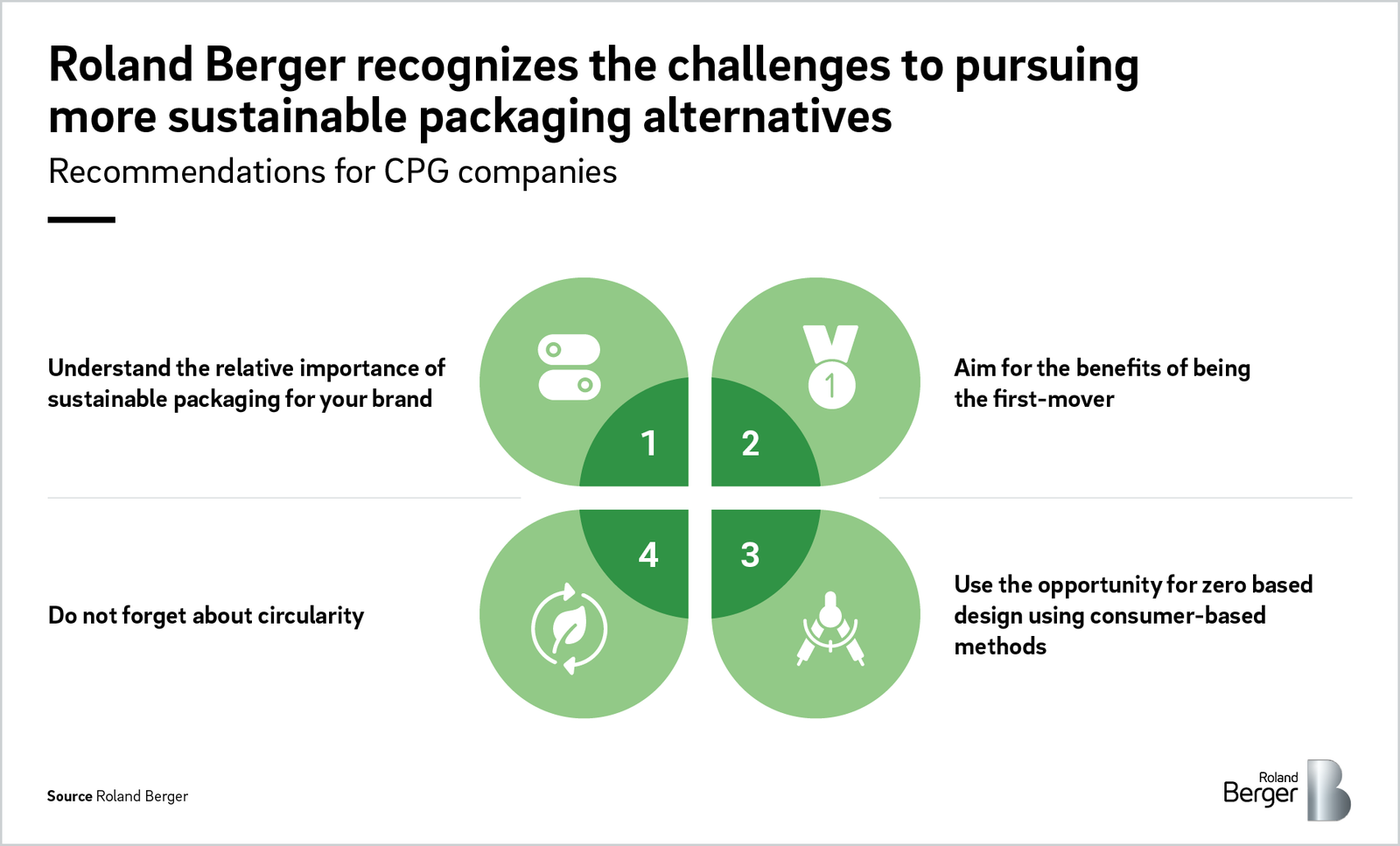
Here is what you need to know moving forward.