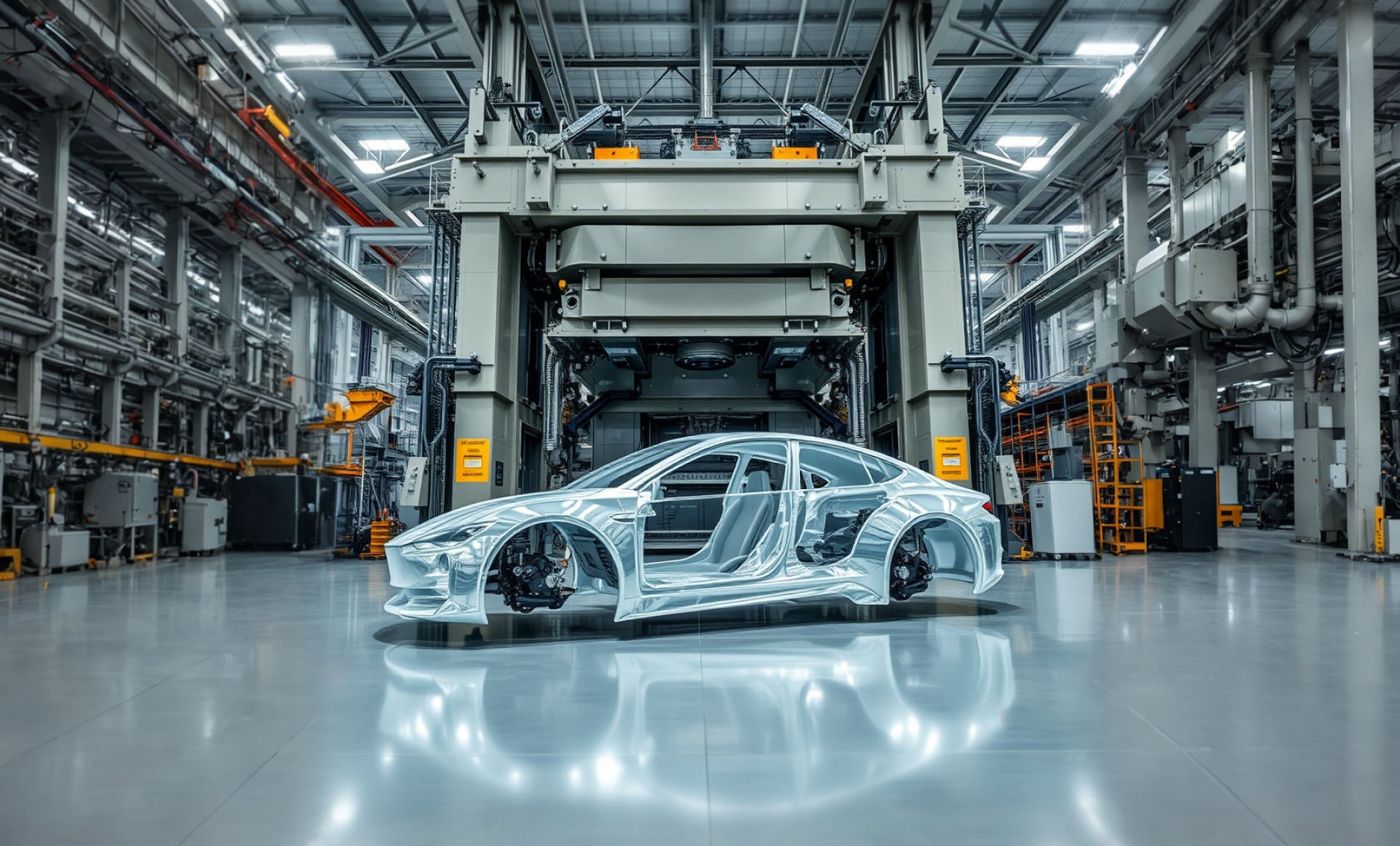
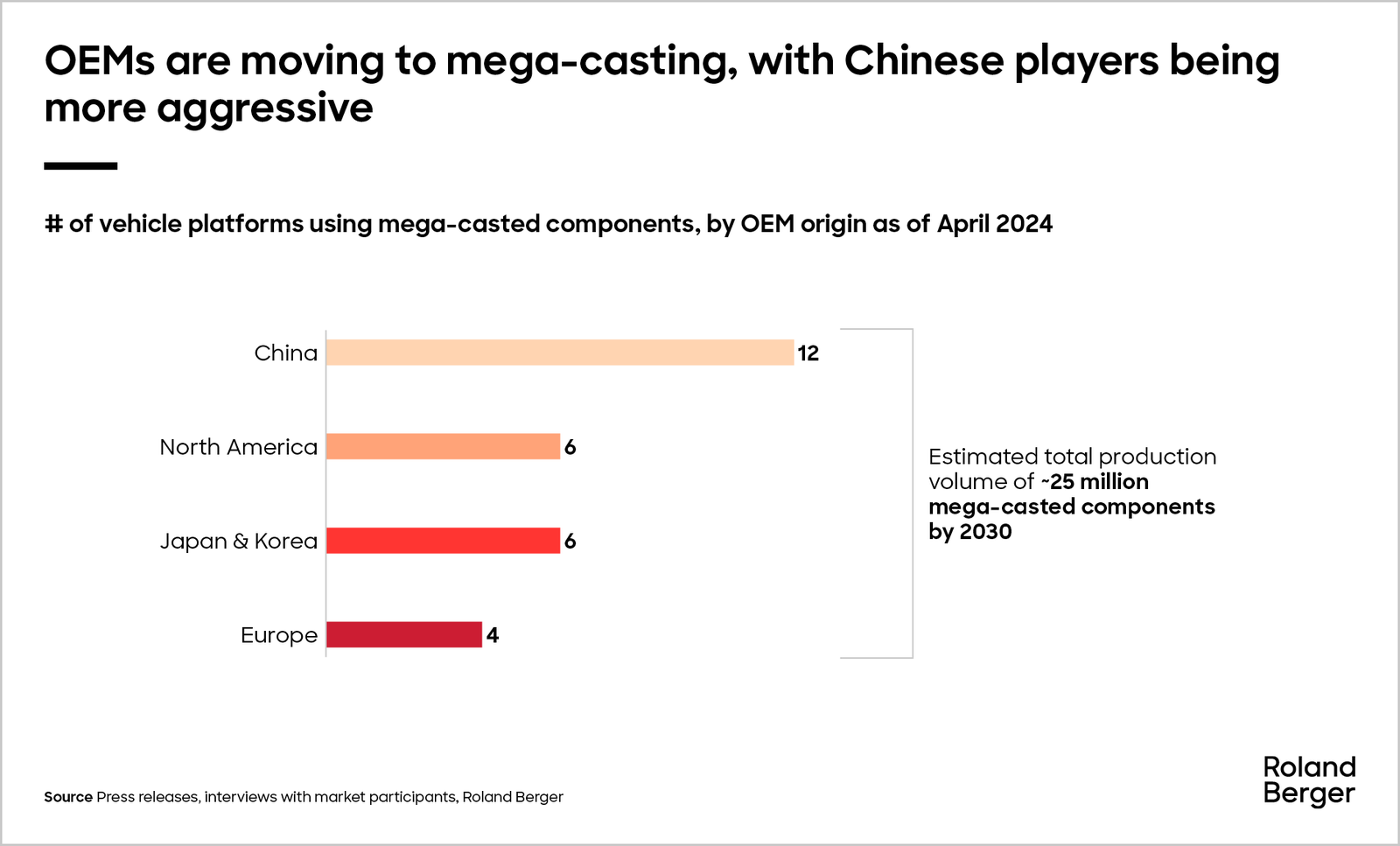
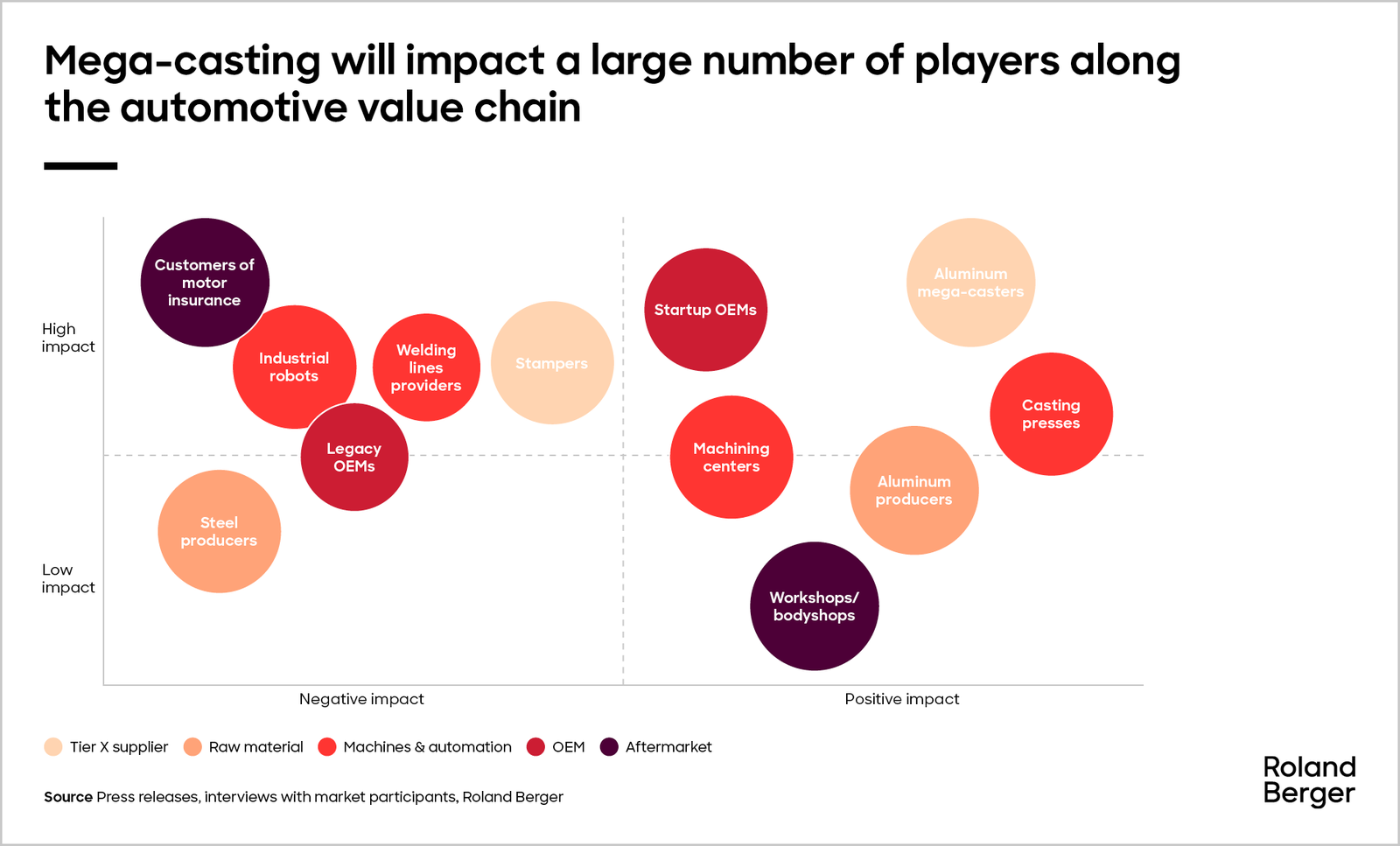
Megacasting – the production of large-format high-pressure die-casting (HPDC) parts – is radically simplifying automotive production. While the automotive industry first widely accepted HPDC in the 1980s, it was not until 2018 that the first megacasting presses with a clamping force of more than 6,000 tons were introduced. 2020 saw the first series production of a vehicle with a megacast rear end, since then there has been rapid uptake of the production technology by original equipment manufacturers (OEMs) and now Tier 1 suppliers. But while Chinese automakers are pushing megacastings aggressively, Western players have been somewhat more hesitant. We look at the challenges facing legacy players and the impact across the automotive value chain.



High-pressure die casting for large auto parts – a potential gamechanger?
The pressure die casting (HPDC) process, in which molten metal is injected into a mould under high pressure, is commonly used in the automotive industry to produce small to medium sized aluminum castings. Now, however, companies such as Tesla have extended its use to the production of larger car parts with complex designs up to 1500 mm, and other car manufacturers are wondering whether they should follow suit.