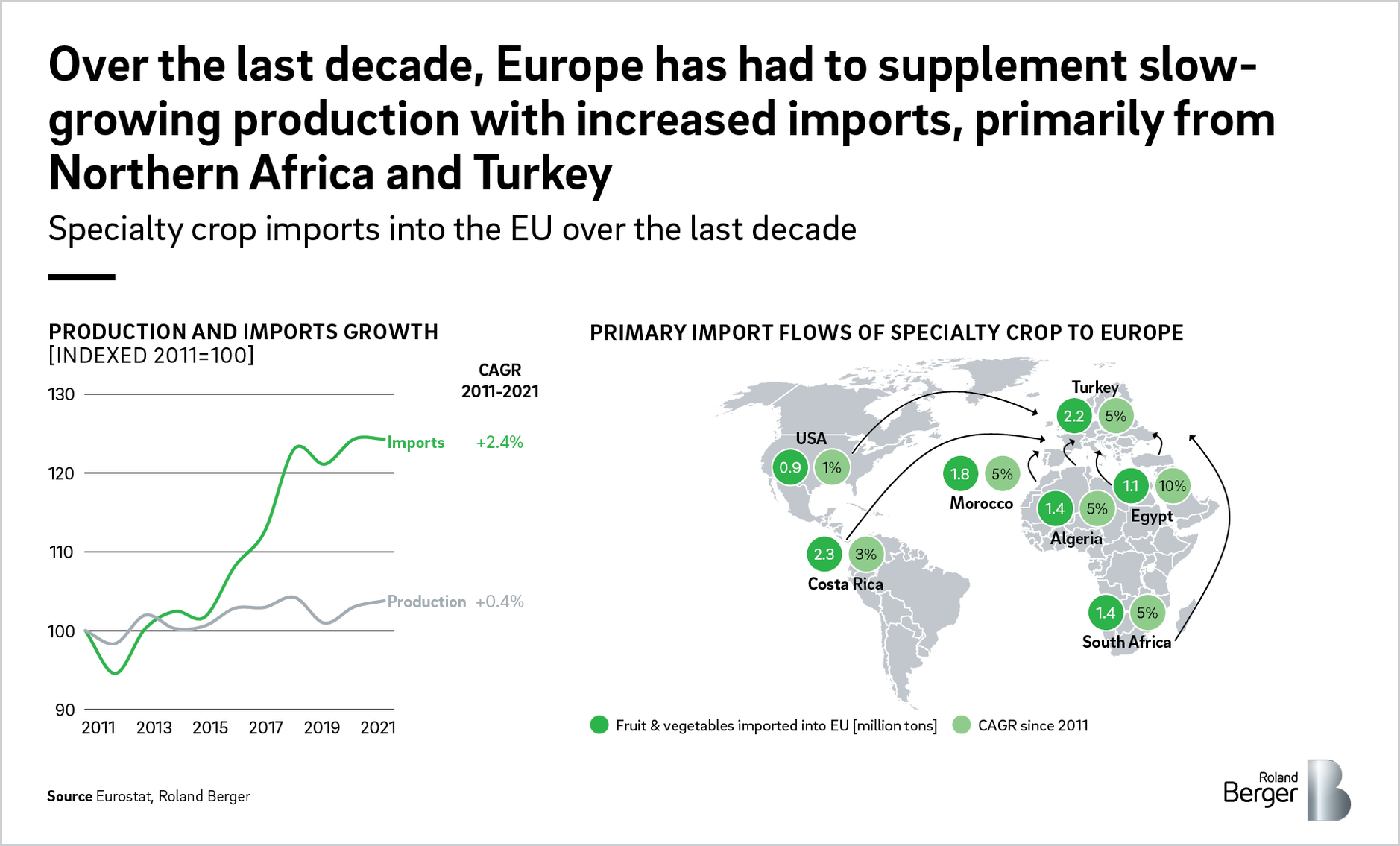
As young Americans increasingly don’t pursue agriculture careers, farmers have looked south of the border for labor. The H-2A visa program provides certifications for seasonal agriculture workers coming into the U.S., predominantly from Central American countries and Mexico. Certifications granted through this program have grown rapidly since 2010 at an annual rate of 14%, as farmers desperately look for enough labor to harvest their crop.
Enter the Automation Start-Up
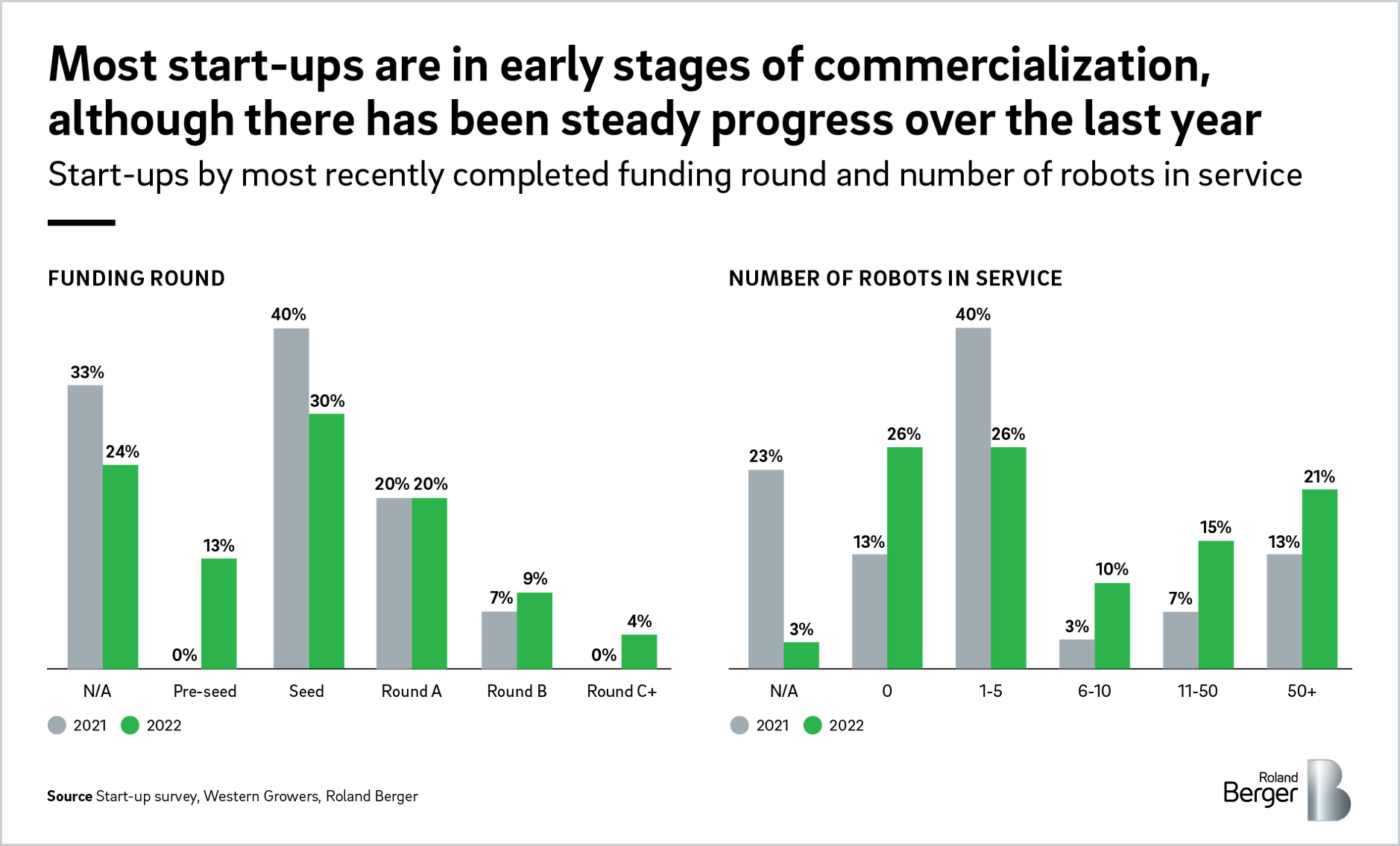
Specialty crop automation start-ups have gained notable traction in the last couple of years as they seek to revolutionize an industry which is still extremely reliant on human labor. When analyzing data from a survey dedicated to specialty crop automation start-ups, progress is being made quickly in the commercialization of their products and scaling of their operations. Indeed, when comparing data in 2021 and 2022 there has been notable progress in terms of latest funding round and number of robots in service, showing that start-ups are continuing to receive funding and scale their operations with this capital.
While most start-ups are in the early stages of commercialization, this varies when analyzing the activity which the start-up automates. Indeed, when mapping start-ups based on activity, pre-harvesting activities such as weeding and thinning reveals itself as the activity with the most companies in the most mature phases of commercialization. This is due in part to the scalability of these technologies across different crop types, e.g., one company's weeding robot works across several vegetables including tomatoes, broccoli, lettuce, while another's weeding machine works across apples, tomatoes, broccoli, lettuce, carrots, garlic, and onions. Conversely, harvest automation technologies are technologically quite sophisticated and difficult to scale across crop types, although there are still several harvest automation companies which have developed scale to their operations.
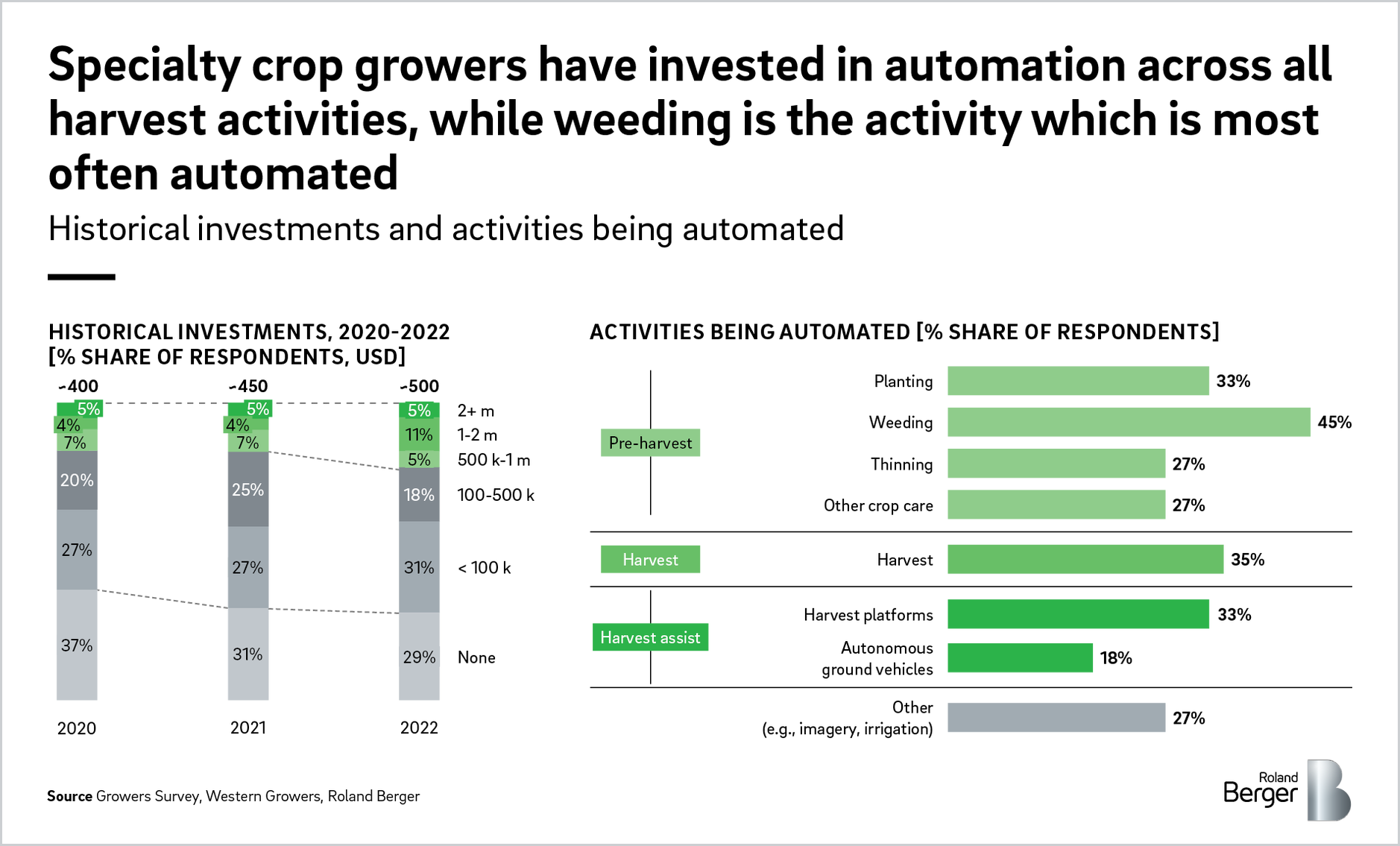
Indeed, when analyzing where specialty crop growers have been focusing their automation investments, we see that the activity which is most often automated is weeding, with 45% of growers having automated some of this activity.
Generally, however, investment in automation is increasing. With the average spend on automation investments from specialty crop growers increasing from USD 400 k in 2020 to USD 500 k in 2022.