Declining capacities, shrinking commission volumes in traditional channels, differentiation through new technologies
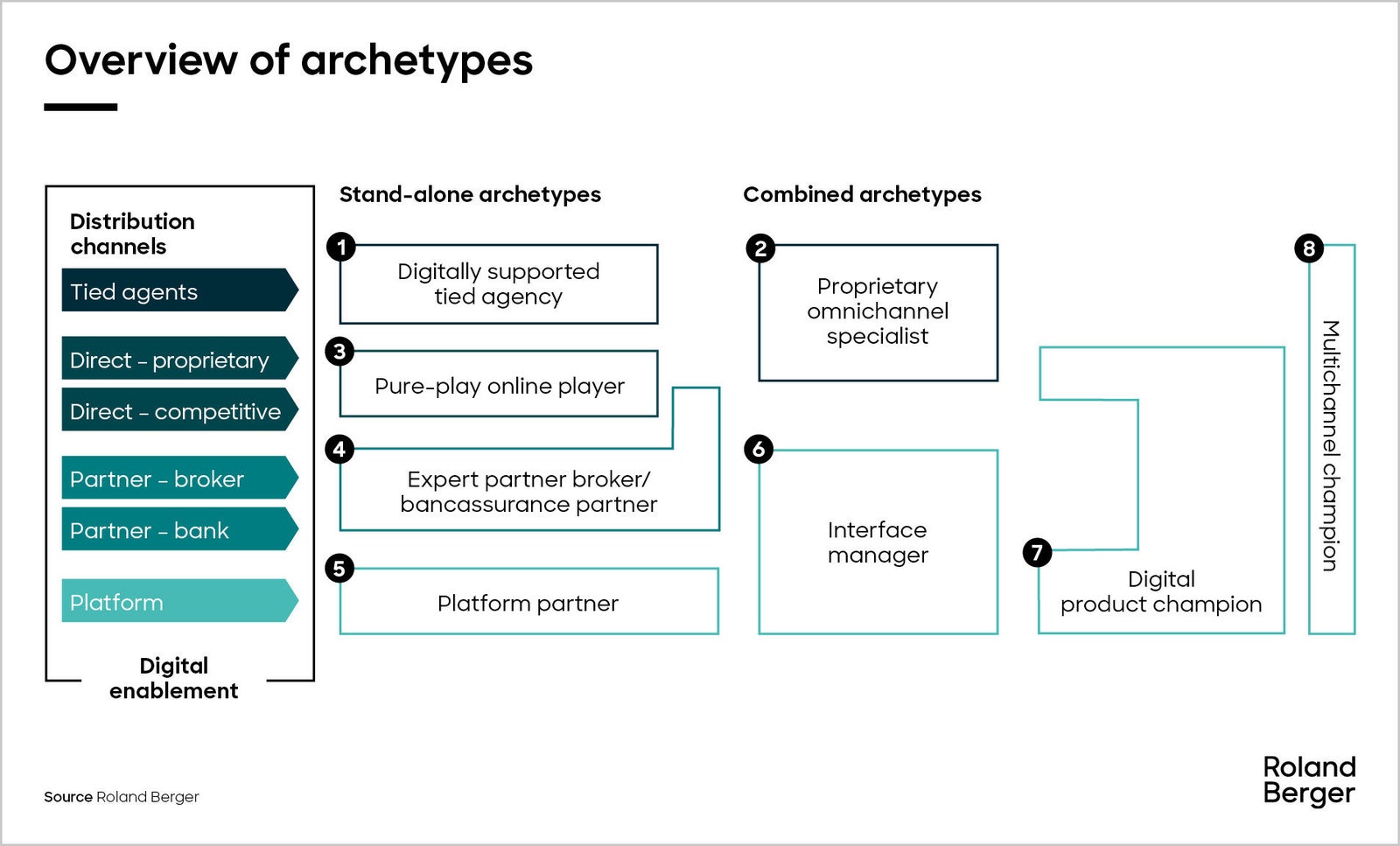
The paper describes how insurance distribution in 2028 will be shaped by independently minded customers, a smaller number of ambitious distribution partners and new cooperation partners, and numerous technologies that are embedded in the distribution processes across all channels. This constellation harbors both opportunities and risks.
Indeed, the authors expect demographic change to shave 25–30% off distribution capacity in the coming years. At the same time, ongoing consolidation will increase the size – and with it the negotiating power – of individual distribution entities.
Furthermore, a decline in new life insurance business and a shift to other lines of business and (digital) distribution channels will combine with the wider proliferation of commission sharing models to cause commission volumes in existing channels to shrink. As a result, traditional insurance sales will likely become an even less attractive job prospect for young talent. That will make distribution resources even scarcer and place them at a premium.
At the same time, technologies such as artificial intelligence (AI) and
data analytics
are opening up new opportunities. They are also a good way for insurers to provide targeted support for partners' distribution activities. In the tied agency business, they could be deployed in everything from lead generation/conversion to the preparation of customer meetings with next-best product/action recommendations to digital/phone-based efforts to generate more business from intermediaries' existing customer portfolios. In the broker channel, interface optimization, the dynamic pricing of modular products and broker support in the form of digital avatars are just some of the possibilities. Essentially, insurance companies will need to align the way they collaborate with and service their distribution channels and distribution partners much more closely with the varying needs of the different distribution channels. Outsourcing parts of the value chain to specialist providers and InsurTechs could also be an attractive way to make sure the right services are delivered through the right channels.