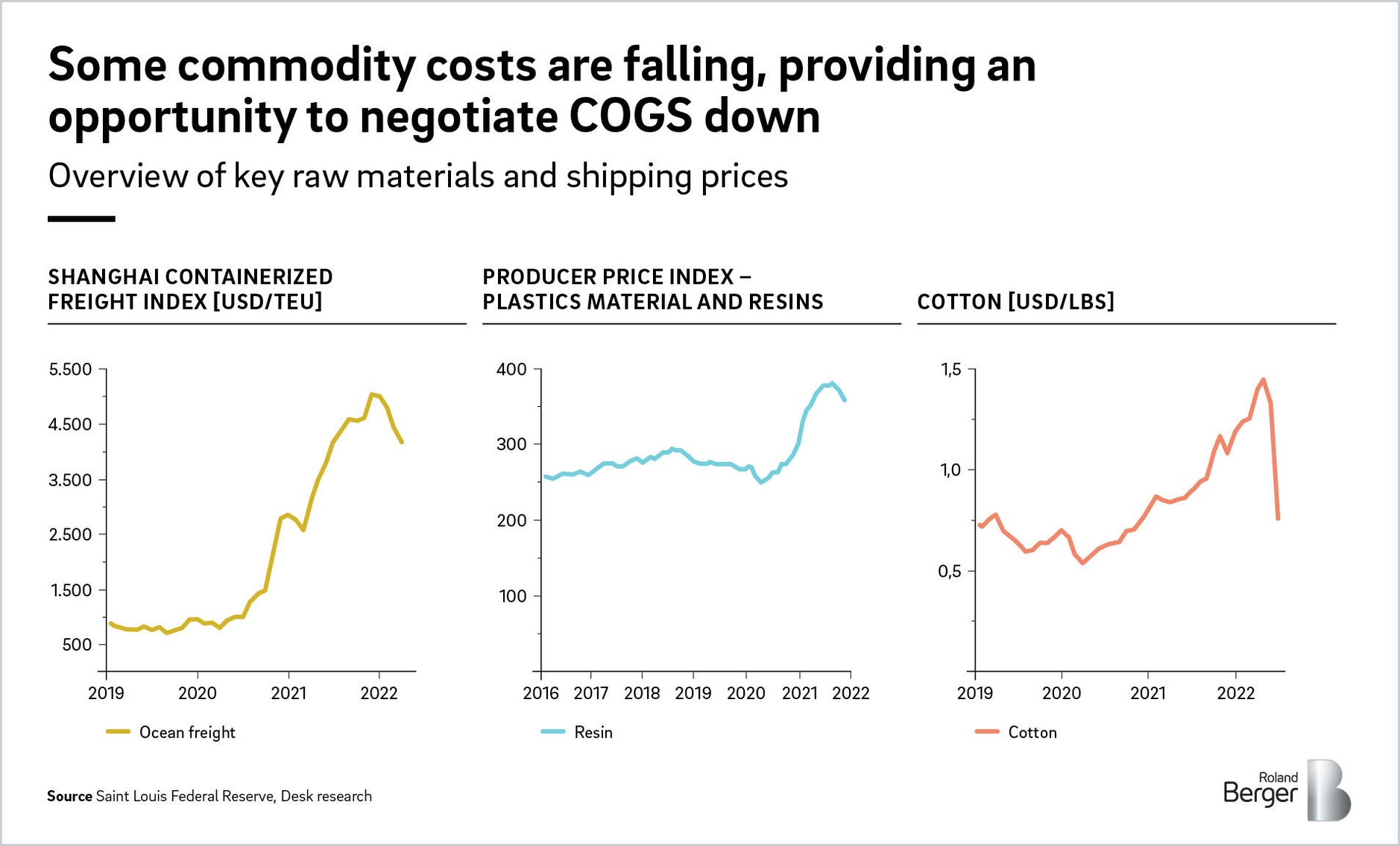
1. Monitor commodity market trends. For most companies, raw material costs could account for 20-50% of retailers’ product purchasing cost, followed closely by supply chain costs. . Companies should prioritize developing capabilities around tracking and monitoring critical commodity prices. It is essential for retailers to develop scenarios to understand how changes in commodity prices will impact their business and develop purchasing strategies accordingly.
2. Product cost modeling. Retailers should develop cost modeling capabilities for their key spend categories. They need to understand not only raw material costs, but also other key input factors, such as labor, equipment, margin, etc. Development of cost models can serve as a key vendor negotiation lever, drive product design changes and predict cost/margin performance.
3. Leverage index-based pricing contract. For commodities with strong cyclical nature, It is useful to put in place a cost structure that rises and drops with commodity markets, so when commodity index prices fall, retailers could realize the cost savings. Best practices such as implementation of a price increase cap and most favored nation clauses mitigate the risk of cost spikes and maintain competitiveness. But retailers might have to commit more volume to certain suppliers to get that favorable deal. Again, retailers need a holistic review of their category purchasing strategy to decide what type of contract is best fit for them.
4. Track retailers’ purchasing cost performance. Retailers should track at least five years' purchasing cost performance and have a system to conduct periodic spend analysis either using ERP systems or more exotic tools. Retailers will receive reminders from the tools regarding which categories' costs need to be further reviewed and negotiated.
5. Set up a task force to drive all manner of cost down, with senior executive support. On the direct material side, schedule strategic vendor review discussions. It is important that companies reach beyond a transactional relationship with their vendors and consider a joint business planning/strategic review approach to improve transparency. On indirect spend, use strict budget discipline and all available spend reduction levers (consumption, commercial and efficiency) to drive down overall enterprise costs.