Implications for building technology OEMs
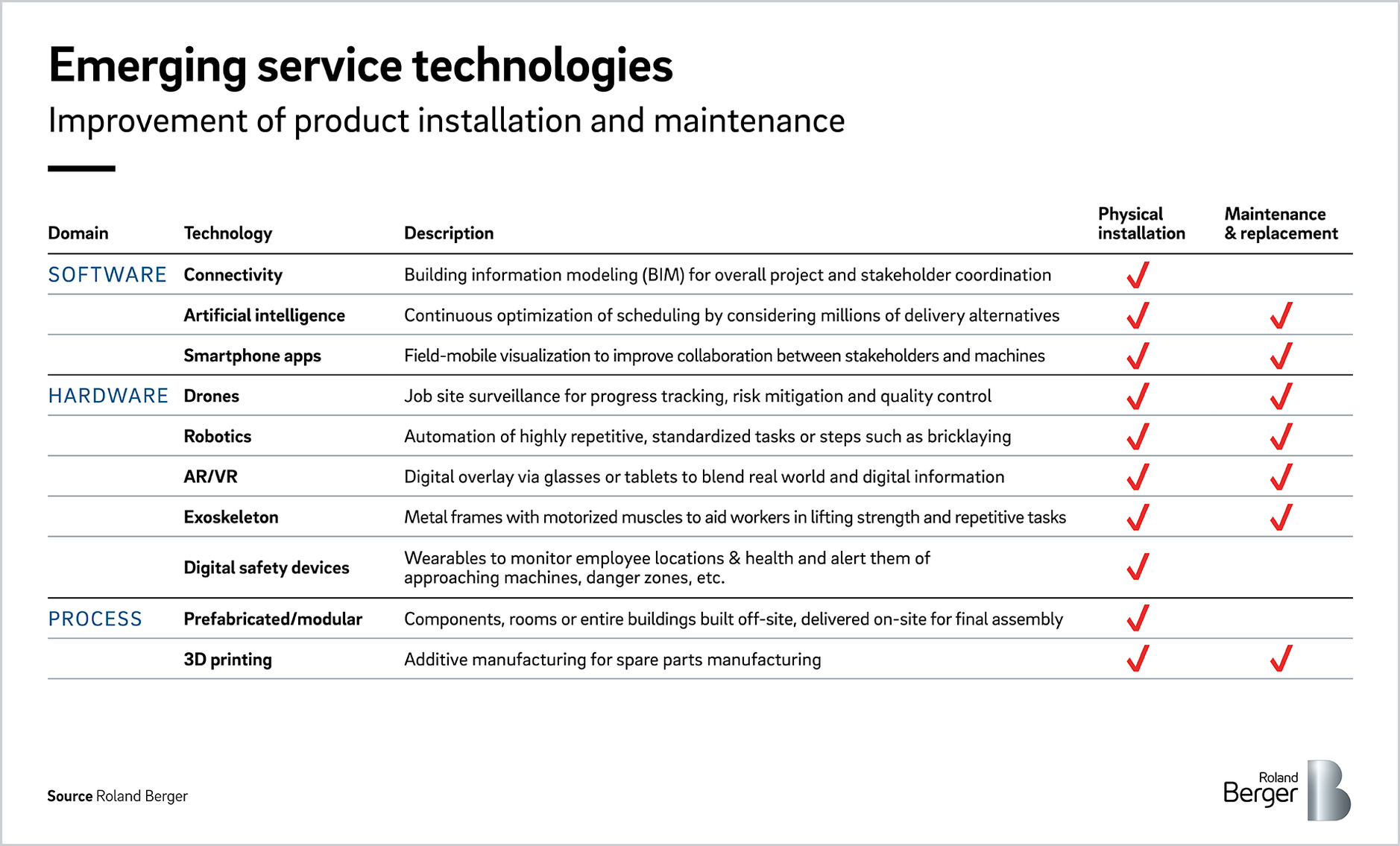
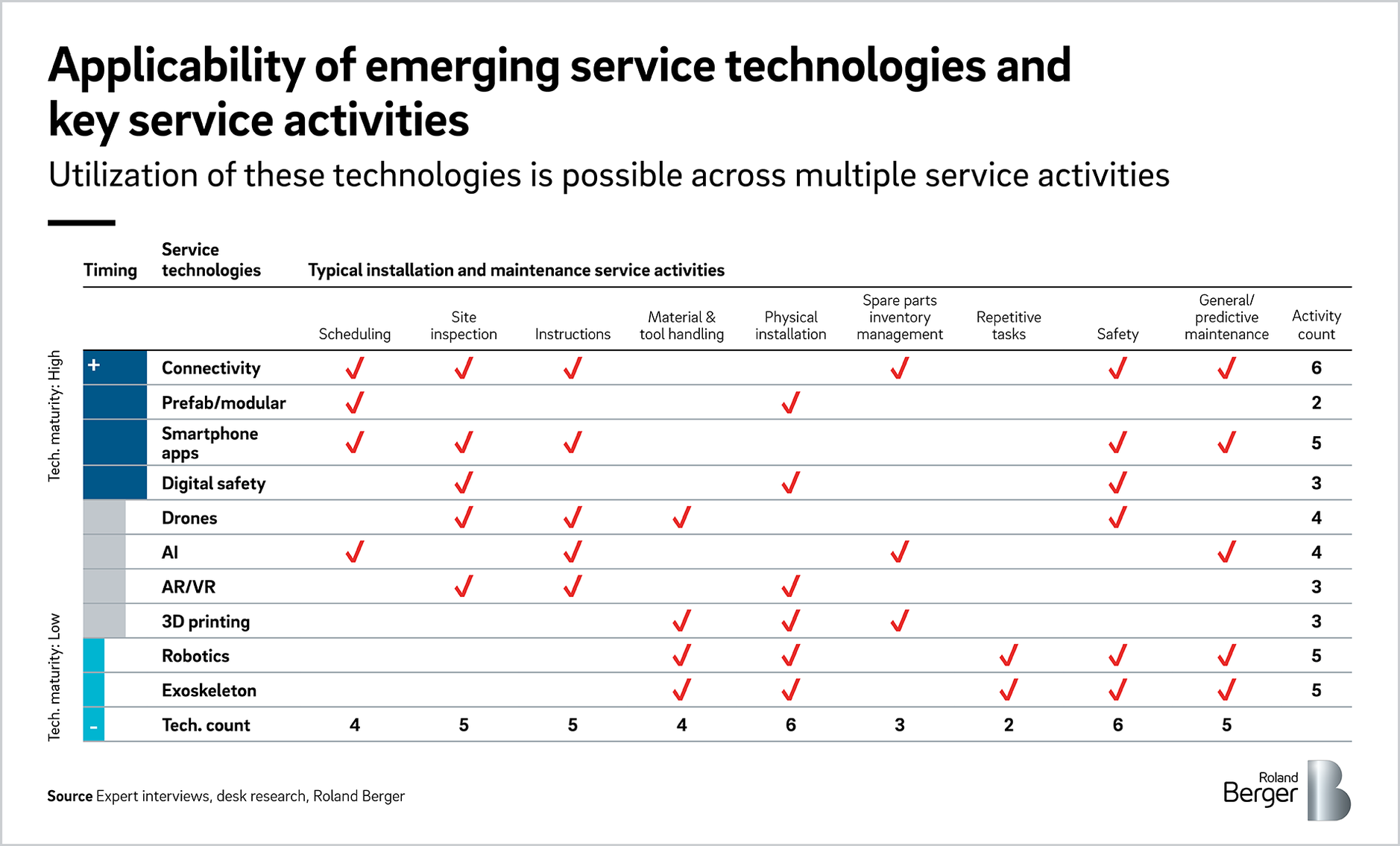
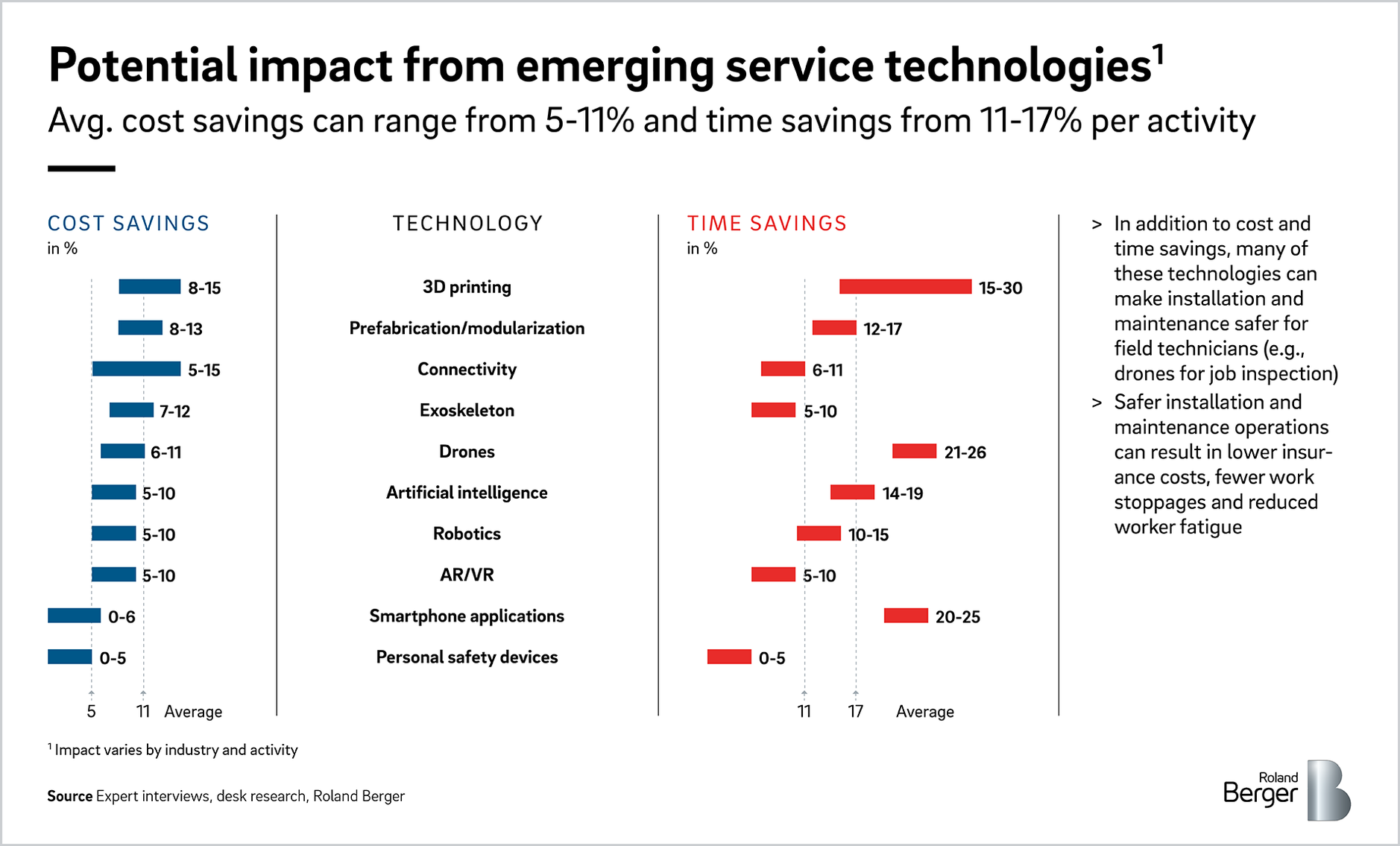
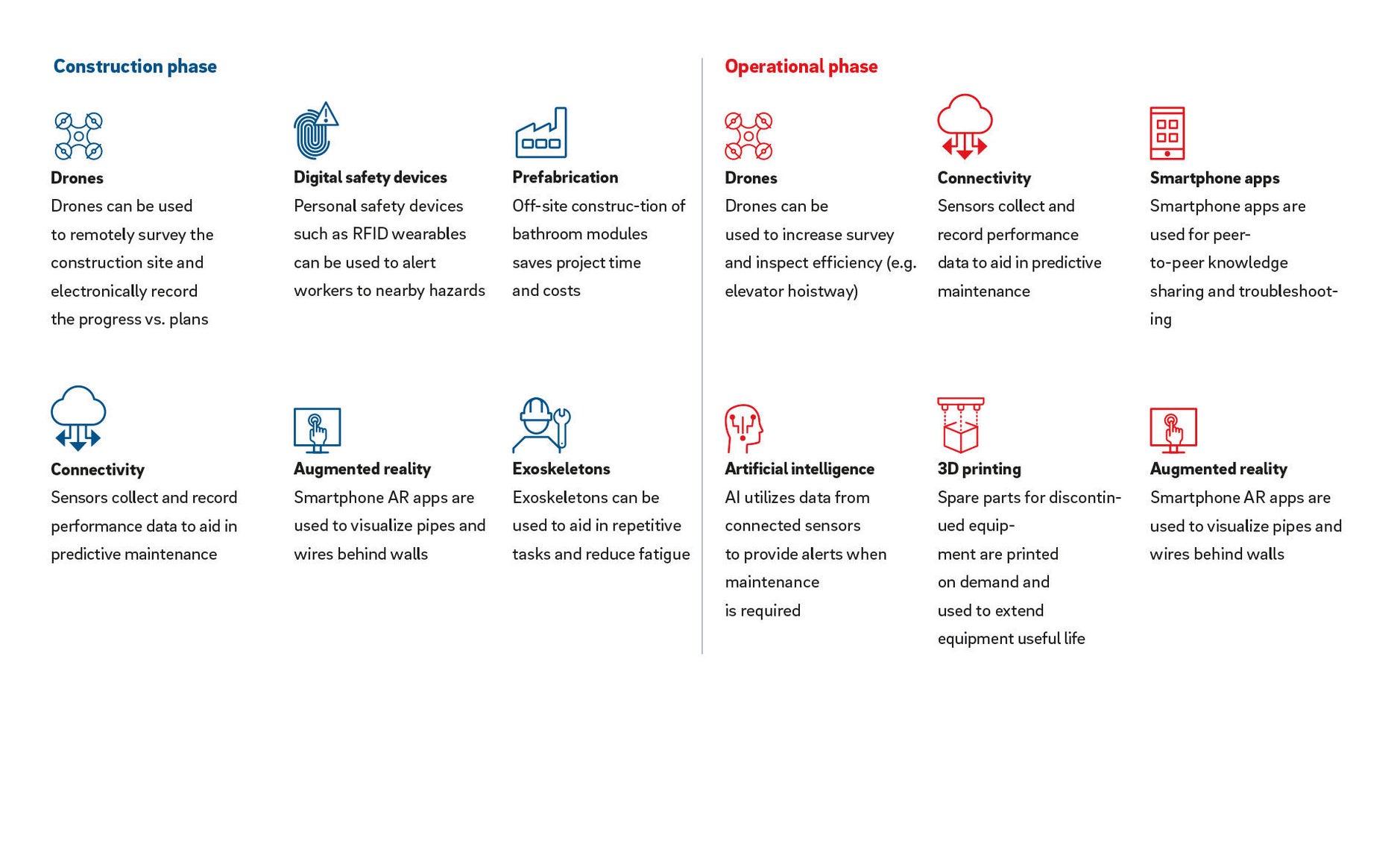
Implementing these emerging technologies will have both beneficial and challenging implications for OEMs. Increased technician utilization rates, increased equipment uptime, service performance improvement, and reduced inventory working capital are some of the benefits and advantages that OEMs can look forward to. As a result, however, companies will be challenged with an increased need for specialized training for their existing workforce. Current processes and procedures will also need to be adapted and updated to keep pace with these emerging technologies.
Technician utilization rates will increase
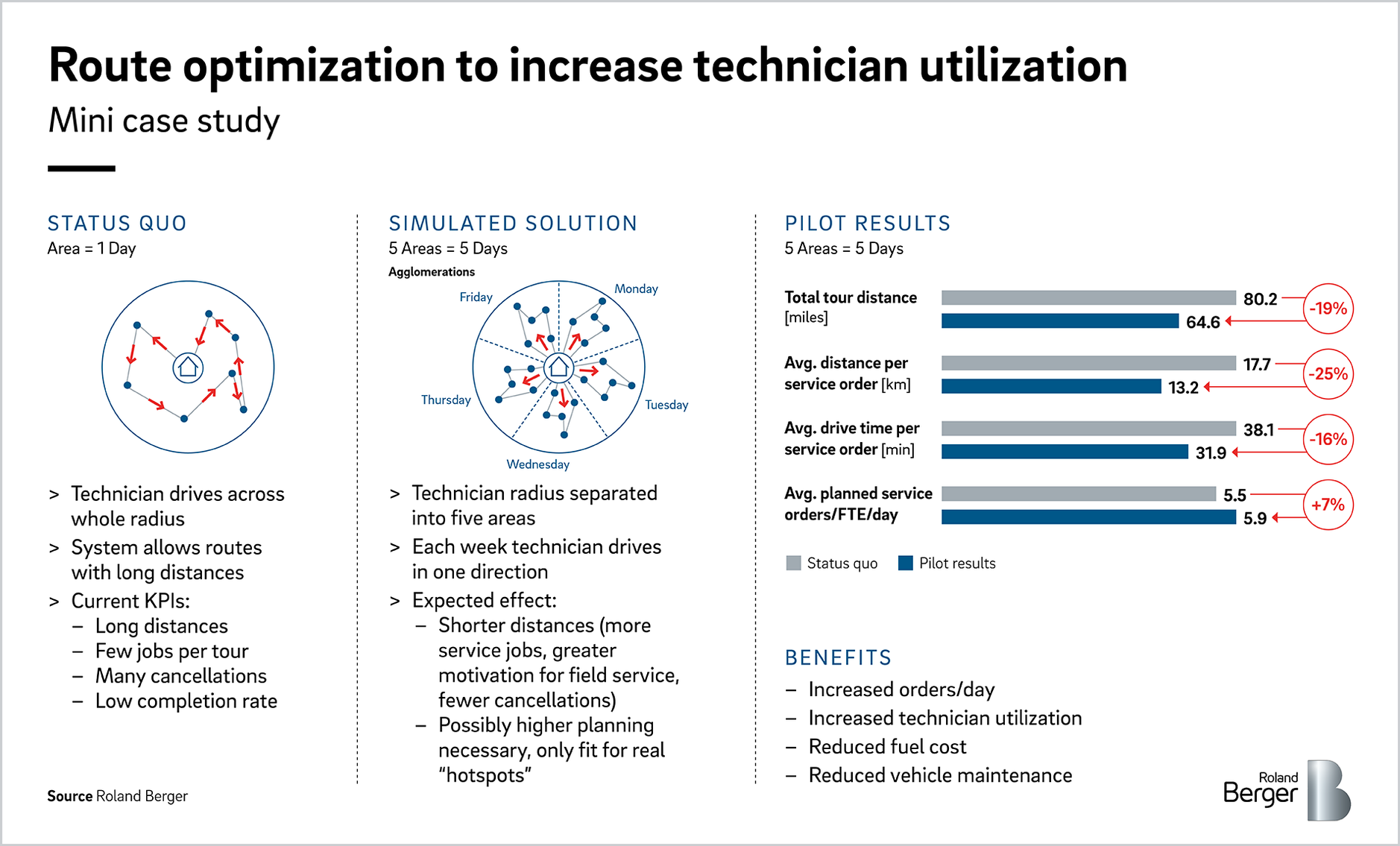
The use of artificial intelligence, big data, and smartphone applications to optimize the daily work schedules and travel routes of service technicians in the field will result in higher worker utilization rates, creating a reduction in overall service workforce and significant savings for OEM service organizations. The use of artificial intelligence and big data to remotely monitor equipment and then predict equipment failure rates means deploying technicians only when necessary and knowing in advance which parts of the equipment need service, repair, or replacement.
Equipment uptime will rise
Equipment utilization rates will improve due to remote monitoring of equipment and AI-based predictive maintenance. This means equipment will be serviced prior to failure in the field and any knock-on effects to adjacent parts and systems will be avoided. This may also have the added benefit of increasing customer loyalty as equipment uptime could become an important competitive differentiator.
Installation and service performance will improve
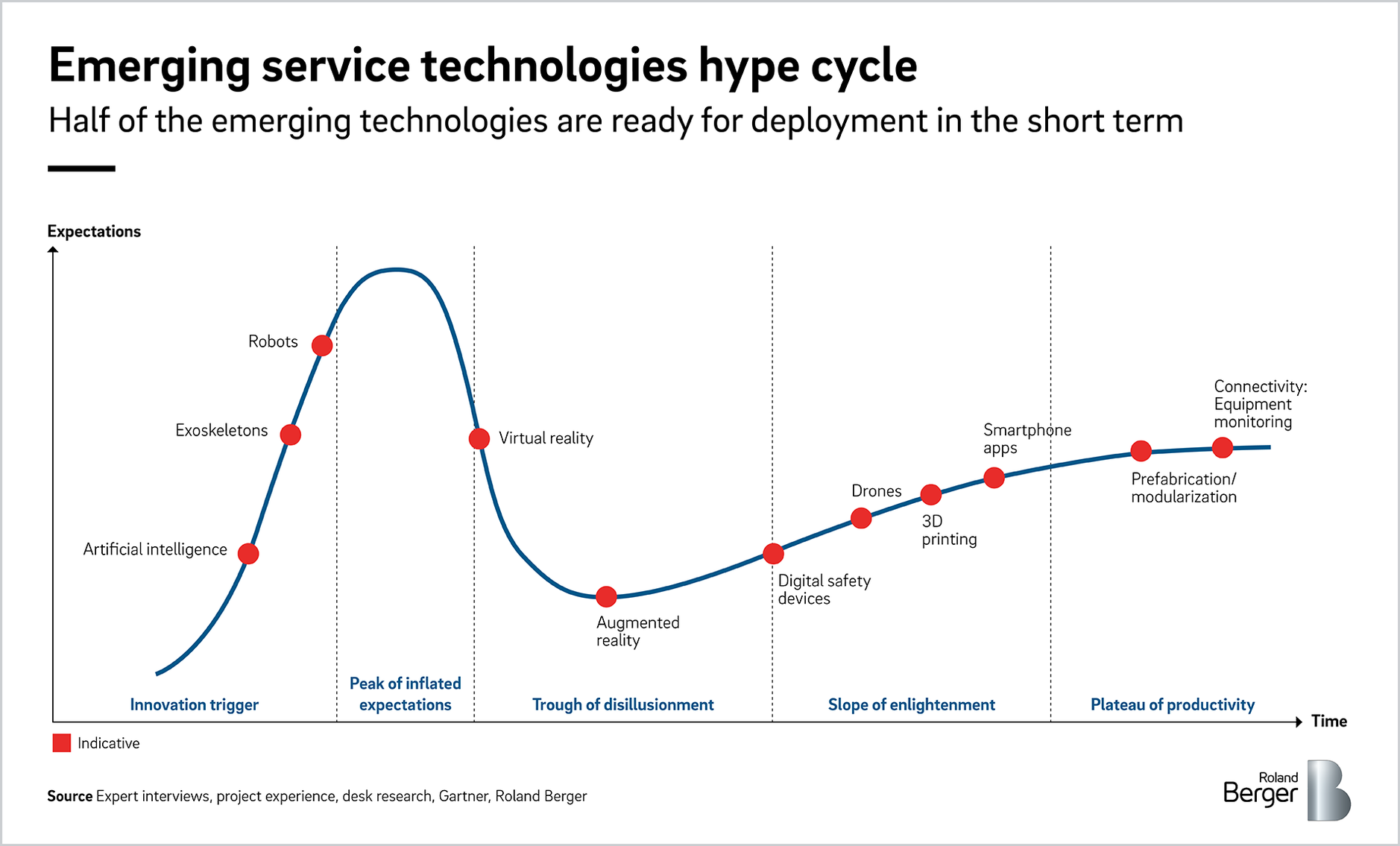
The overall installation process can decrease in cost and time with the use of prefabrication and modularization of equipment. Smartphone peer-to-peer networking apps will enable technicians to share knowledge in real time, resulting in reduced errors during installation and service activities. Service will become more efficient using augmented reality tools on tablets and visors, enabling technicians to visualize the inner workings of equipment to pinpoint problem locations before opening equipment panels, access panels, or walls.
Reduced spare parts inventory working capital
3D printing spare parts will enable the service supply chain to manufacture discontinued components as needed basis, reducing working capital tied up in inventories. The useful life of equipment in the field will increase while dependence on the traditional supply chain for spare parts will decrease, especially for older equipment in the field.
The existing service workforce will need training
Technicians and service teams will need to be trained to use these emerging technologies i.e., smartphone apps, drones, and digital safety devices). Over time, training will also need to be updated to include virtual and augmented reality tools. Current installation processes and procedures, along with project schedules and tasks, will need to adapt to incorporate these new technologies. The positive side of retraining the workforce to use these new technologies could result in reduced technician fatigue as new technology decreases the physical strain of installation and service.