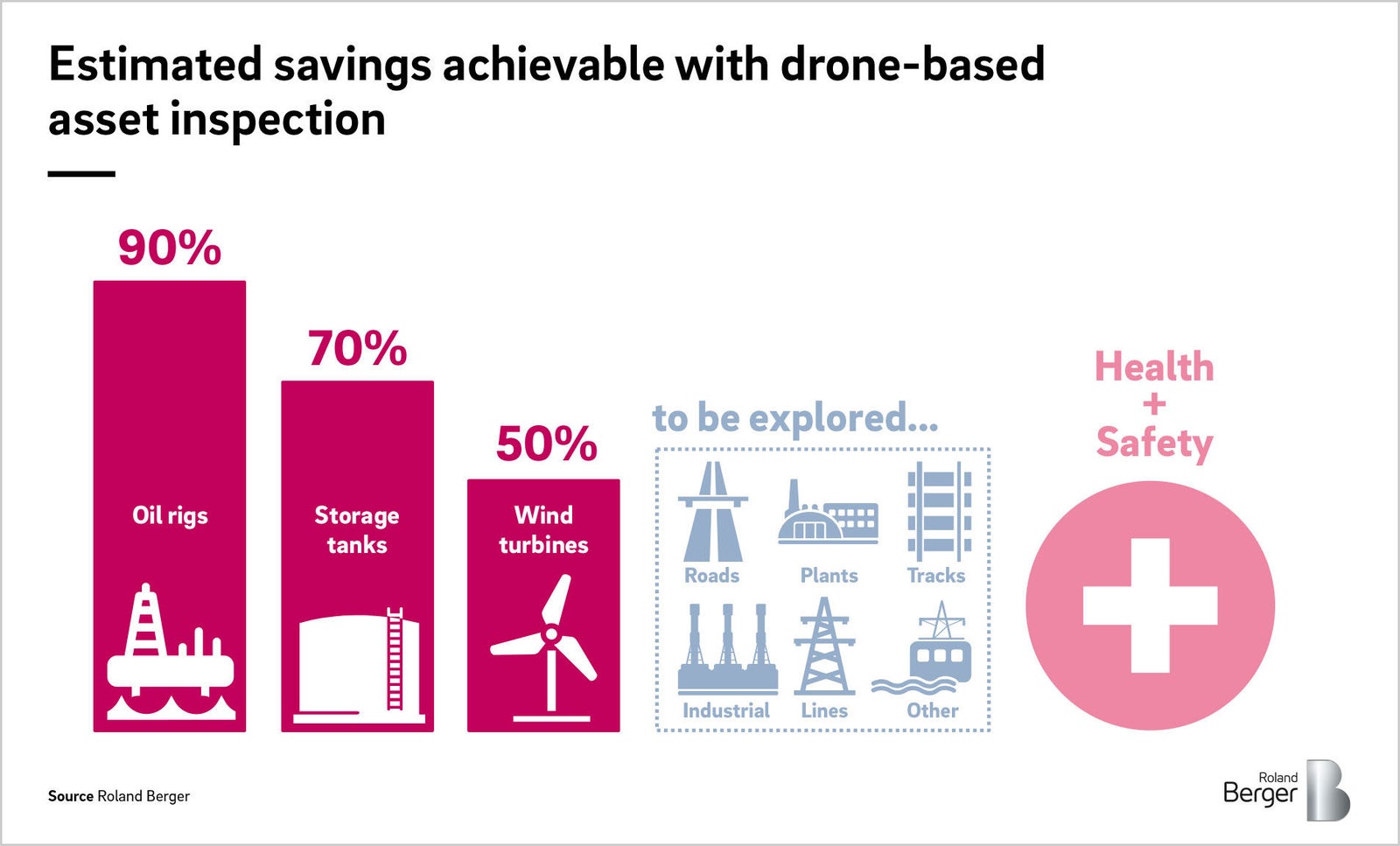
Oil rigs, chimneys or antennae – a company's large infrastructure assets are typically remote and difficult to survey. This makes the tried-and-tested method of manual maintenance inspection a costly, time-consuming and sometimes even dangerous process.
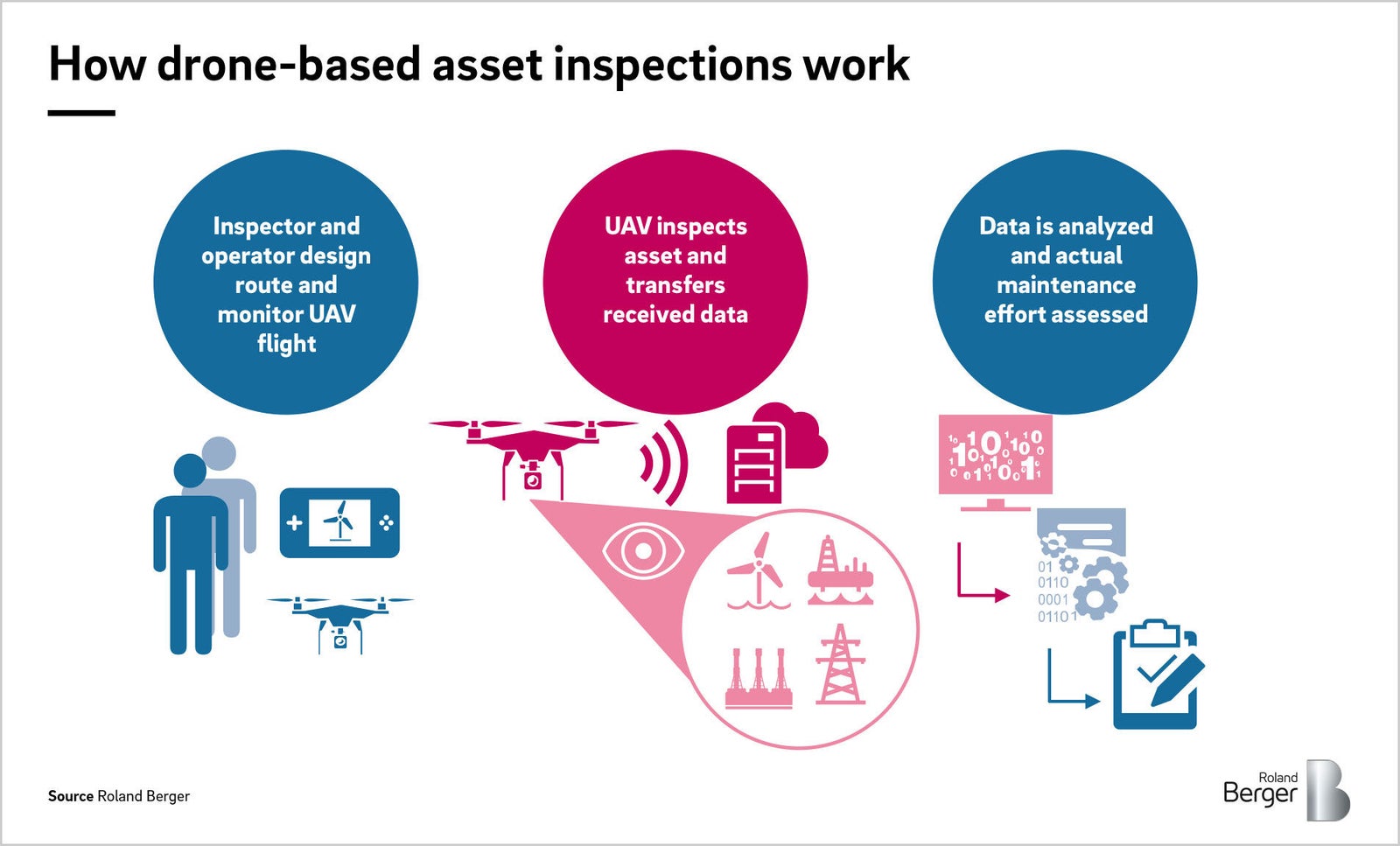
But with drones, it doesn't need to be this way. The principle is simple: Instead of a technician climbing up a chimney or wind turbine, why not use a drone armed with a camera to beam footage to an experienced inspector? Or better still, kit out the device with advanced visual and data analytics capabilities and let it assess the asset's status and maintenance needs itself.
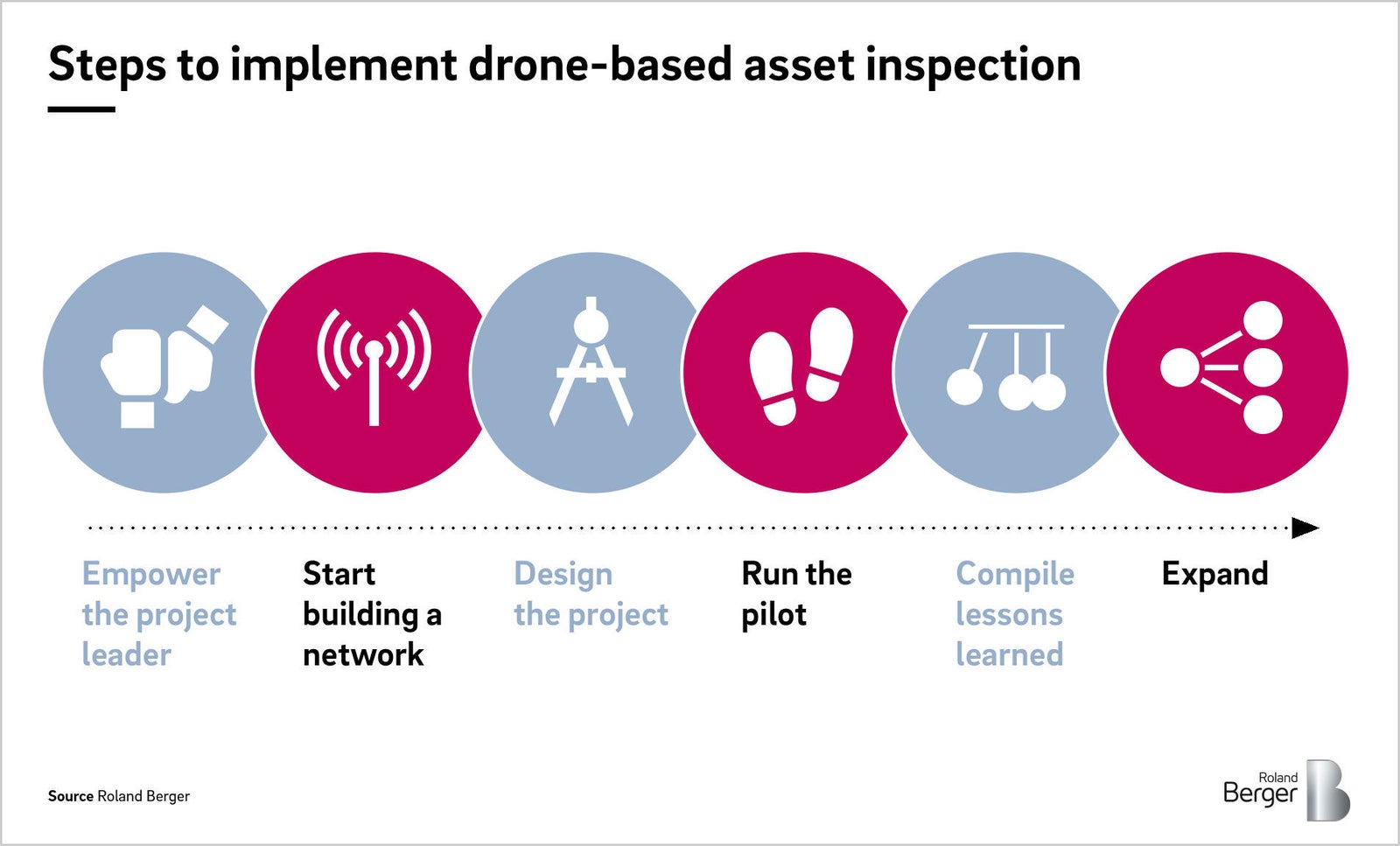
Unmanned aerial vehicles (UAVs) can access hard-to-reach places faster, cheaper and with less risk than manual inspections, and potentially allow the asset to remain on line. They may one day also be able to carry out maintenance. In this report, we outline the advantages of drone technology and provide a pathway for decision makers who want to harness its asset-inspection potential. We also show that first movers stand to reap the biggest rewards.