Winners and losers
Adjusted for average regional growth, manufacturing in traditional countries such as Germany, Japan and the United Kingdom grew at below-average rates from 2015 to 2019, partially because manufacturing value-add was shifted to lower-cost countries. Now, the shifting trend appears to have reversed. Since 2018, some 63 % of the world's largest manufacturing companies have changed (or announced changes to) their production footprint. Of these companies, 52 % have shifted production to their home or neighboring countries. The reasons most frequently cited are customer proximity, reduced supply-chain risks and increased sustainability due to reduced transport emissions. Of those companies that have changed their footprint, 70 % have built or are now building production facilities on greenfield sites, while 22 % are realizing both greenfield and brownfield site projects. The remaining one percent have either extended their existing facilities or closed sites down.
Criteria for selecting sites
Adjusting your manufacturing footprint is a major decision – indeed, it is often one of the biggest decisions a CEO ever makes, and one that can take years to fully implement. A solid basis for this momentous decision is needed, taking into account specific features of the company and its legacy production network. It is not a decision purely for the "manufacturing" side or the COO.
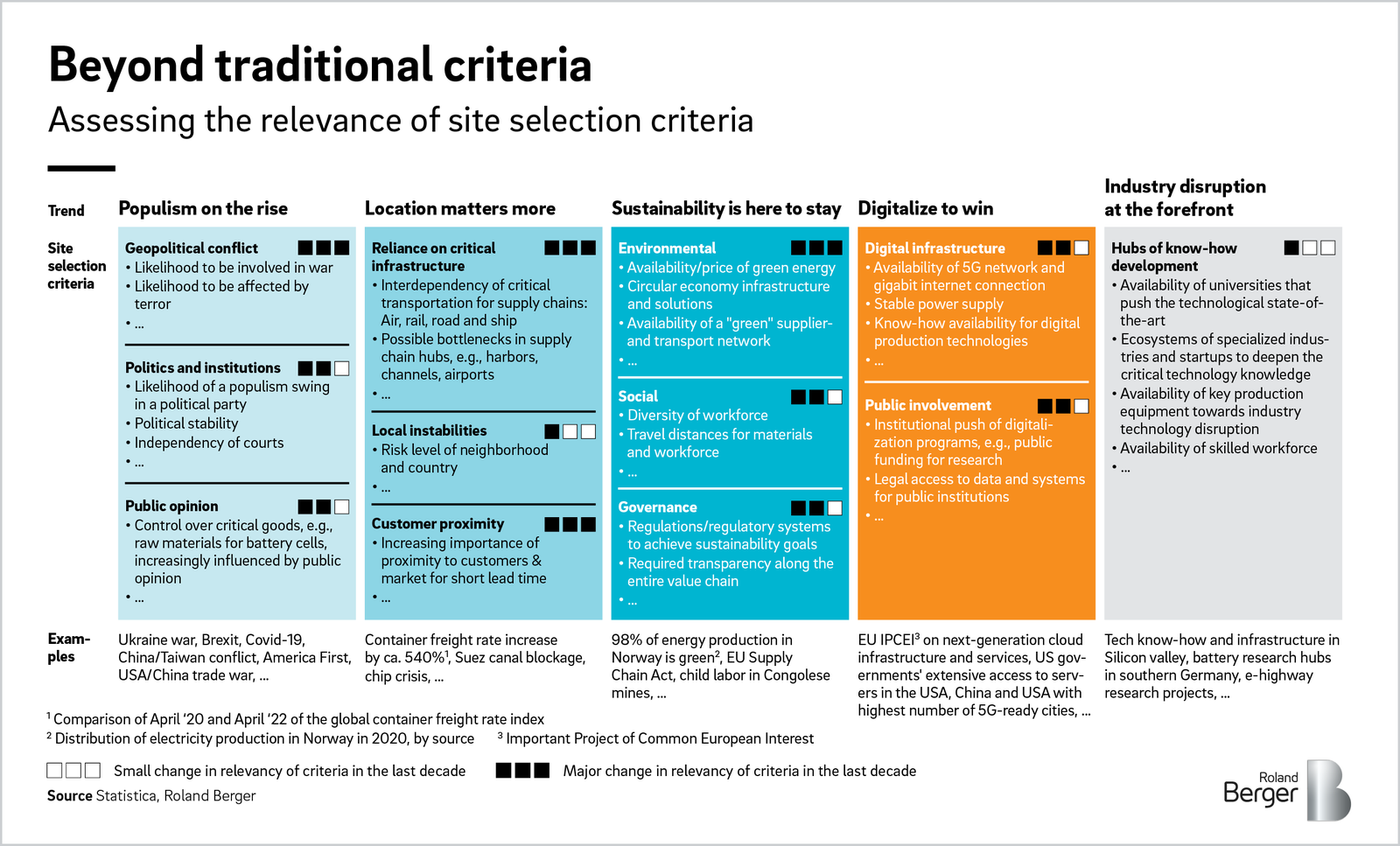
Traditional site selection criteria are no longer adequate. To broaden companies' perspectives, Roland Berger takes a wide range of site selection criteria, grouping them under the six major trends (without individualization) based on our
Next Generation Manufacturing framework
. These selection criteria, while not exhaustive, look beyond traditional factors such as costs, subsidies and labor, and include factors such as regional legislation, industry-specific trends, customer awareness, and so on. New site selection criteria should also take the company's specific position and its production legacy into account.