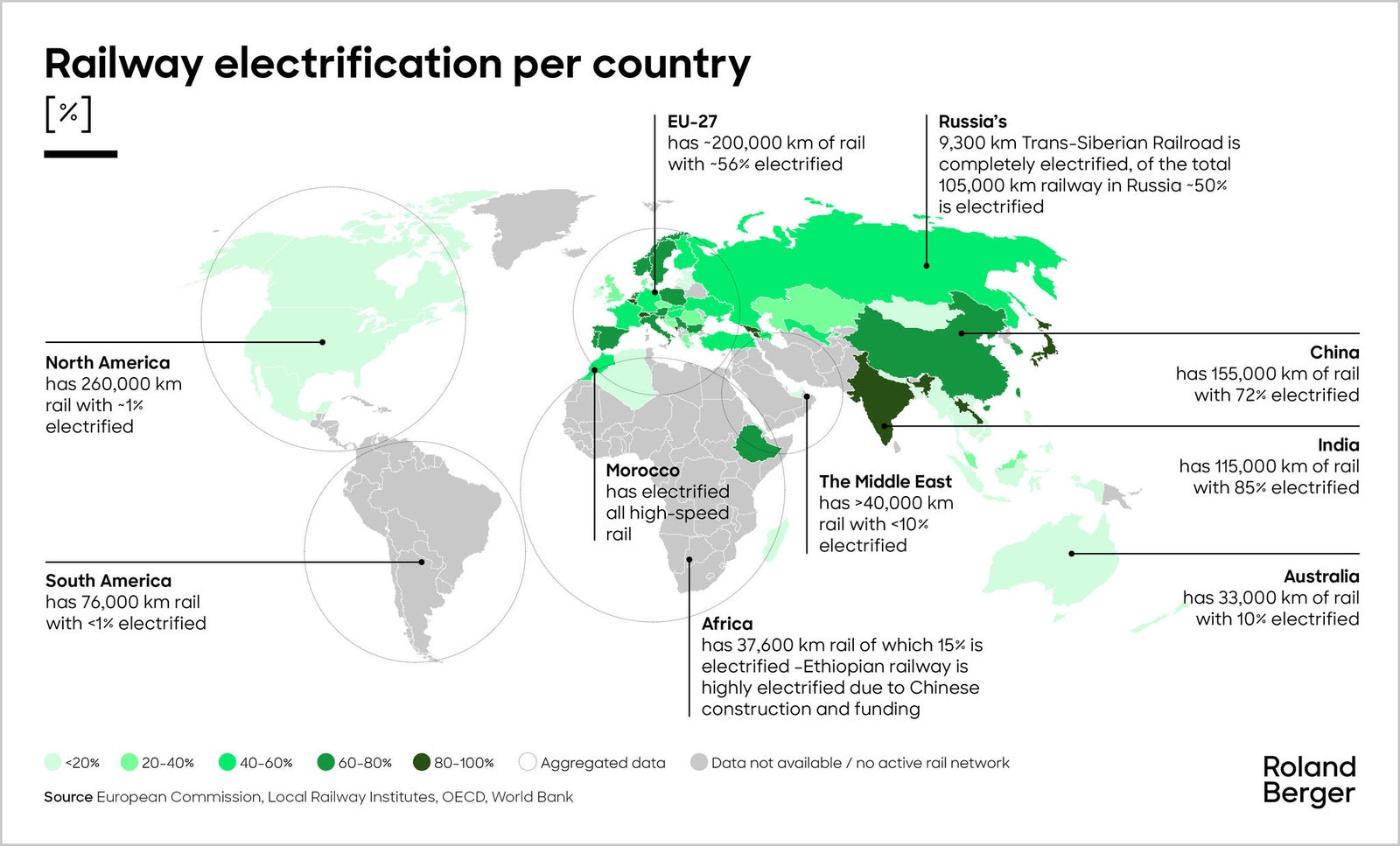
Though all trains running on zero-emission electricity using overhead catenary or third rail may seem like the ultimate goal, costs and (scope 3) emissions from construction of trains and electricity infrastructure cannot be ignored, and therefore other options may need to be explored. For certain routes or specific regions, it may be more sustainable to switch from diesel (with high CO2e emissions) to alternative fuels, such as low-emission biodiesel. Pure biodiesel can result in a GHG emission reduction of up to 90%, while train technology does not need to be updated and fuel costs are only marginally higher. Production and therefore procurement of sufficient biodiesel is currently a challenge, but acceleration is pushed by several marine and road fleet operators. Other options such as (green) methanol and hydrogen have not yet reached, and might never reach, the sufficient maturity and cost-efficiency stage to be implemented at scale. Hydrogen fuel cells are attracting significant interest, and test trains have been running, as operation is possible over long non-electrified routes, and refueling is fast. Hydrogen storage on board is still a challenge, and hydrogen production is very expensive and inefficient resulting in significant CO2e emissions from non-renewable electricity production. Battery electric trains are another reasonable option to assess, with increasing efficiencies and quickly reducing costs. The weight of batteries will continue to limit the range of the vehicles, and emissions from battery production need to be taken into account, but railroad electrification combined with batteries for hard-to-electrify parts of the network is a serious option to consider.
Station and tracks decarbonization
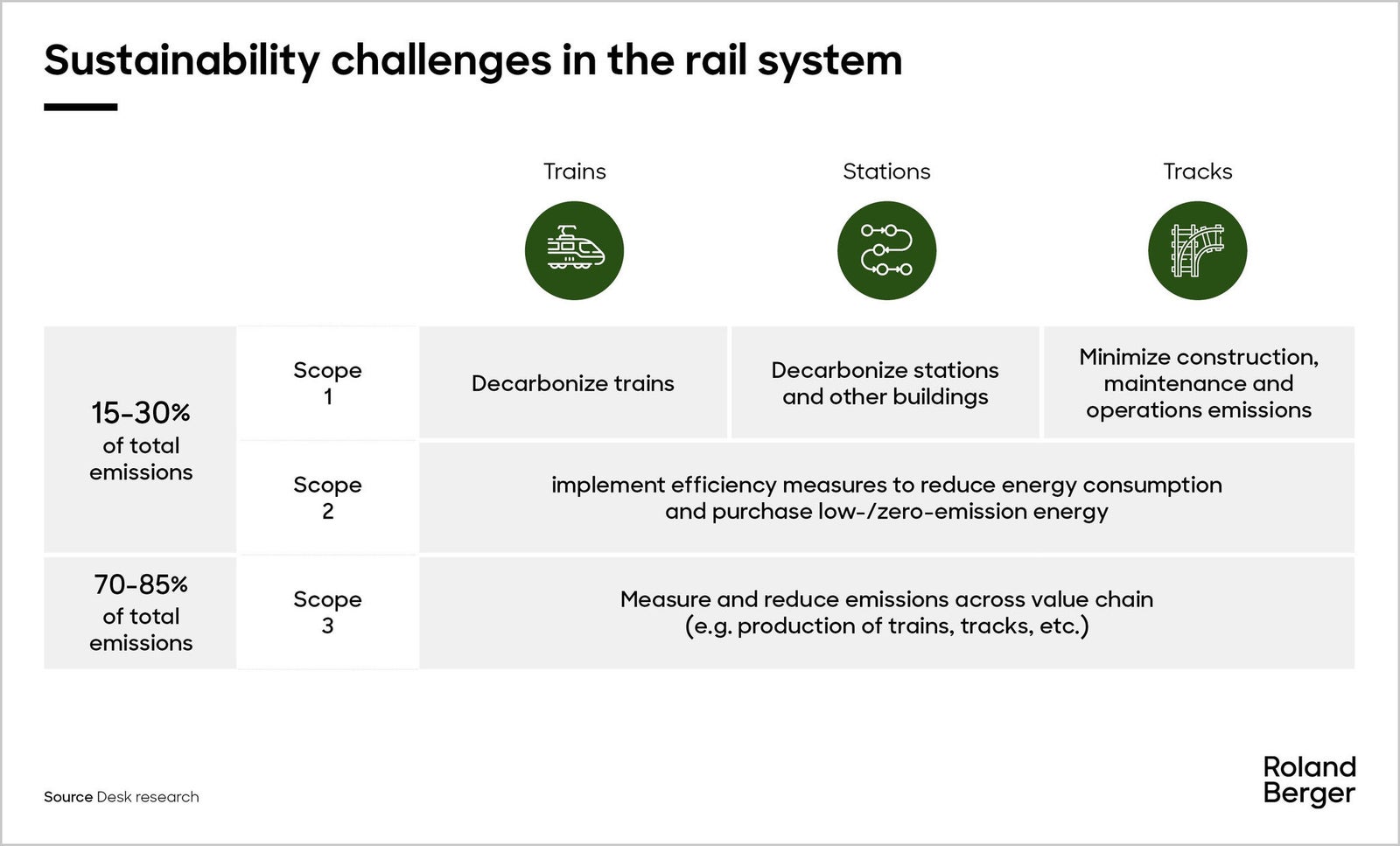
Besides the trains, it is also necessary to decarbonize the tracks, stations and other buildings. But how do we do that without disrupting operations? Roland Berger has experience with taking a systematic approach to decarbonization.
Sustainability
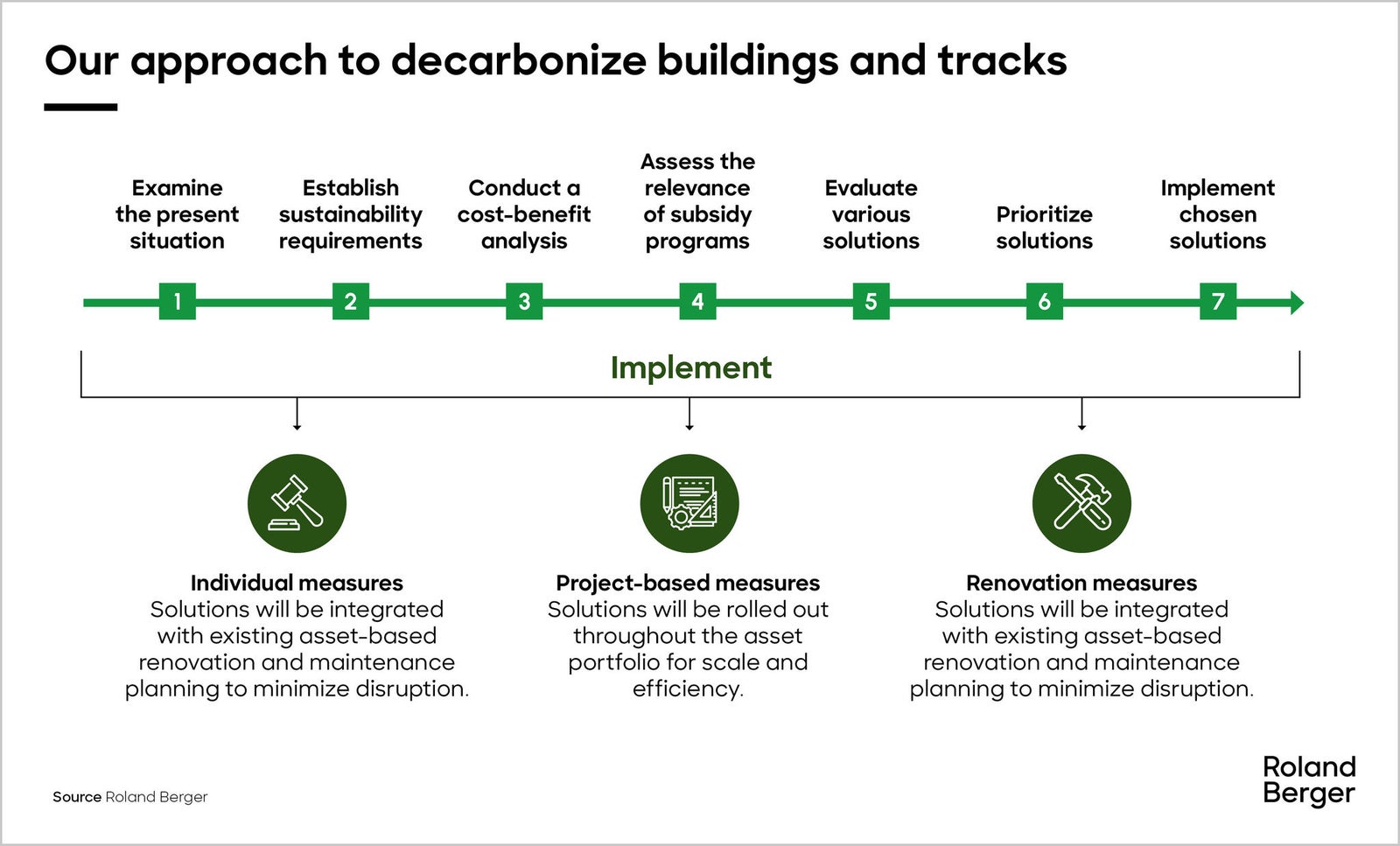
efforts should, whenever possible, align with existing renovation plans and projects to minimize (additional) operational disruptions, though mandatory measures for compliance with laws and regulations should be prioritized. The project approach as depicted in figure 3 is aimed to optimize the tracks and stations’ sustainability and operability. Depending on the current situation, the project approach and focus areas would need to be adapted. While stations generally have significant Scope 2 emissions from purchased energy with room for improvement, emission reduction measures for tracks are more focused on Scope 3 emissions from construction and maintenance.