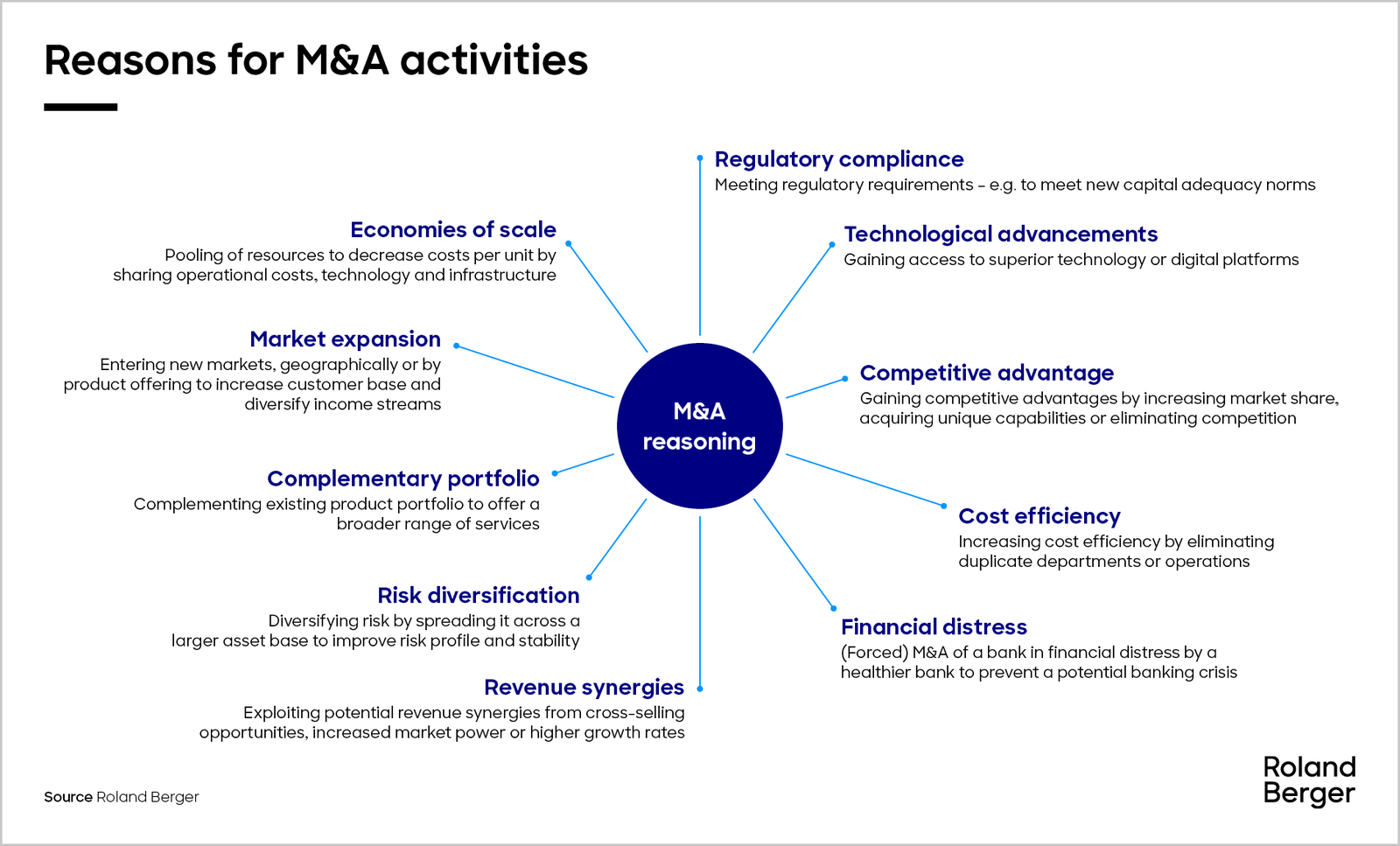
Today, M&A deals continue to shape the banking industry, driven by the need for digital transformation, compliance with regulatory changes and evolving market dynamics. The recent mega-merger in Switzerland is just one example. The strong consolidation trend and robust M&A activity is set to persist as financial institutions seek to expand their market presence, enhance capabilities, realize economies of scale, diversify risk and adapt to shifting industry demands.
The growing
M&A trend
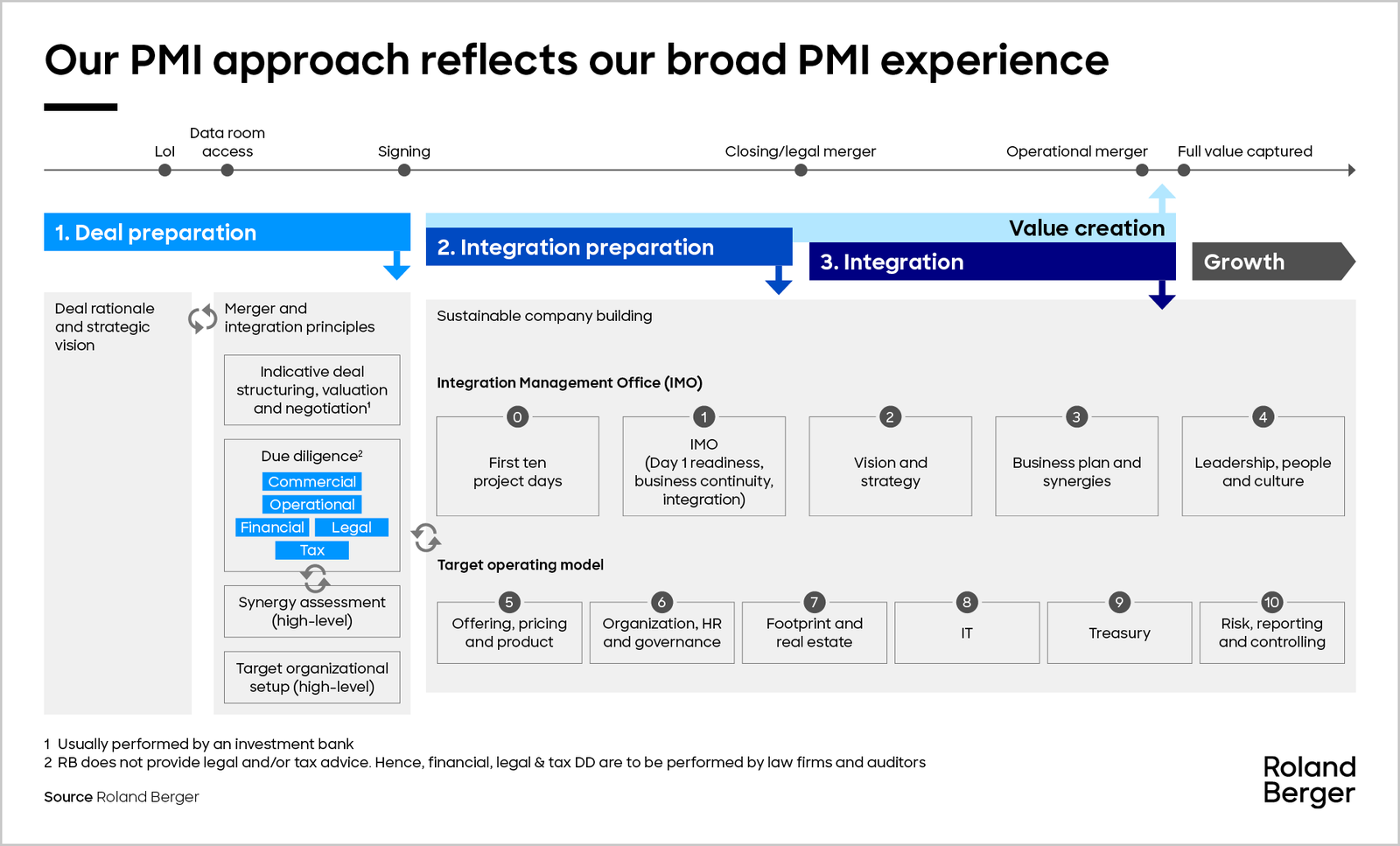
does not, however, mean that mergers are getting easier. While M&A presents significant opportunities for growth and transformation, effectively integrating the merging entities remains a real challenge. Achieving targeted synergies, aligning operations and merging corporate cultures without disrupting ongoing business activities requires a well-defined and structured approach to pre-merger preparation and post-merger integration (PMI). And there is no one-size-fits-all model – the
PMI-approach
needs to be adapted to the involved entities and their relationship, whether a merger of equals or private equity investment. Success requires a comprehensive, flexible and growth-focused PMI strategy.
In this article, we outline the key components of Roland Berger’s PMI approach for banks. Our flexible framework provides a clear and practical roadmap for the preparation and integration of a merger to master integration complexities and help banks realize the full potential of their mergers.