Procurement as a multiplier inside and outside the company
How can
Procurement
itself contribute to bringing a company's sustainability strategy to life? Does it act as a brake or an accelerator to sustainability efforts?
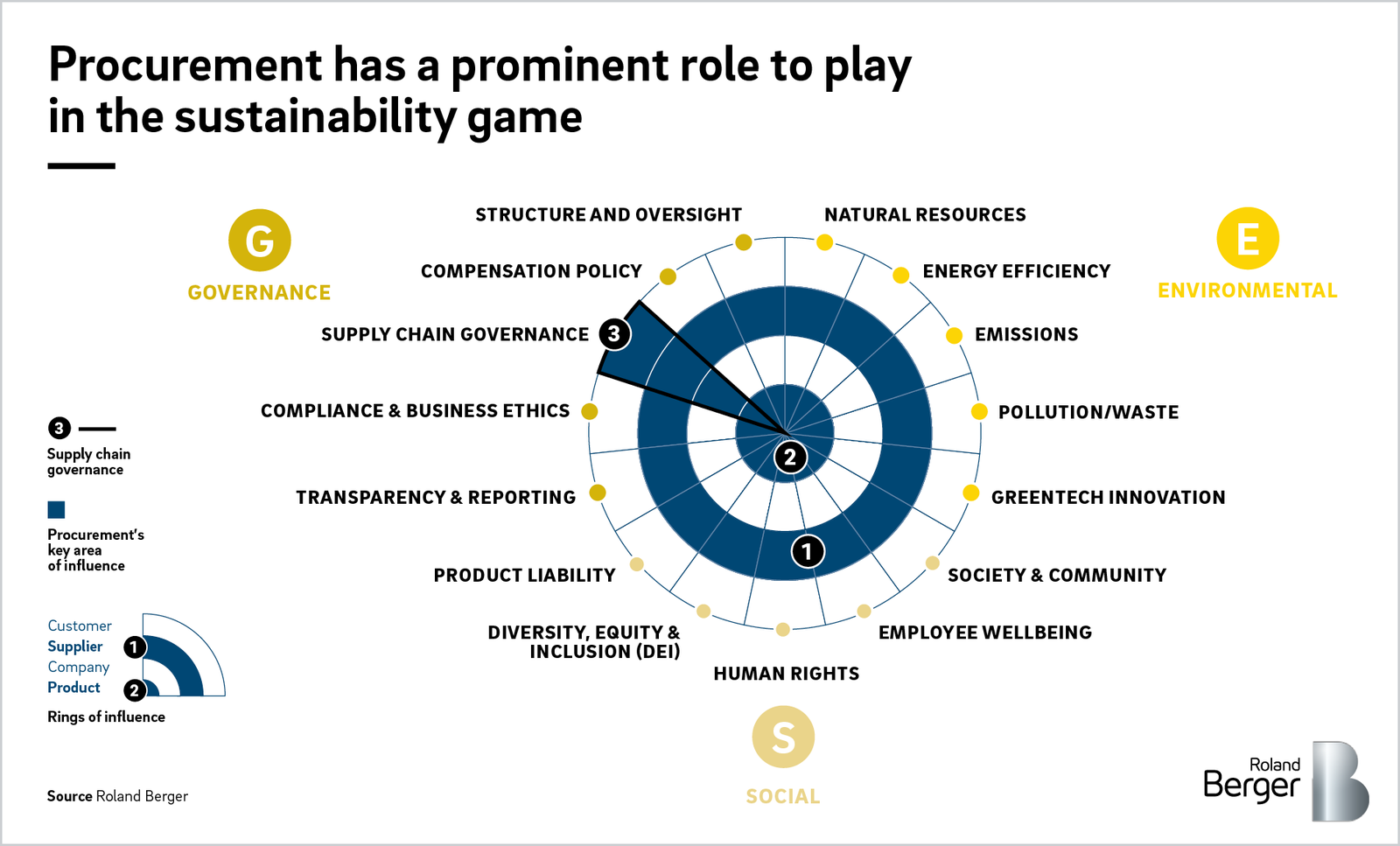
Often referred to as being at the "center of the spider's web," Procurement's role is instrumental in three ways. First, because Procurement is master of the entire supply chain, managing and controlling it via its supply chain governance role. Second, because Procurement actively drives the issue of sustainability into the supplier base through its direct interface with suppliers. And third, because Procurement is able to actively take sustainability innovations from out of the supplier base and feed them into the product development process. In doing that, Procurement makes a significant contribution to the product's design, the product's differentiation, and ultimately even the company's success.
Procurement is therefore neither a brake on sustainability nor an accelerator of it: If Procurement fulfills its role to the full and does it right, it can serve as a sustainability multiplier and a value generator for the entire company!
If you look at it from an end-to-end perspective, the job of sustainability multiplier is very extensive:
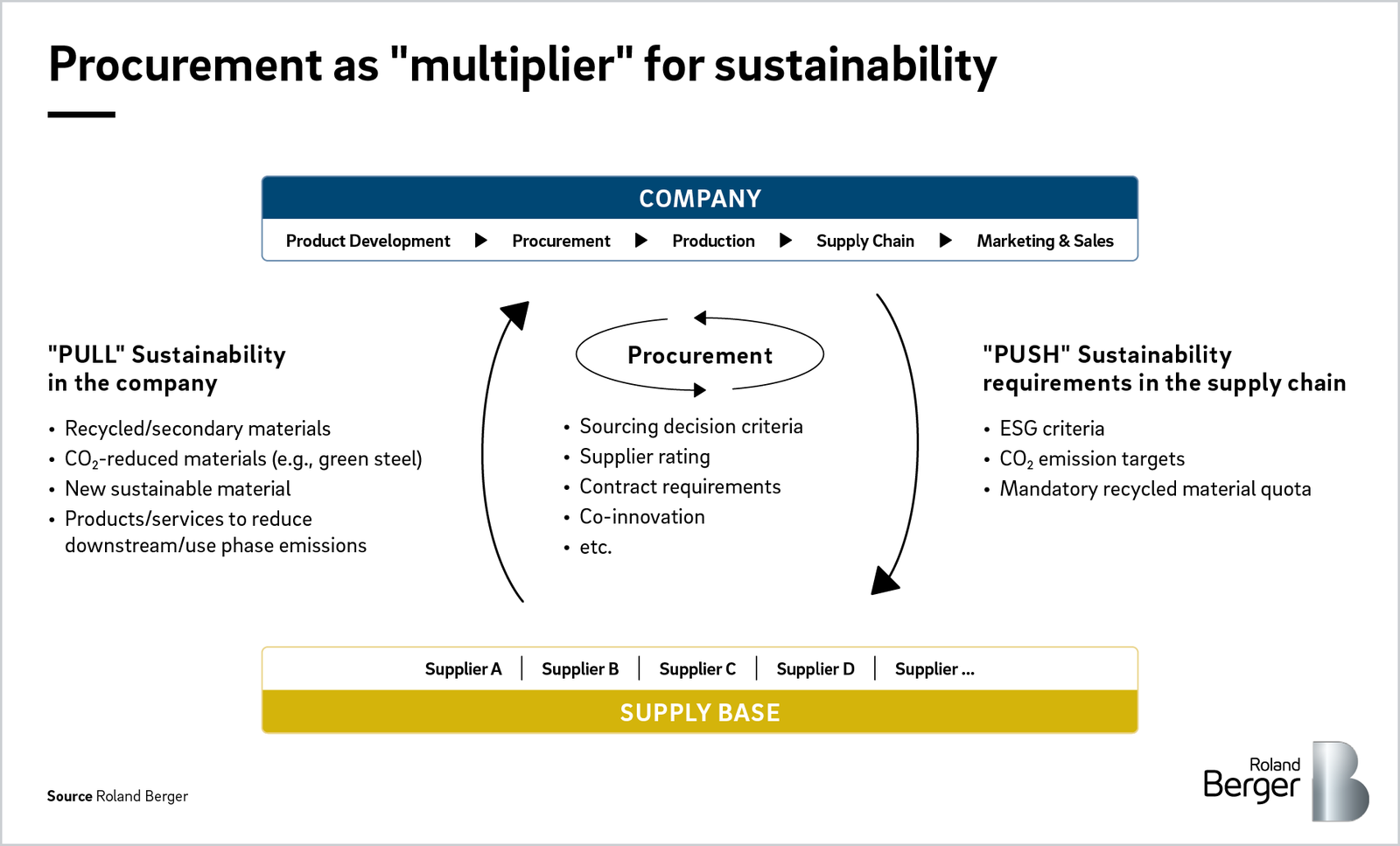
- Procurement is the function that makes the biggest contribution to a sustainable business through its supply chain governance. It does so by taking the requirements and objectives from the corporate side and building them into the criteria for supplier selection, contract awarding or supplier evaluations, for example.
- Procurement takes sustainability and multiplies it into the supplier base by conveying the requirements and targets to the supplier base and specifying, demanding and enforcing their implementation and compliance with them, or by supporting suppliers with their implementation.
- The most important of the roles of a multiplier, however, lies in stimulating and identifying sustainability innovations (such as through environmentally friendly or circular materials) on the part of suppliers so that these can then be systematically incorporated into the company and its products.