The UK's trade agreement with the EU preserved tariff-free trade for most goods. It did not, however, eliminate non-tariff barriers. Exporters now face customs declarations, rules-of-origin requirements and a range of additional administrative procedures. For an economy that still sends almost half of its goods exports to the EU, these frictions have raised costs and reduced competitiveness.
The depreciation of sterling has done little to offset these effects. Following the referendum, the pound recorded its sharpest one-day fall since 1971, declining 8% against the US dollar and 6% against the euro. It has yet to return to its pre-referendum level. Ordinarily, a weaker currency would be expected to support exports. The limited response suggests that higher trading costs and supply chain disruptions have outweighed any gains in currency devaluation.
The
service industry
presents a more positive picture. UK service exports have expanded strongly since Brexit, reflecting the country's longstanding comparative advantage in sectors where cross-border trade faces fewer barriers. According to the ONS, telecommunication and intellectual property exports more than doubled since 2022. That growth appears to reflect the continued expansion of the global services economy rather than any direct benefit from Brexit.
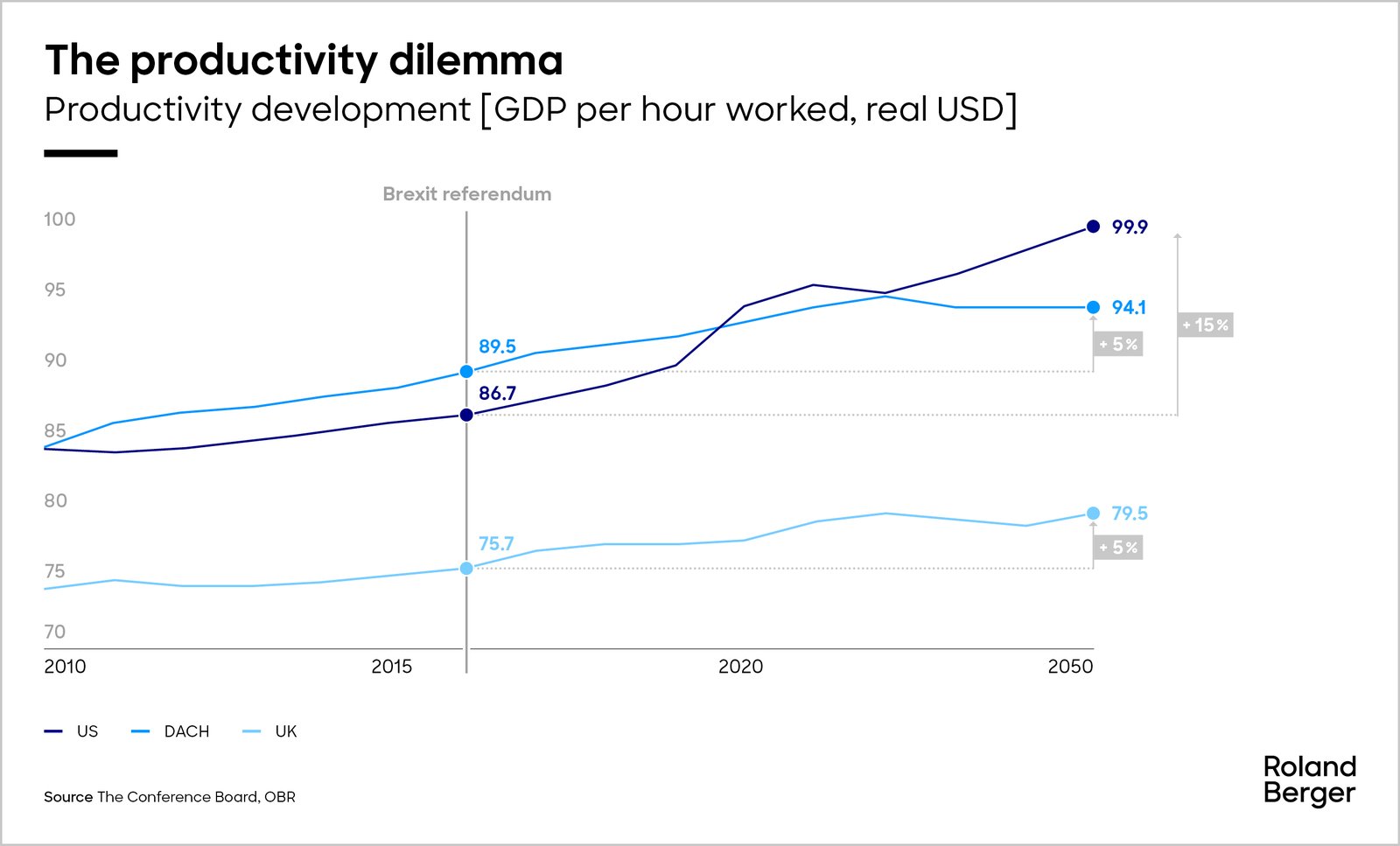
Productivity remains a more persistent concern. The UK continues to underperform both the EU average and, more significantly, the US, where productivity growth has remained substantially stronger. In 2025, an hour worked generated almost USD 100 of output in the US, compared with around USD 94 in the DACH economies and USD 79.50 in the UK. The Office for Budget Responsibility (OBR) estimates that Brexit will reduce long-run UK productivity by around 4%, largely because lower trade intensity limits competition, investment and the diffusion of new technologies.