Trade is the second biggest line item in the P&L for most consumer goods manufactures and accounts for up to 30% of total revenues, which makes these common mistakes so costly, according to new Roland Berger research.
Introduction: The implications are huge
For most consumer goods companies, trade spending is a big deal. As much as 30% of gross revenue is spent on trade activities, second only to the cost of goods sold. As a significant portion of the overall marketing mix, trade spending is a key lever to drive top-line growth. But make a mistake or get overly complacent, and trade can become a drain on profitable growth.
Many CPG companies struggle to improve the effectiveness of their trade investment for three key reasons: fear of lost sales that might result from changing “Entitlement” retailer programs, comfort with the status quo and shying away from hard conversations with buyers, and limited access to reliable data that people can trust for decision-making. Because of this, many companies are hesitant to make significant changes to their trade funds architecture or spending approach - changes that people know should be made to boost operational performance of the business.
Roland Berger has identified three very common mistakes that consumer goods companies make that limit growth opportunities:
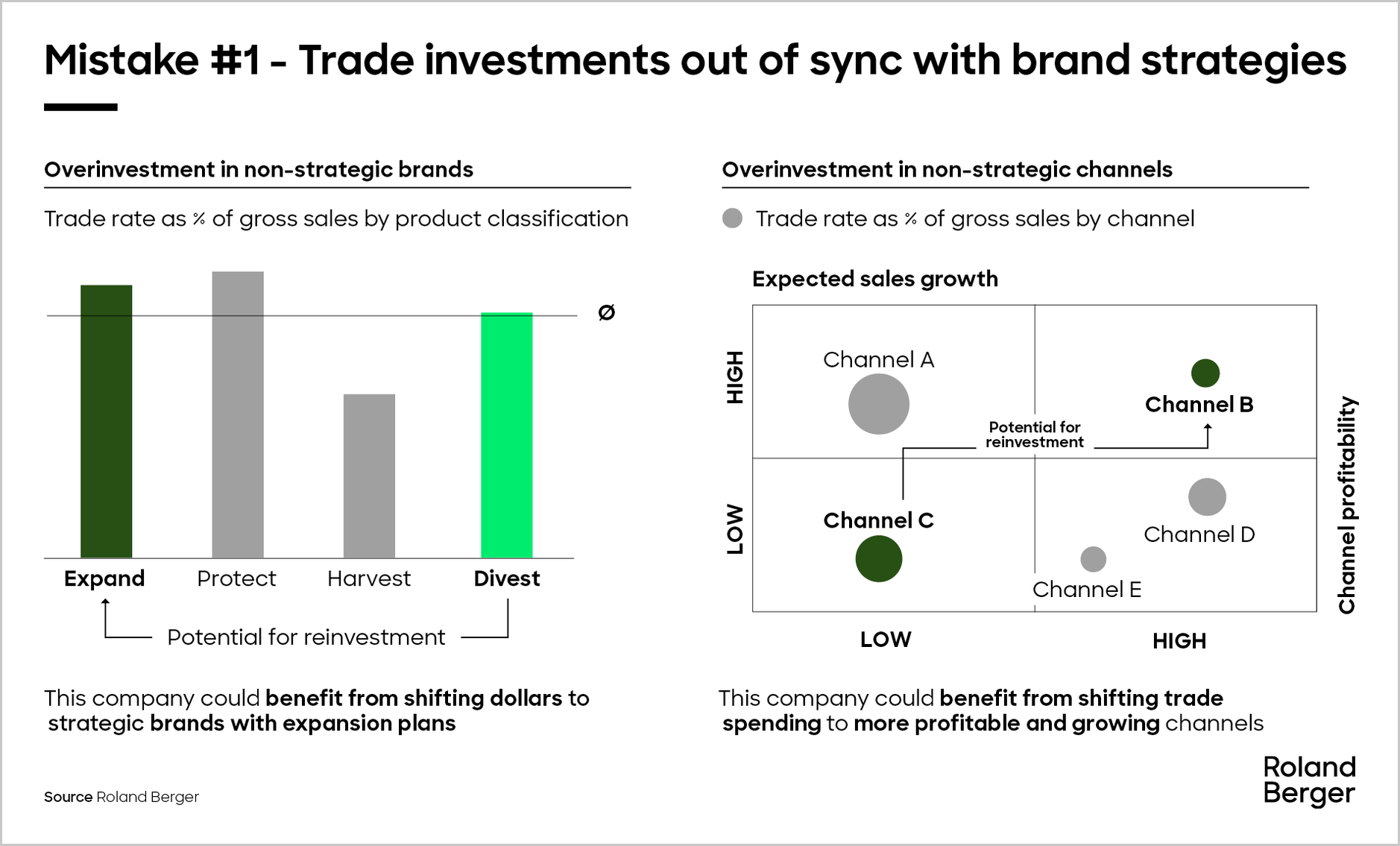
- Trade investment strategy that is out of sync with brand and channel strategies
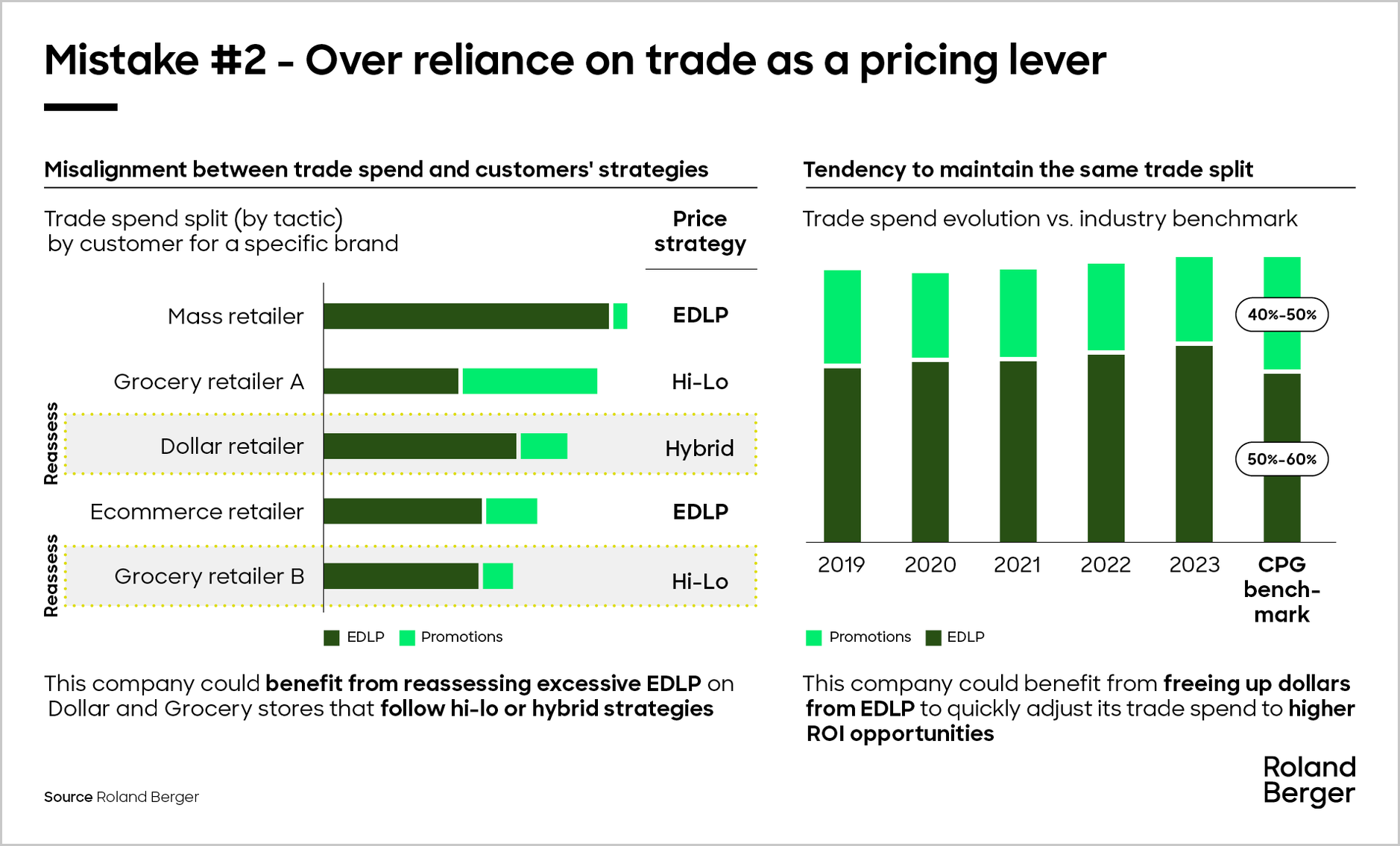
- An over-reliance on trade spending as a pricing lever
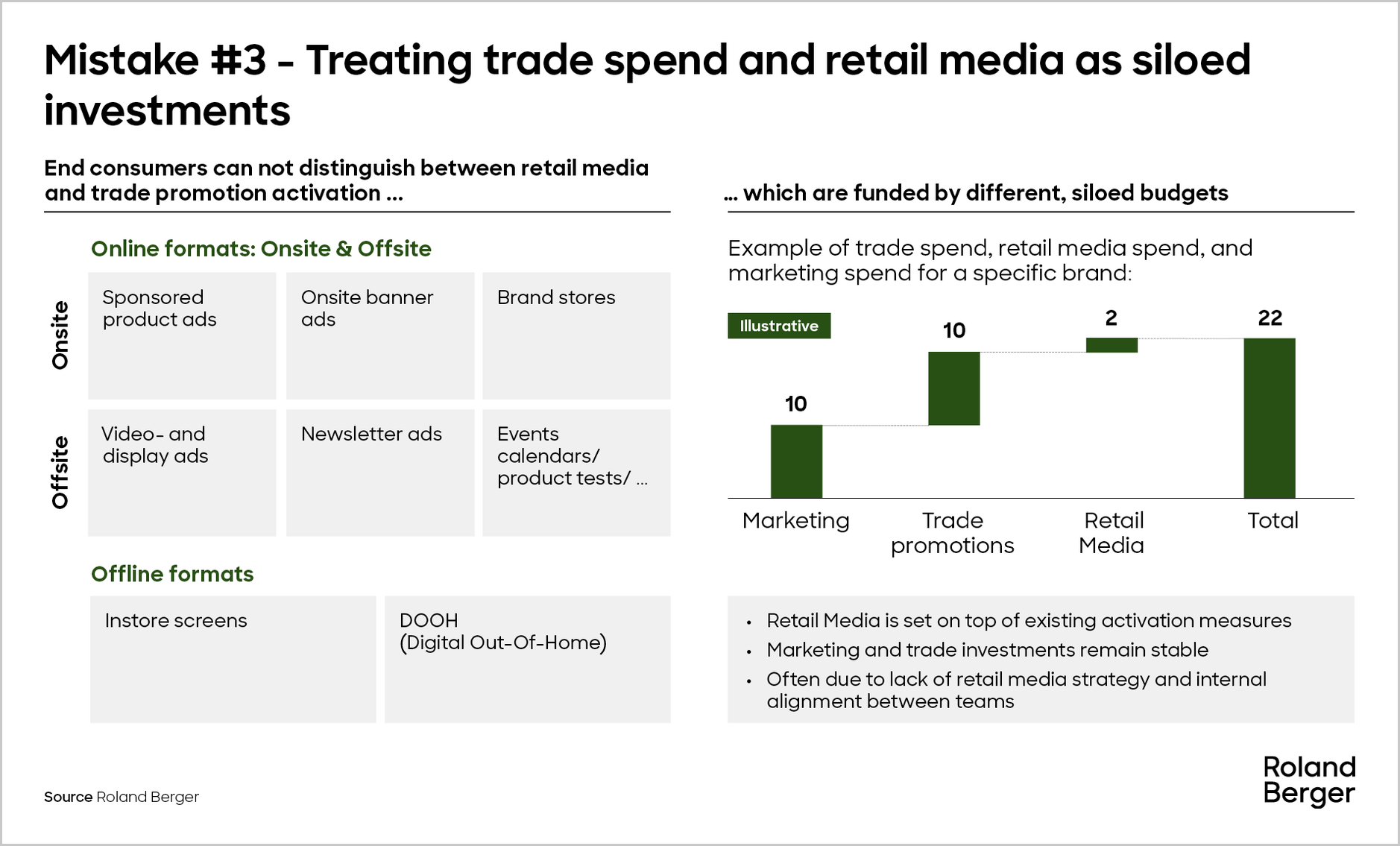
- Treating trade and retail media as siloed investments
The good news is there are proven ways to overcome these mistakes. To get there, however, you need to understand the root causes of the problems.