Case for PHM in the GCC and way forward
a. Current situation in the GCC
The Gulf Cooperation Council (GCC) health systems face various challenges, including clinical, behavioral, social, and environmental factors that impede progress in population health outcomes and elevate healthcare costs.
Non-communicable diseases (NCDs), such as diabetes, cardiovascular diseases, and cancer, are leading causes of mortality in the region. For example, diabetes affects over 18%²) of the population in Saudi Arabia, while cardiovascular diseases account for nearly 20%³) of all deaths in the UAE. Although communicable diseases like tuberculosis and hepatitis are less prevalent, they still pose risks, especially among migrant populations in countries like Qatar and the UAE.
Behavioral factors significantly contribute to the rise of NCDs. Poor dietary habits, low levels of physical activity, and smoking are linked to obesity, diabetes, and heart disease. Nearly 40%⁴) of adults in the GCC region are physically inactive, and childhood obesity rates exceed 45%⁵) in several countries. This situation increases the likelihood of chronic diseases developing earlier in life.
Social factors, such as urbanization and changing lifestyle patterns, worsen the region’s health issues. The increased availability of fast food and processed meals, coupled with more sedentary lifestyles, is particularly prevalent in major urban areas.
Environmental factors, particularly air pollution, are also a major contributor to health issues in the region. For example, the average annual concentration of particulate matter (PM2.5) in Riyadh⁶) is estimated to be around 80 µg/m³ and 76 µg/m³ in Doha⁷), more than three times the World Health Organization’s (WHO) recommended limit of 25 µg/m³. The high levels of PM2.5, along with similar air quality issues in cities like Riyadh, greatly increase the risk of respiratory diseases such as asthma and chronic obstructive pulmonary disease (COPD).
Together, these clinical, behavioral, social, and environmental factors are driving healthcare costs higher. In the GCC, the current health expenditure (CHE) is estimated to have grown at a compound annual growth rate (CAGR) of 9.5% from 2020 to 2022, reaching USD 104 billion⁸). It is expected that this expenditure will increase further to USD 135.5 billion in 2027. To tackle these challenges, a comprehensive PHM approach is needed, focusing on prevention and long-term health outcomes.
b. Emerging PHM efforts in the GCC
In recent years, GCC countries have begun to embrace PHM initiatives, driven by a unique combination of regional health trends, economic goals, and demographic factors. These include the prevalence of NCDs such as cardiovascular diseases, obesity, and diabetes, which rank among the highest globally. Additionally, the rising costs of healthcare—exacerbated by NCDs, an aging population, and inflation—are a significant concern. There is also a pressing need to improve healthcare access in remote and rural areas. Furthermore, the GCC must manage the health of a large expatriate population alongside local citizens. Moreover, the region faces unique challenges during mass gatherings, particularly in Saudi Arabia during the Hajj and Umrah seasons, which require robust health management strategies. These factors collectively underscore the critical need for effective PHM systems in the region.
GCC countries have made progress in implementing components of PHM, particularly in addressing key health challenges such as NCDs and promoting healthier lifestyles. For example, Saudi Arabia's Vision 2030 emphasizes preventive health measures, including large-scale screening programs for diabetes and hypertension aimed at early detection. Similarly, national health campaigns in the UAE encourage residents to engage in daily physical activity to reduce the incidence of chronic diseases.
These initiatives often focus on specific health issues instead of adopting a fully integrated PHM model. Preventive health measures typically target individual conditions rather than acknowledging the interconnectedness of clinical, behavioral, social, and environmental health determinants. While this approach may yield short-term results, it falls short in creating a coordinated system for long-term and sustainable health management.
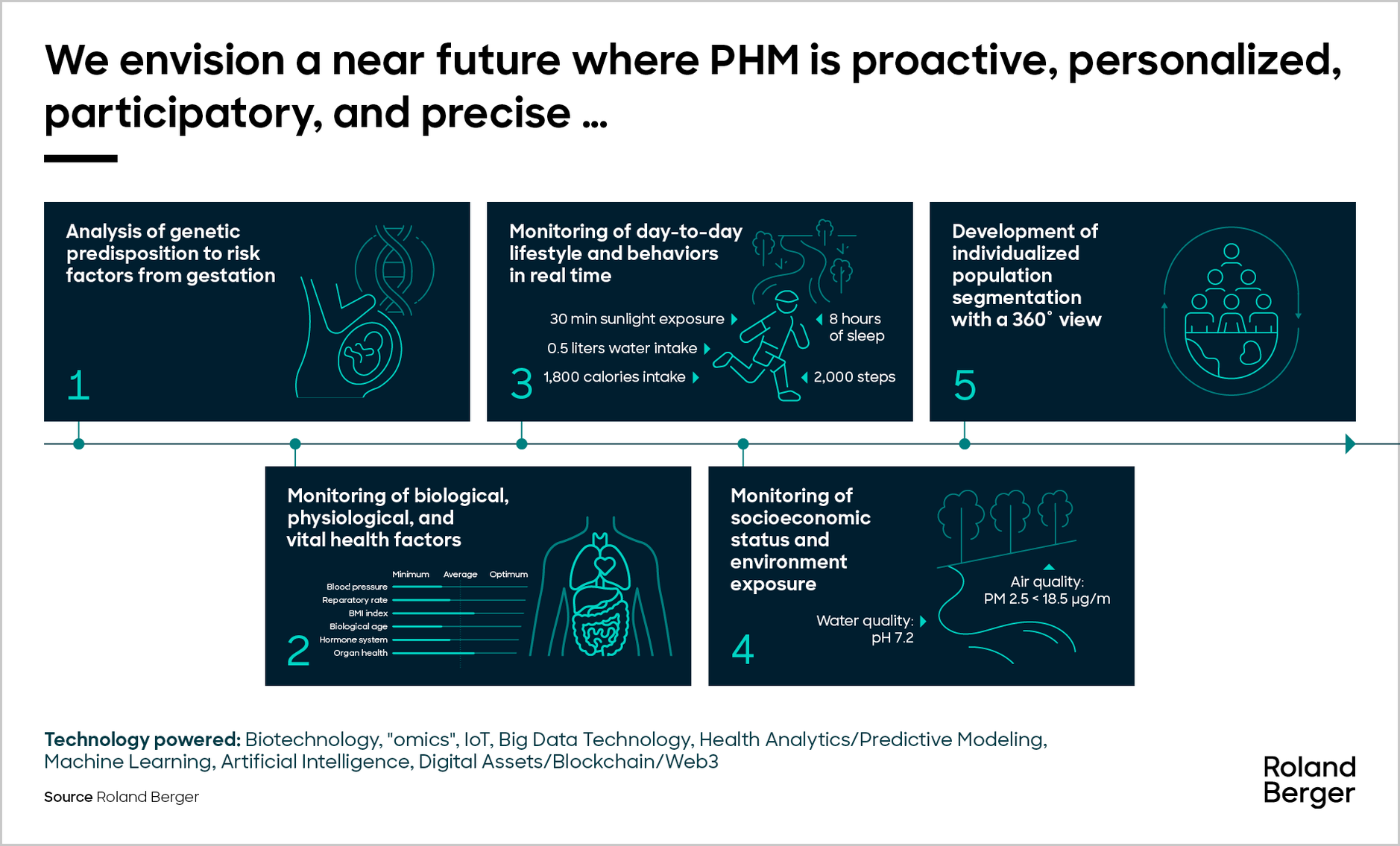
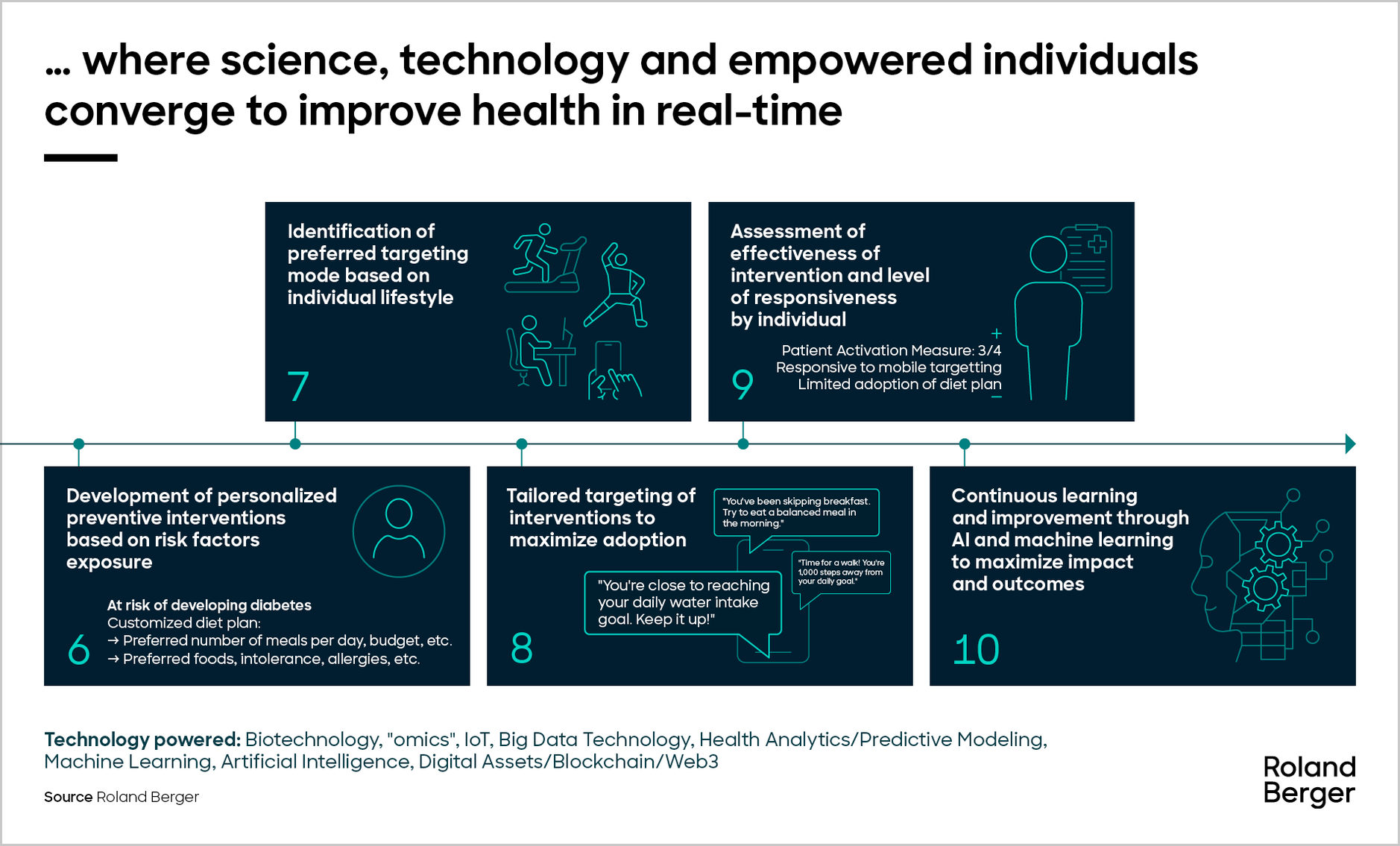
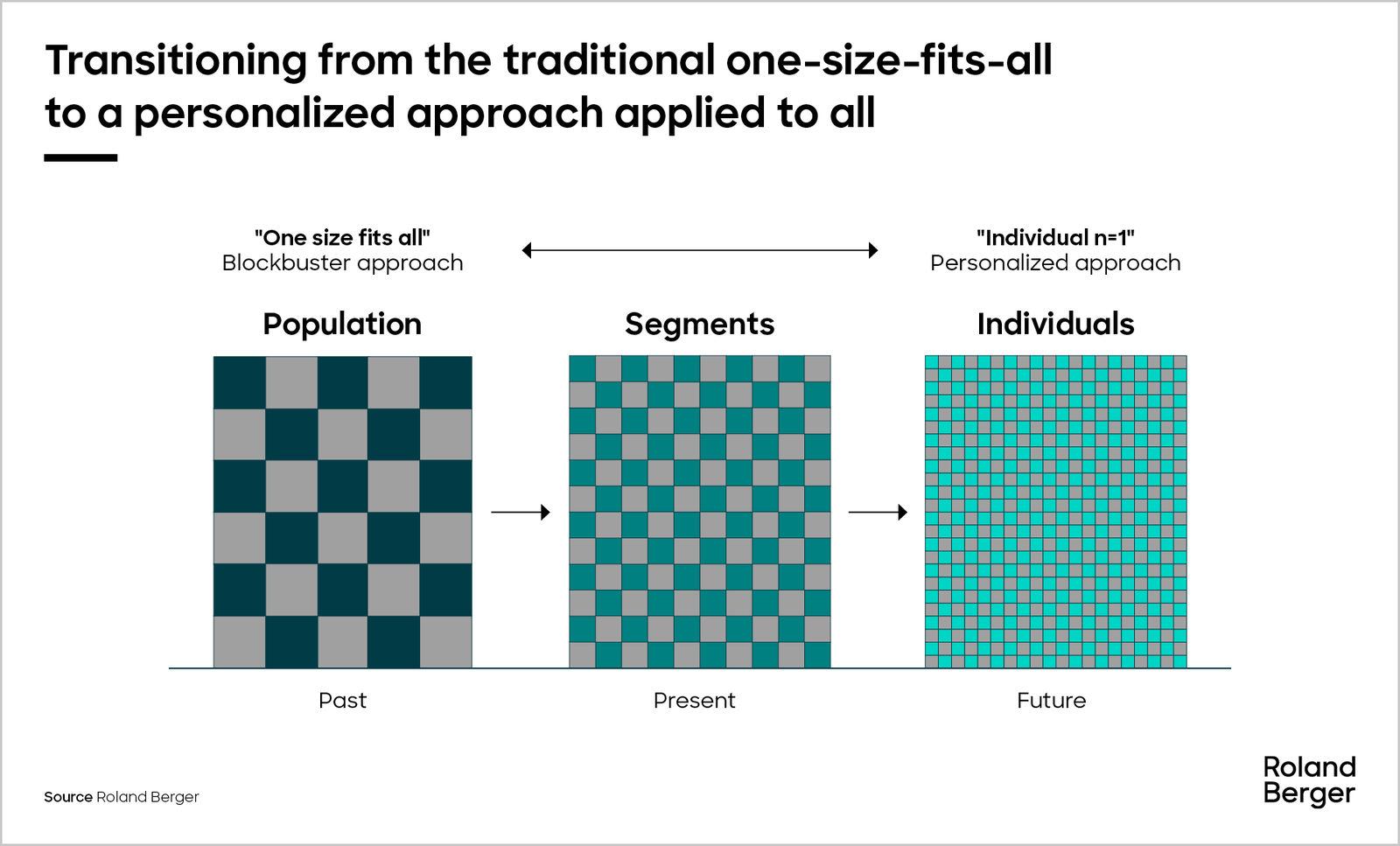
GCC countries can transition from isolated public health interventions to a proactive, comprehensive, data-driven population health management model that integrates prevention, personalized care, and health management.
c. Way forward to fuel PHM transformation in the GCC
Implementing a successful PHM model in the GCC requires several key enablers, including regulatory reforms, infrastructure development, technology integration, and a shift in mindset. To establish a comprehensive PHM model in the GCC, it is essential to address several critical enablers:
- Policy and regulatory support: Developing policies that promote value-based care, population health management, and secure and integrated health data sharing across the healthcare ecosystem
- National health governance: Designing data and clinical governance structures that align public and private key health ecosystem stakeholders to support cohesive PHM strategies
- Funding and investment mobilization: Structuring financial incentives, redesigning payment models that integrate population-level health outcomes, and fostering public-private collaborations to drive innovation and accelerate the adoption of PHM solutions
- Underlying data and technology infrastructure: Developing national exchange platforms that allow for secure, standardized data sharing, enabling effective decision-making and coordination
- Telemedicine and remote monitoring: Expanding telemedicine infrastructure to enhance care access, particularly in remote areas, with real-time health tracking capabilities
- AI and predictive analytics: Implementing AI-driven predictive models to identify at-risk populations, enabling targeted preventive interventions
- Preventive genomics: Advancing the field of genomics (and epigenetics) for prevention and PHM to build a stronger scientific foundation that promotes adoption and acceptance of such services among the population
- Social and environmental determinants: Addressing underlying social and environmental factors, such as air quality, physical activity, and nutrition, to enhance PHM effectiveness
- Community engagement strategies: Delivering public health campaigns and interventions that focus on people activation, encourage preventive care, foster sustained behavioral change, and promote the use of health technologies
- Shifting mindset to support PHM: Shifting healthcare professionals’ mindset to champion PHM approaches to health and equipping them with the skills to use advanced medical and digital health tools to deliver personalized, preventive care
d. Role of stakeholders in implementing PHM transformation
Collaboration among regulators, payors, providers, and individuals is essential for developing a sustainable and effective PHM model in the GCC.
Regulators establish the groundwork by creating policies and regulatory frameworks that promote value-based care, encourage standardized data sharing, and ensure patient privacy. Their role also involves fostering an environment that supports innovation in health technologies while accounting for the social and cultural impact of the future PHM model.
Payors, including both private insurers and publc payors, play a crucial role in promoting PHM by incentivizing preventive and proactive care instead of episodic treatment, thus aligning reimbursement models with long-term health outcomes.
Healthcare providers play a crucial role in implementing PHM by integrating preventive services, enhancing the population’s health literacy, and creating personalized care pathways. They utilize digital tools to proactively manage people’s health effectively.
Individuals also play an essential role as active participants in their health journey. Through population activation and engagement, communities are empowered to adopt healthier behaviors, participate in preventive interventions, and utilize health monitoring technologies.
Furthermore, IT and data providers play a crucial role in developing the digital platforms, AI-driven tools, and analytics necessary to support PHM. Meanwhile, community organizations and educational institutions help raise awareness and advocate for healthier lifestyles.
By collaborating, these stakeholders can create a proactive and cooperative PHM ecosystem that enhances health outcomes for the population, reduces costs, and promotes a healthier future for the GCC.