#3 Rise of the Metaverse
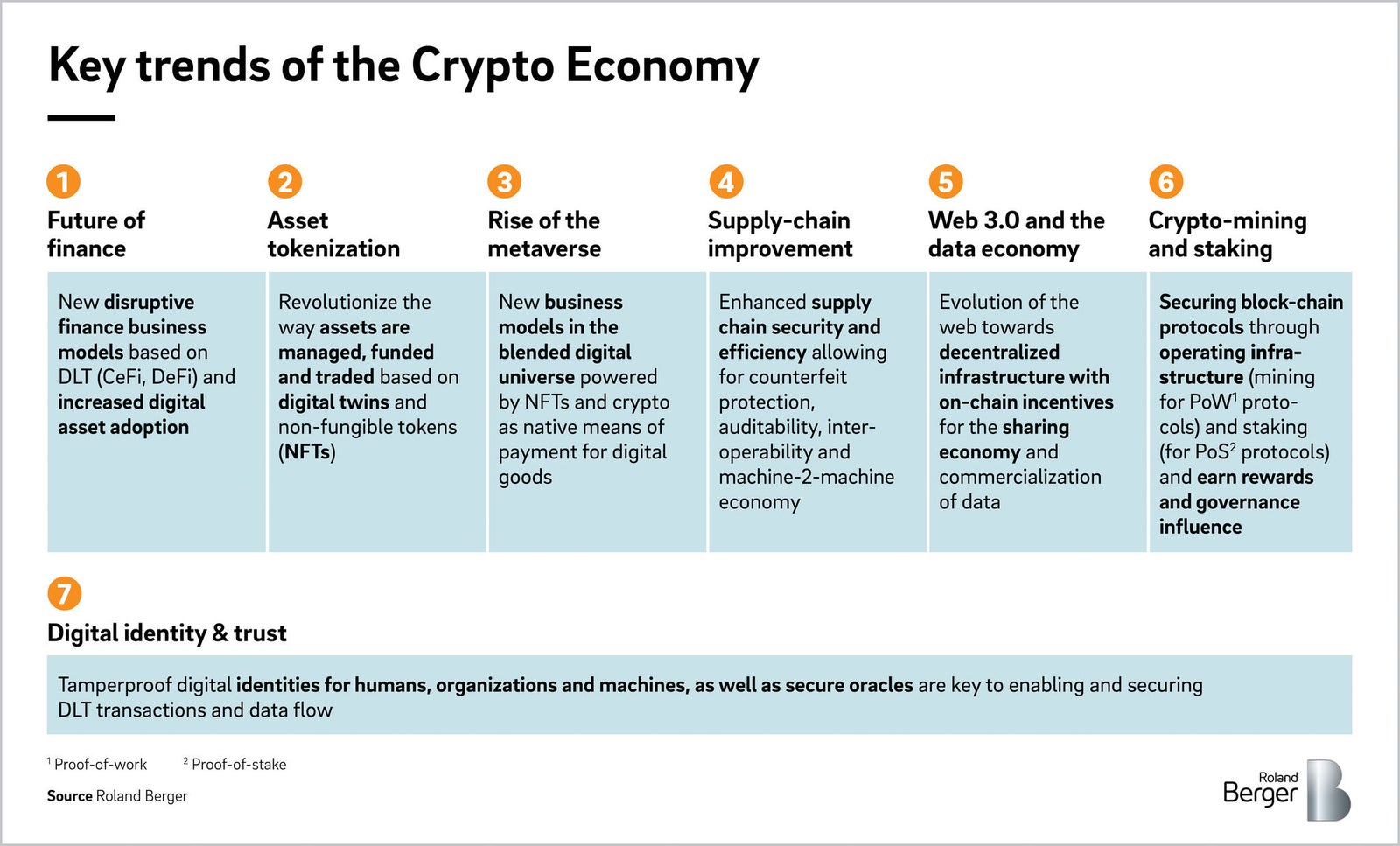
In short, the Metaverse describes the virtual space in the digital world. In purely digital spaces but also in the blended augmented reality where physical and virtual worlds collide. The amount of time spent in digital worlds has increased significantly during the last five years and the market for digital goods like in-game items, digital art, virtual real estate and vanity items is booming.
Crypto is the native currency of the digital space and the ability to create non-fungible tokens (NFTs) has further accelerated the development. OpenSea, the largest marketplace for non-fungible tokens, or NFT, recorded a USD 3.4 bn transaction volume on Ethereum in August 2021, more than 10 times the value in July. In addition, crypto gaming investments accounted for 9% total funding in the gaming industry in 2021 and rising.
Digital items in the form of NFTs are becoming the norm for consumers and even high-class consumer brands creating and selling digital items (e.g. Dolce & Gabbana and Rolls-Royce). Businesses not only need to be prepared for significant revenue streams in the metaverse but also a growing expectation of being present in the metaverse.
The race between a centralized and decentralized Metaverse has already begun with tech giant Facebook announcing its strategic repositioning and rebranding to become a dominant Metaverse player, Outlier Ventures and others working on the Open Metaverse OS.
Top 3 sectors to be impacted: Gaming/Entertainment, Fashion/Consumer Goods, Social Media