Tokenization decoded
In easy to understand terms, tokenization is the process of converting any rights or assets into a digital token that can then be used, owned and transferred by the holder through a blockchain, without the need for a third-party intermediary. Roland Berger & Keyrock’s study focuses specifically on investment tokens, which can offers its holder the same voting rights, rights to future cashflows,… as traditional shares or bonds can do, but in a digitalized form, allowing the ownership of these assets to be kept up to date via a decentralized ledger.
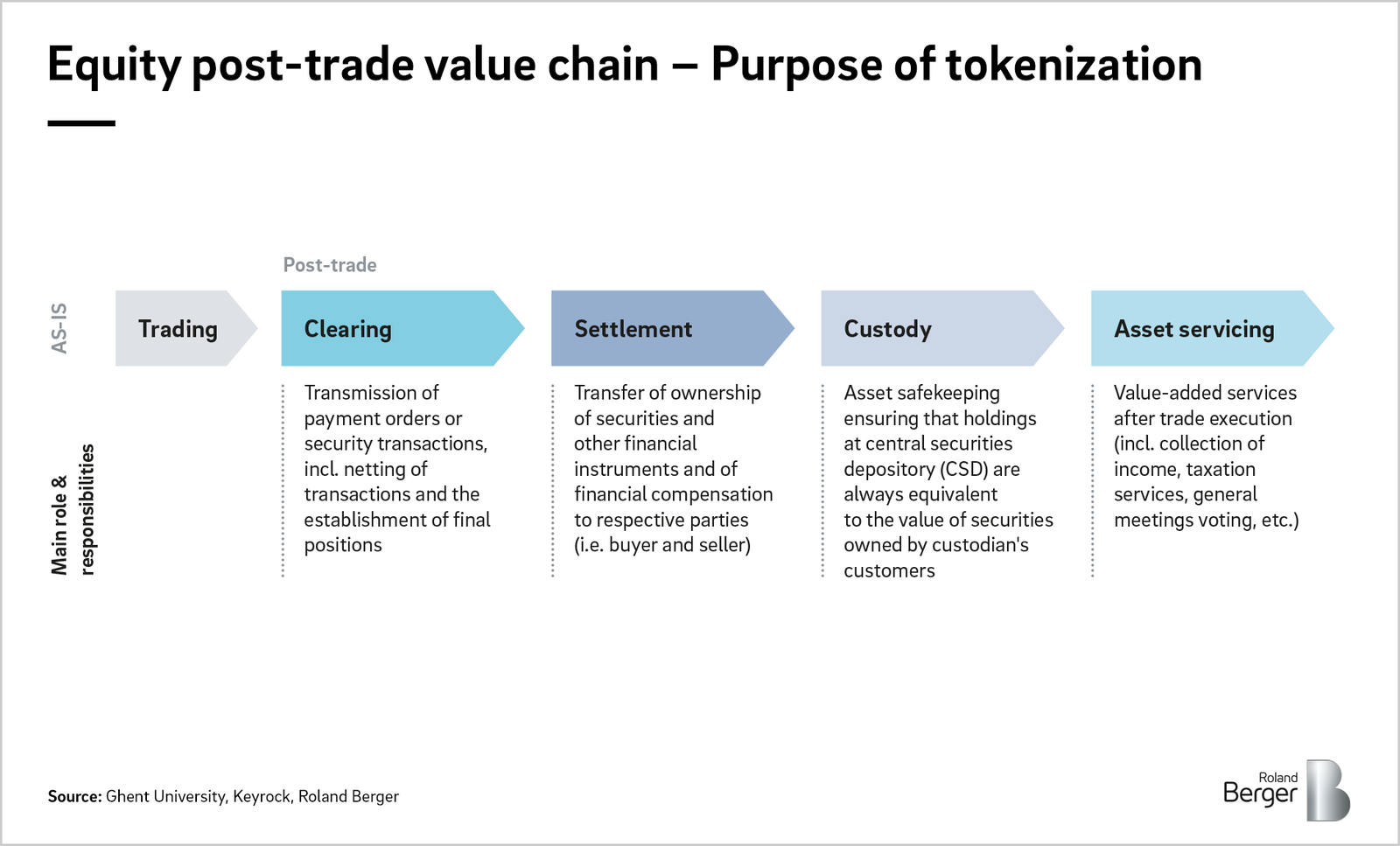
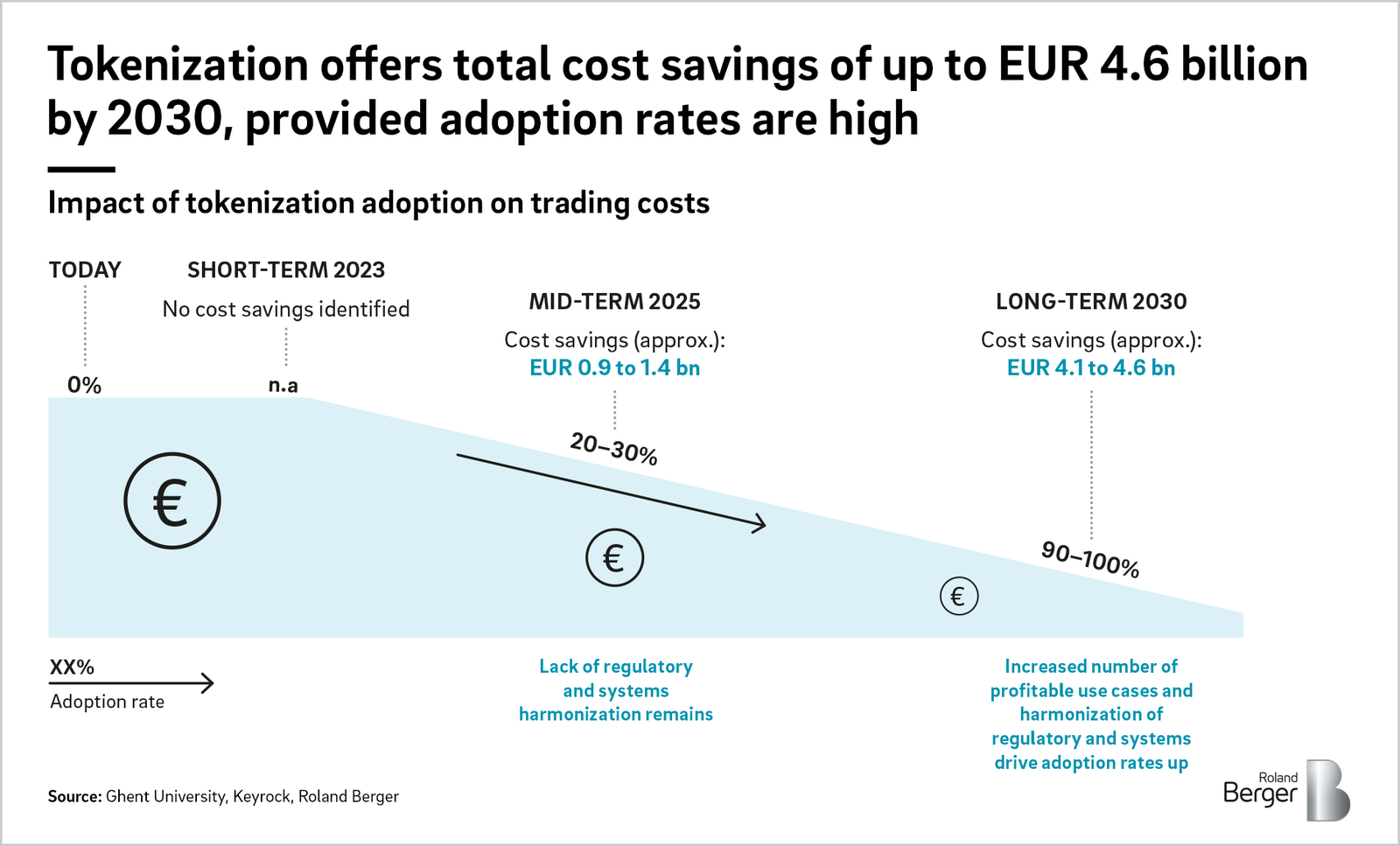
By cutting out third-party intermediaries traditionally involved in the post-trading process, tokenization offers significant cost-efficiency benefits. Additionally, a seamless data flow – provided stakeholder policies and local laws are in place – allows for greater transparency. Tokenization creates also new opportunities, as fractionalization of assets, boosts access to new markets.
Tokenization isn’t without its challenges though. There are significant hurdles that need to be addressed from investors to issuers:
- Regulatory framework: With no common industry standards or homogenous regulatory frameworks in place, the adoption of tokenization, in essence a model that works according to a common global standard, becomes problematic.
- Scalability: Approval and encryption times into the various blocks of the chain take a significant amount of time, making scalability a major bottleneck to be further addressed.
- Cyber security: Several factors, including the combination of a centralized and decentralized environment, make setting up proper cyber security measures a challenge.
- Adoption: Still being in its nascent stage, tokenization is expected to take time to catch on; it would take convincing the many retail investors and significant investments in the new technology.
However, tokenization has the potential to mitigate the complexities and inefficiencies associated with the current post-trade process. For example, the secured interlinkage of financial institutions and traders through blockchain could potentially eliminate the need for the clearing process, and considerably shorten settlement times.