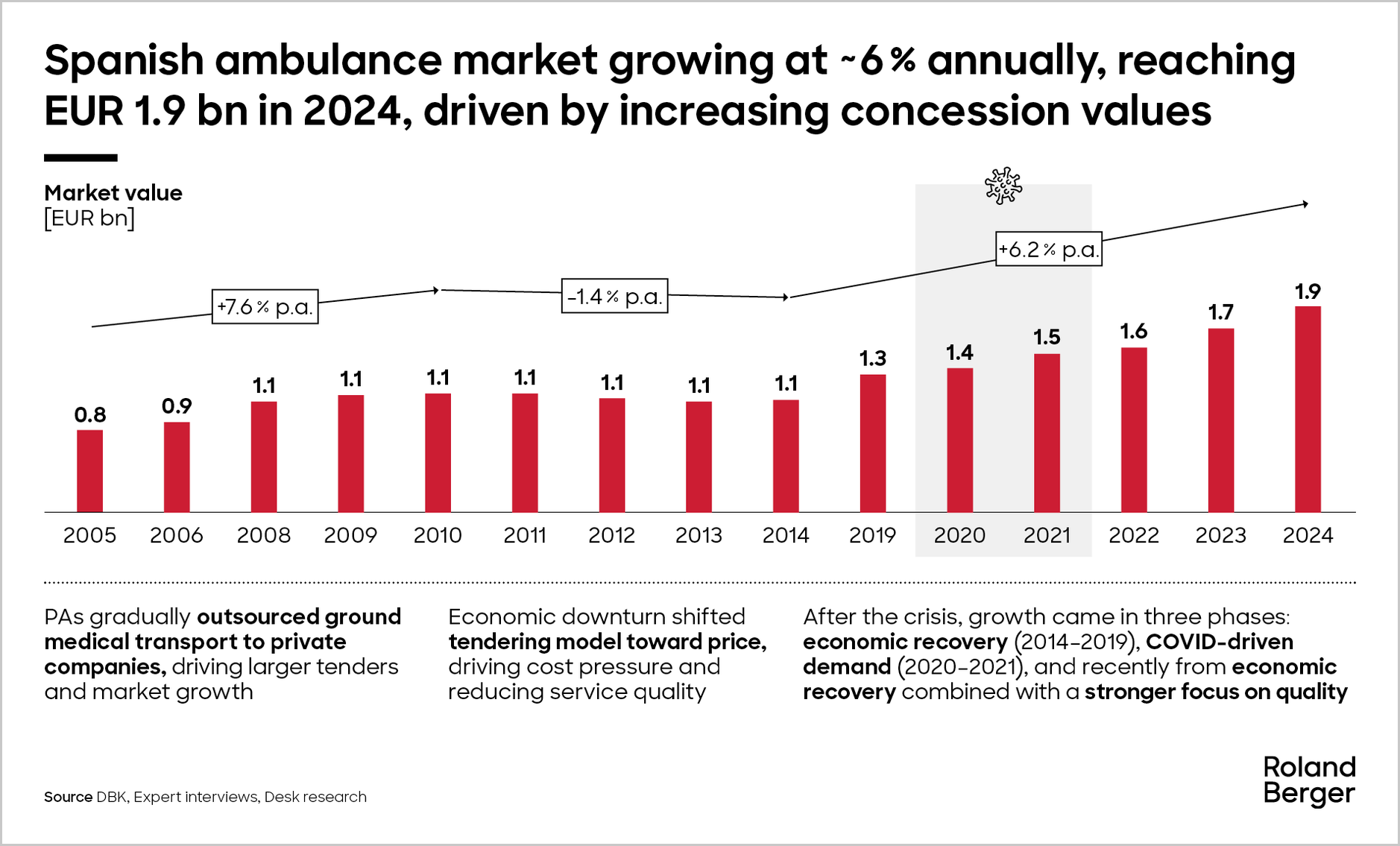
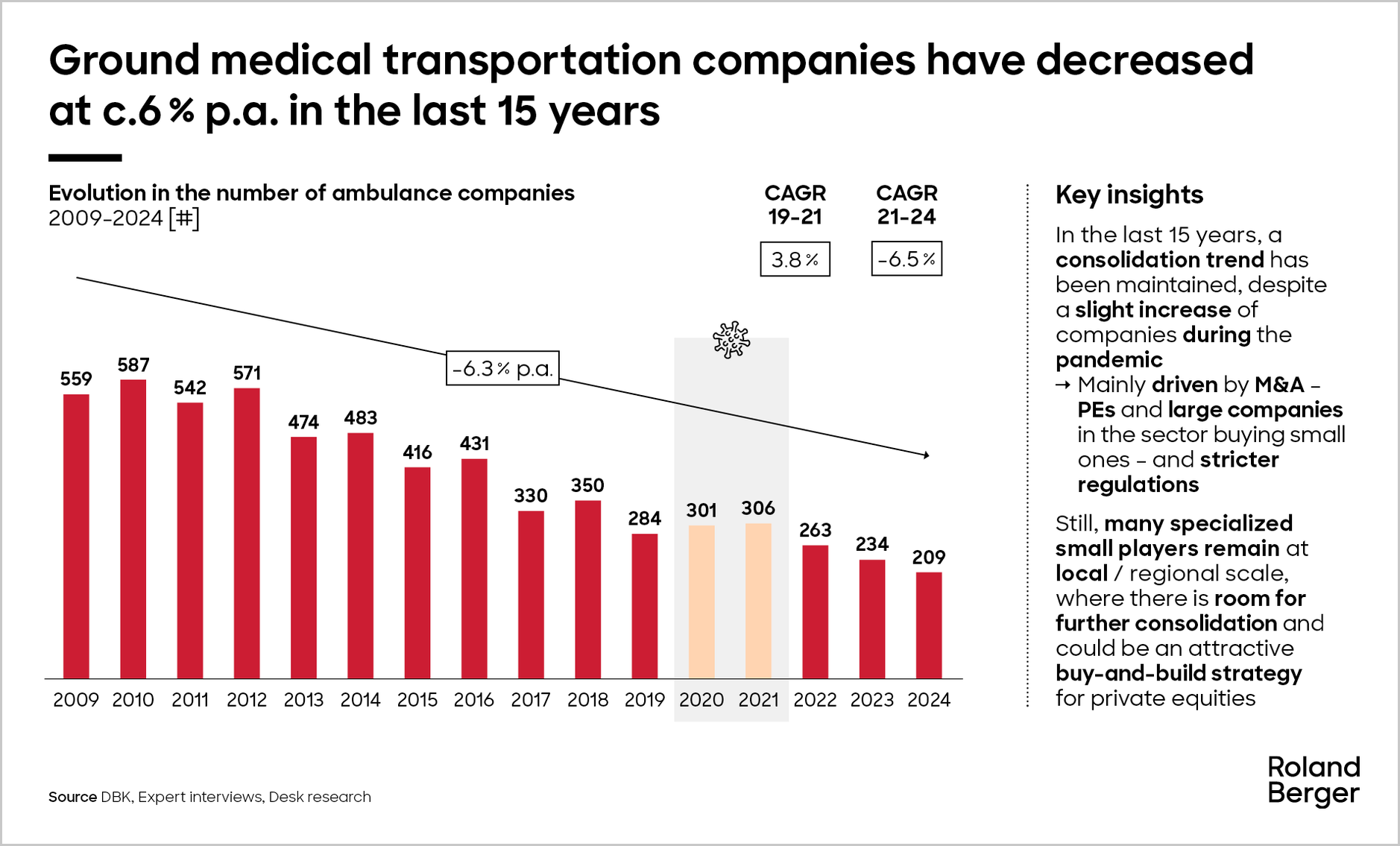
Despite this structural evolution, the sector remains operationally demanding. Labor represents the dominant cost component, accounting for roughly 70% of operating expenses. Mandatory transfer of staff, strong union presence, and high absenteeism rates in certain regions create structural rigidity and limit short-term flexibility. Cost inflation, particularly in wages and energy, can strain profitability, especially in contracts with limited indexation mechanisms. Fleet management also requires disciplined capital planning, as ambulances must be replaced or upgraded every five to eight years, often in line with increasingly demanding environmental and technical standards .
Yet these challenges coexist with a set of structural features that increasingly align the sector with core infrastructure characteristics. Revenue streams are contracted and highly visible. Demand is defensive and non-cyclical. Barriers to entry are significant, combining capital intensity, regulatory complexity, and operational know-how. Capital expenditure is recurrent but predictable, enabling long-term planning and financial discipline. Counterparty risk is limited, given the predominance of public payors. In aggregate, these attributes create a business model where risk is concentrated in execution and cost control rather than in market volatility or demand uncertainty.
The sector’s trajectory suggests a continued convergence toward an infrastructure-like profile. Public tenders are becoming larger, longer, and more technically complex. Environmental and sustainability requirements are tightening, reinforcing the need for capital investment and scale. Professional management practices are increasingly replacing entrepreneurial models, and operational excellence has become a critical differentiator. Meanwhile, attempts at public insourcing have remained limited, constrained by operational complexity and fiscal burden, reinforcing the long-term stability of the outsourced model.
In this context, the Spanish ambulance sector offers a compelling illustration of how traditional service businesses can evolve into infrastructure assets. What began as a fragmented collection of local operators has matured into a system-critical public service, underpinned by long-term contracts, structural demand, and regulated frameworks. For long-term capital, this convergence creates an opportunity to participate in the stewardship of essential social infrastructure, where financial stability, operational discipline, and public service intersect. As the boundaries between private services and public infrastructure continue to blur, sectors like ambulance transportation demonstrate that the future of infrastructure investment may lie not only in concrete and steel but increasingly in the invisible networks that sustain everyday life.