But maturity does not mean stagnation. As regulatory pressures intensify, consolidation accelerates and
strategic acquisitions
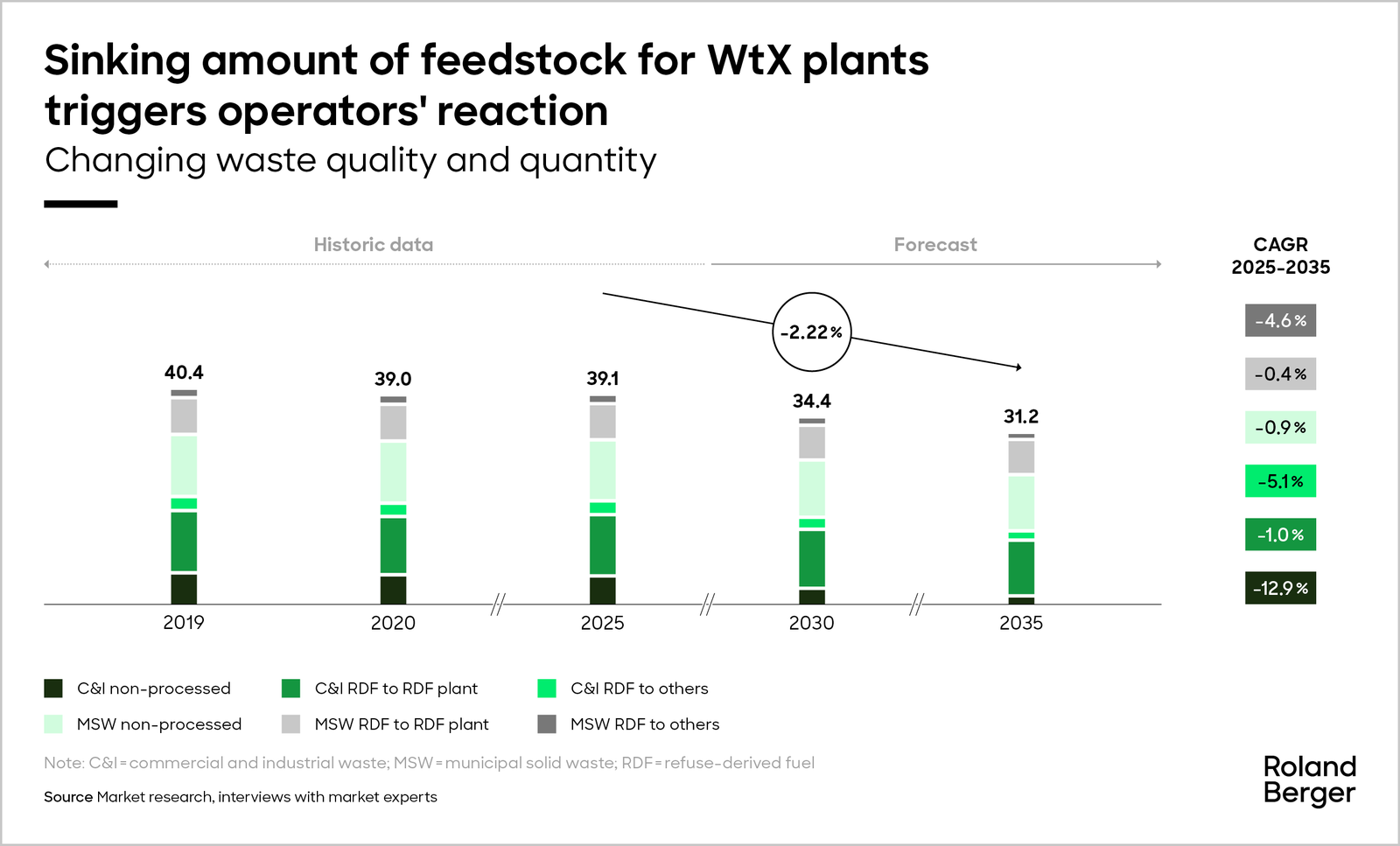
reshape ownership structures. At the same time, feedstock availability shrinks and aging assets demand attention. Against this backdrop, operators face a fundamental question: How do we extract maximum value from existing infrastructure in an increasingly competitive landscape?
A stable foundation facing fundamental change
Europe’s WtE landscape processes hundreds of millions of tons of residual waste every year through a diverse network of facilities. For example, Germany’s WtE landscape processes approximately 25 million tons of residual waste annually in a network of predominantly small-to-medium scale facilities, averaging 270,000 tons per year per line. Unlike markets built on massive centralized plants, as in the United Kingdom, the German decentralized model reflects the sector’s evolution. With 66% of plants under municipal ownership, public service mandates have historically shaped investment cycles and commercial strategies differently than in purely competitive markets.
The numbers tell a clear story: Over the next decade, the total addressable EPC market in the DACH region will reach EUR 12 billion. But this value will not come from new capacity. Germany expects only around two new plants, with approximately five scrap-and-rebuild projects on the horizon. Instead, 35% of market value will derive from component retrofits and 28% from recurring maintenance. The strategic shift is unmistakable – from building to optimizing. However, the exception is Eastern Europe, where markets like Poland and the Czech Republic are still in an early growth phase: Regulatory catalysts like landfill bans are only now arriving, triggering a new-build pipeline that sets this region apart from its western neighbors.
This transition comes precisely as operators face mounting pressure from multiple directions. The combination of regulatory escalation, feedstock volatility, and aging infrastructure creates a complex strategic puzzle. Those who master it will thrive; those who don't will watch margins erode.
Three forces reshaping competitive dynamics
1) The regulatory imperative: From national tax to European market
Several European countries have introduced or expanded national
carbon pricing mechanisms
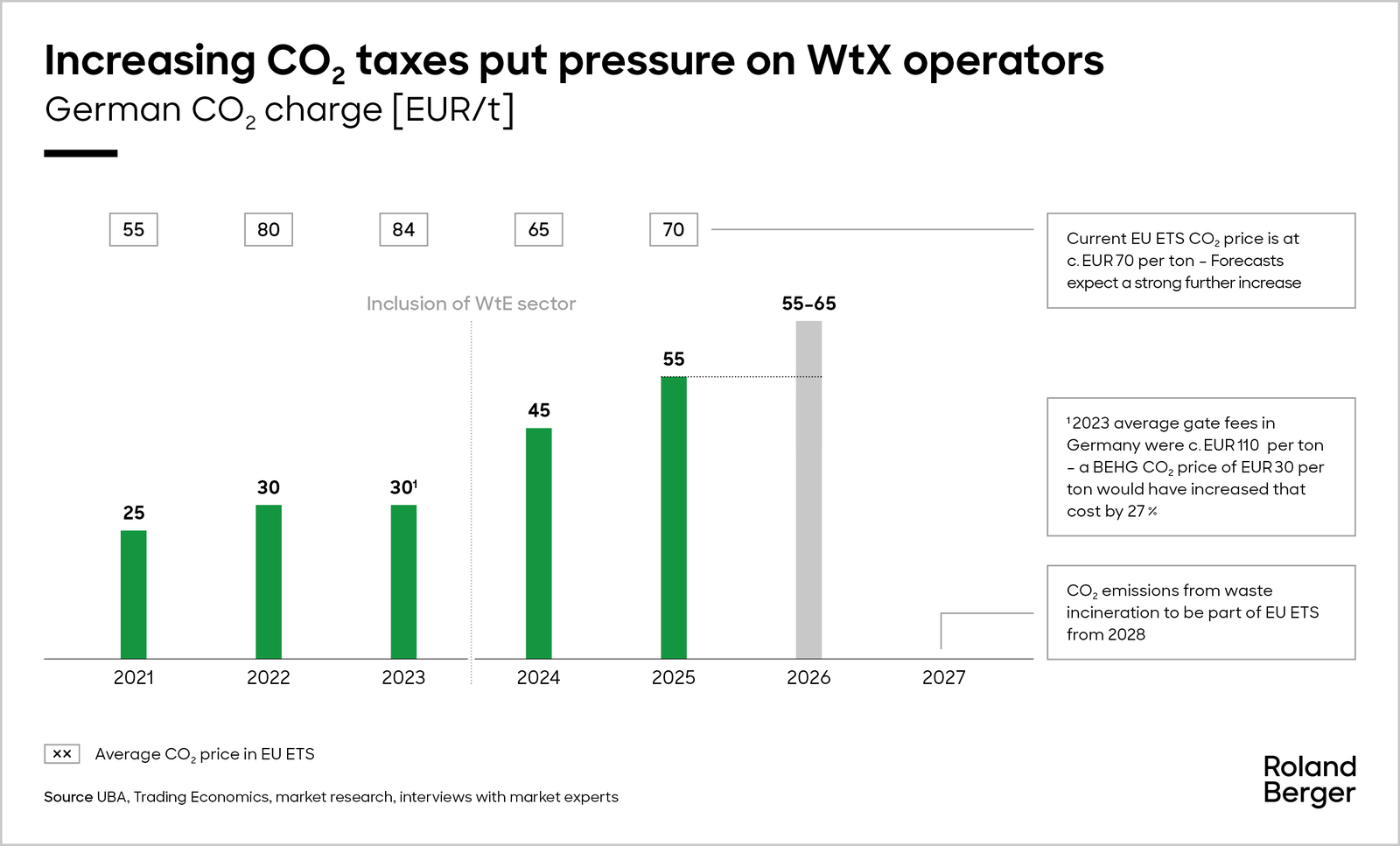
ahead of full EU-ETS integration. In Germany, the Fuel Emission Trading Act (BEHG), effective January 2024, introduced costs of EUR 55 per ton for fossil-derived CO2 emissions in 2025 as one prominent example. Many operators face immediate commercial risk as long-term contracts lack adequate cost pass-through clauses. But national schemes like BEHG represent only the opening act.
By 2028, WtE plants across the EU will likely enter the EU Emissions Trading System (EU-ETS). While this levels the playing field for e.g., German operators currently at a competitive disadvantage, it dramatically raises stakes industry-wide. Operators must choose: purchase high-volume CO2 allowances, invest in capital-intensive infrastructure like carbon capture, or fundamentally manage the carbon content of waste inflows. Mandatory monitoring, reporting, and verification requirements for plants above 20 MW took effect in January 2024, with final EU inclusion decisions expected by 2026.
The impact creates market segmentation. Public operators often benefit from cost-recovery models tied to municipal waste fees, allowing easier cost pass-through and reducing immediate financial exposure. Private operators lack these mechanisms, facing intense pressure to either absorb costs – directly impacting margins – or renegotiate contracts in highly competitive conditions. The era of treating emissions as externalities has definitively ended.