Future of the industry
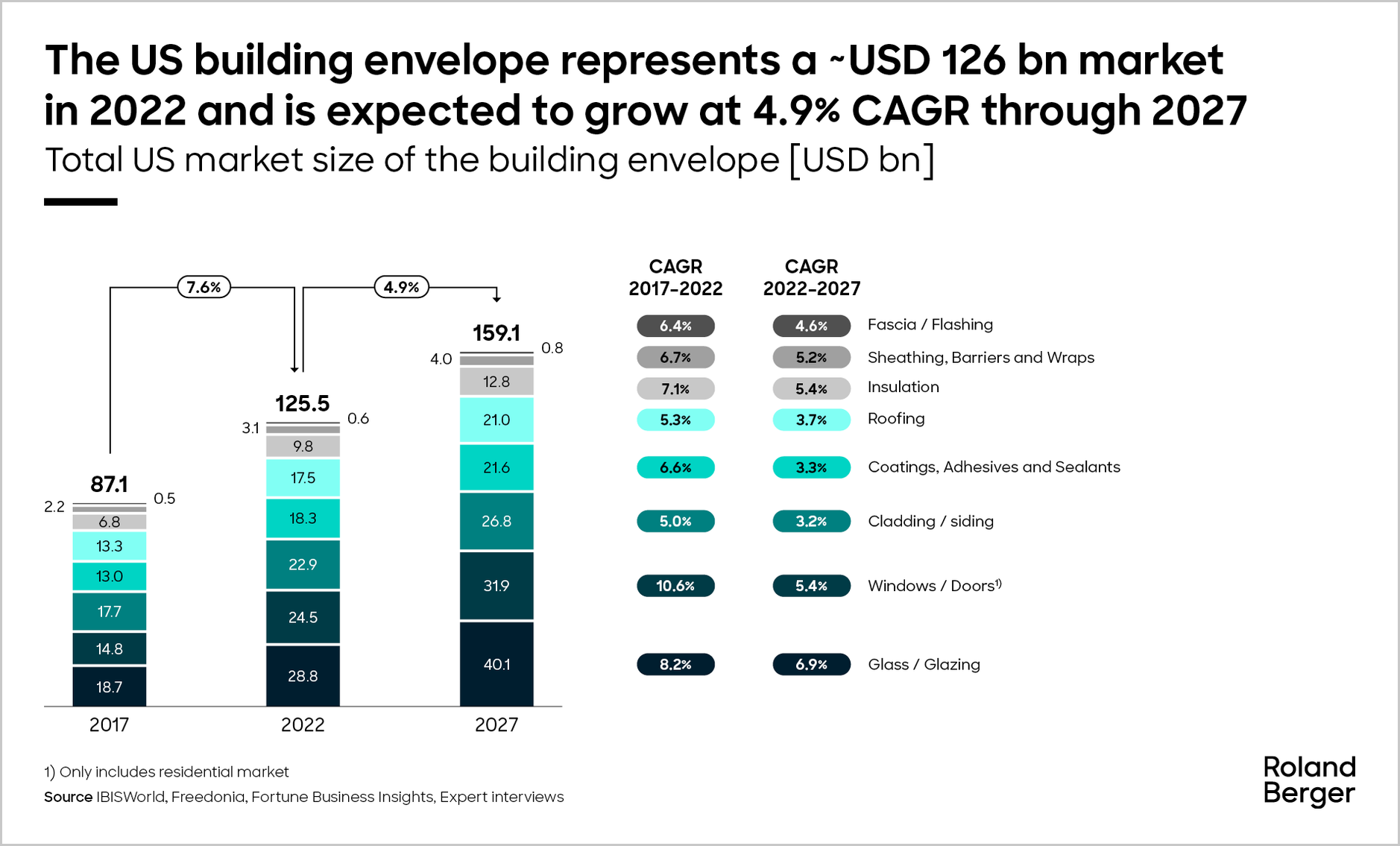
In 2022, the building envelope industry represented a USD 126 bn market, and is expected to grow at 4.9% CAGR through 2027.
The building envelope is tied to all major trends in the built environment, each of which affects the building environment at various levels of impact and disruption. Macro level trends such as the single family housing shortage, labor shortages, supply chain disruption, and inflation and high interest rates are creating varying levels of positive and negative demand impact.
Industry level trends, including material and technology advancements, sustainability, and upgraded in building code regulations and safety enhancements create an overall neutral demand impact while providing opportunity for differentiation for owners and other stakeholders.
An aging building stock will provide unique opportunities to upgrade the envelopes of existing building envelopes; 69% of expected building stock by 2050 will already exist today and require maintenance and retrofit. The preference towards premium materials will unfold, as emerging technologies allow for more dynamic building envelopes, and advances in materials improve thermal performance.
While premiumization, offset by rising interest rates and market uncertainty leads to affordability considerations, incentives including the Inflation Reduction Act (with grants, tax credits, or rebates available for building envelope improvements) and state and local programs and regulations are incentivizing building owners to retrofit and develop more energy efficient buildings to avoid penalties.
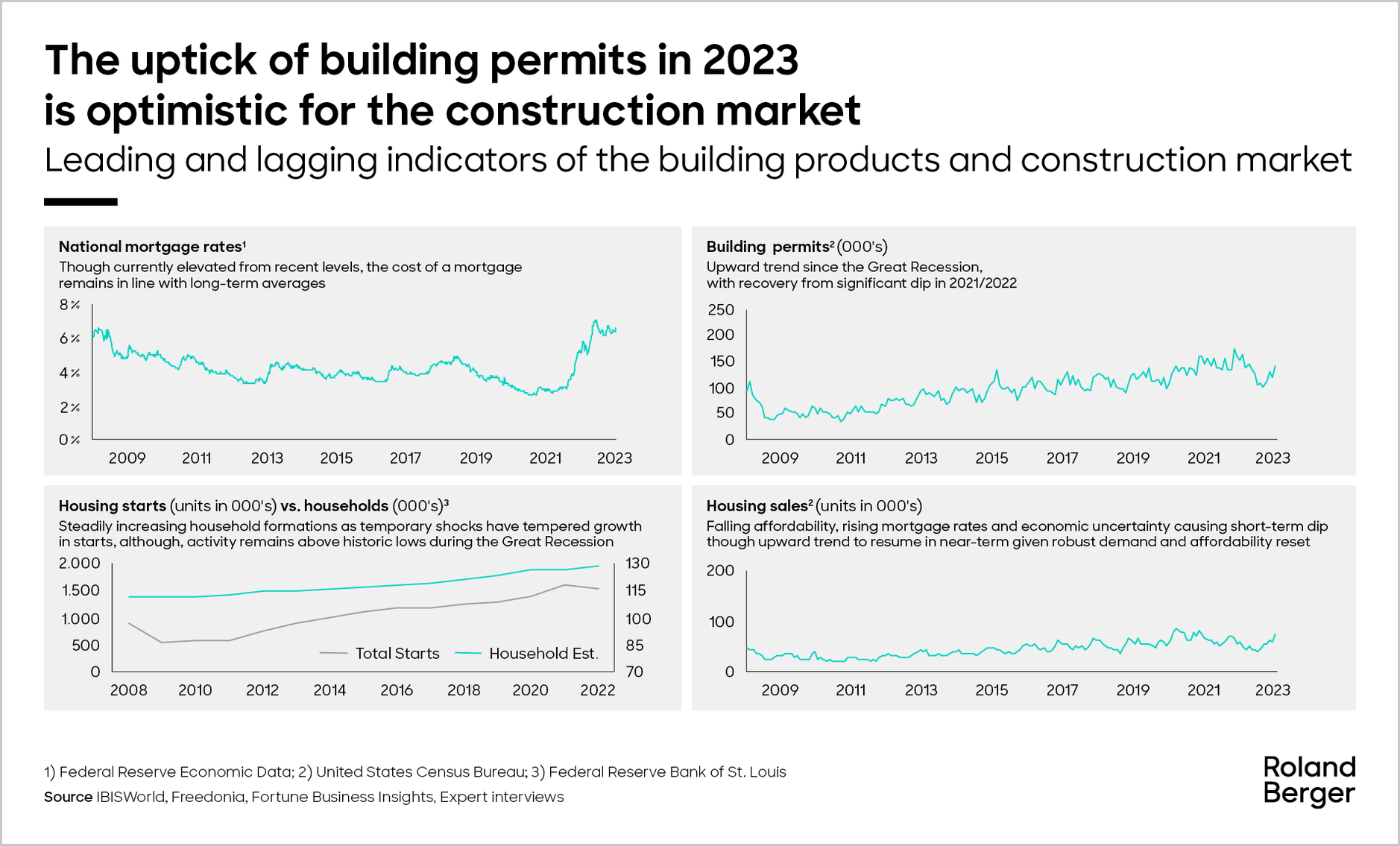
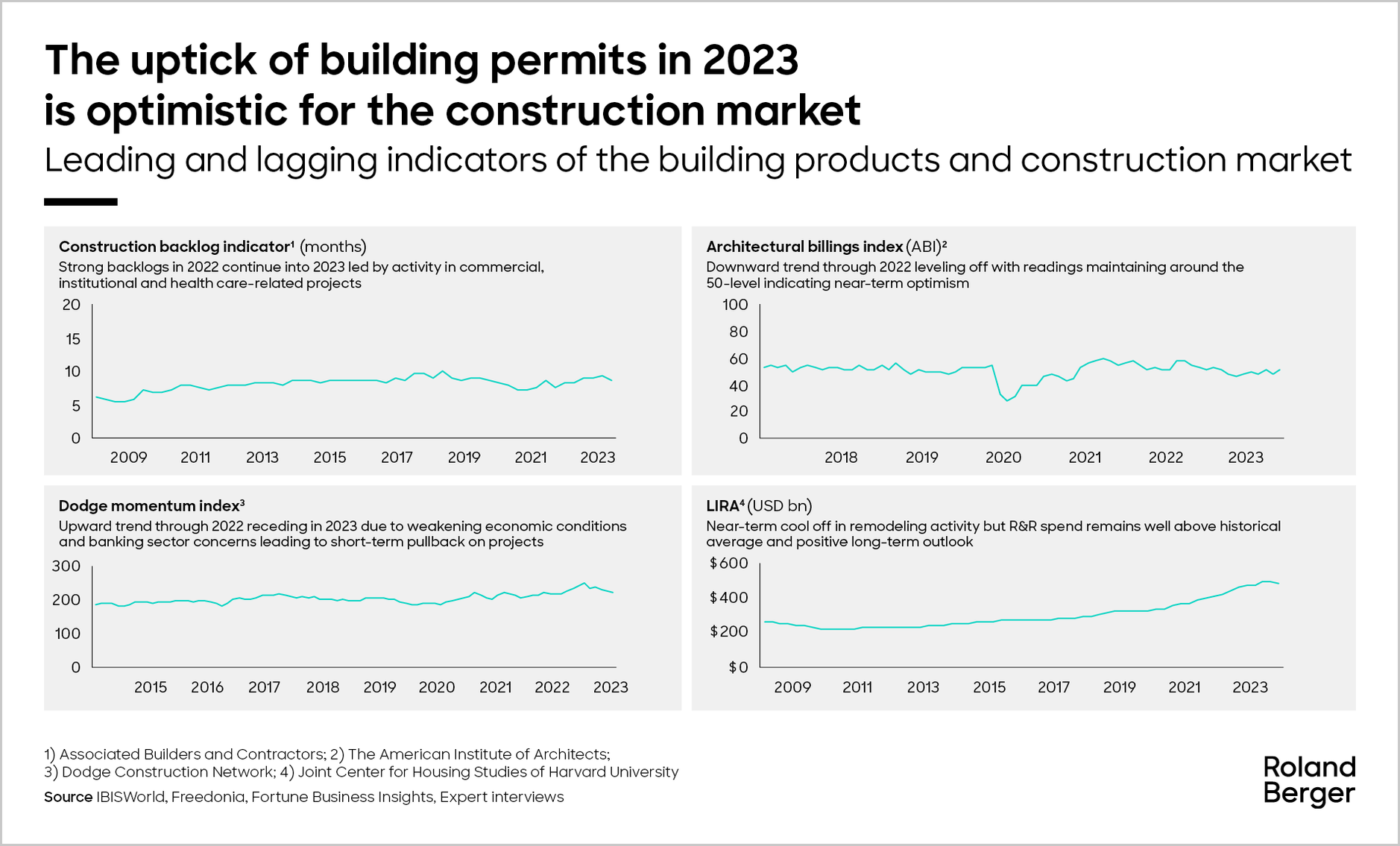
Despite increases in mortgage rates and affordability concerns, the uptick in building permits in 2023 is optimistic for the construction market, with construction backlog, ABI, and Dodge momentum point to a cautiously optimistic outlook for the near/mid-term.