Hours after being sworn in, Trump imposed 25%
tariffs
on Canada and Mexico starting February 1, accusing both countries of allowing drugs and migrants to cross the US border. Just days after taking effect, the tariffs were paused for 30 days following threats of retaliatory measures - shifting the final effective date to March 4. Given the trade agreement between the three partners (USMCA), a bulk of imports remain duty-free, with the 25% rate applying only to non-exempt goods.
Recent data indicate significant shifts in US import patterns. US imports from Canada fell from $38 billion in January to $30 billion in May; a steep drop that, according to the US Energy Information Administration, was largely due to a decrease in energy imports, particularly crude oil.
In contrast, US imports from Mexico peaked at nearly $48 billion in March, supported by regional integration and logistical advantages – factors highlighted by IMF and OECD analyses. Tariff-driven supply chain shifts provided another boost, as US buyers replaced some Chinese imports with USMCA-compliant goods from Mexican factories.
While the immediate impact on Mexican and Canadian imports is noteworthy, the most striking development lies in the steady drop in US imports from China. US imports from China halved between January and May 2025. After the Trump administration announced a 10% tariff rate on Chinese goods in February and an additional 10% in March, the Chinese government retaliated with tariffs on US farm products. The tariff cycle peaked at 145% for Chinese goods before Washington cut the baseline tariff rate to 30% in May. Since then, the two largest economies are working on an agreement.
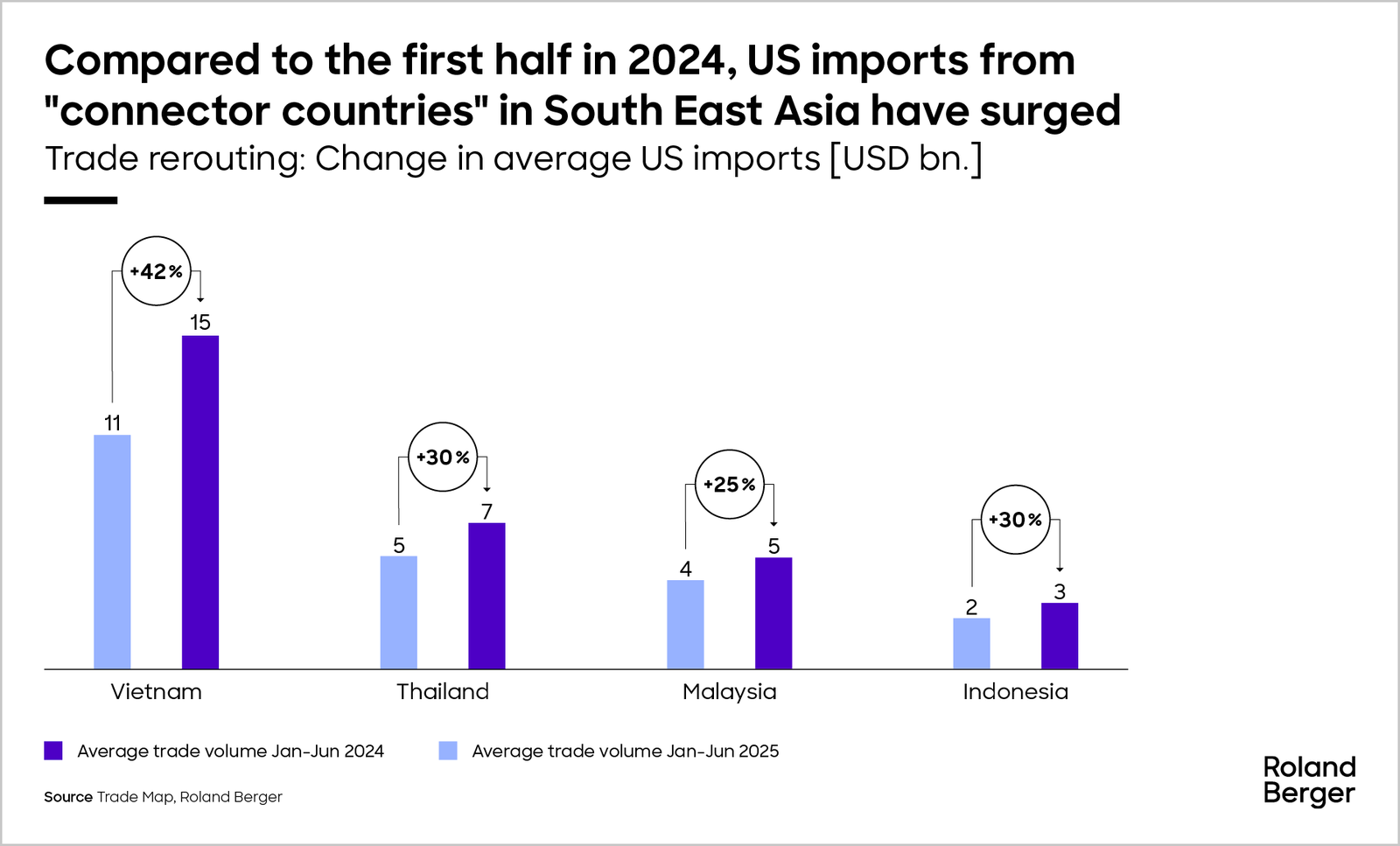
Besides escalating tariffs, structural shifts in sourcing strategies - including transshipment through Southeast Asia and Mexico - and reduced demand amid trade uncertainty have together driven this sharp drop in US imports from China.
Spotlight on China – Tech and machinery hit hardest
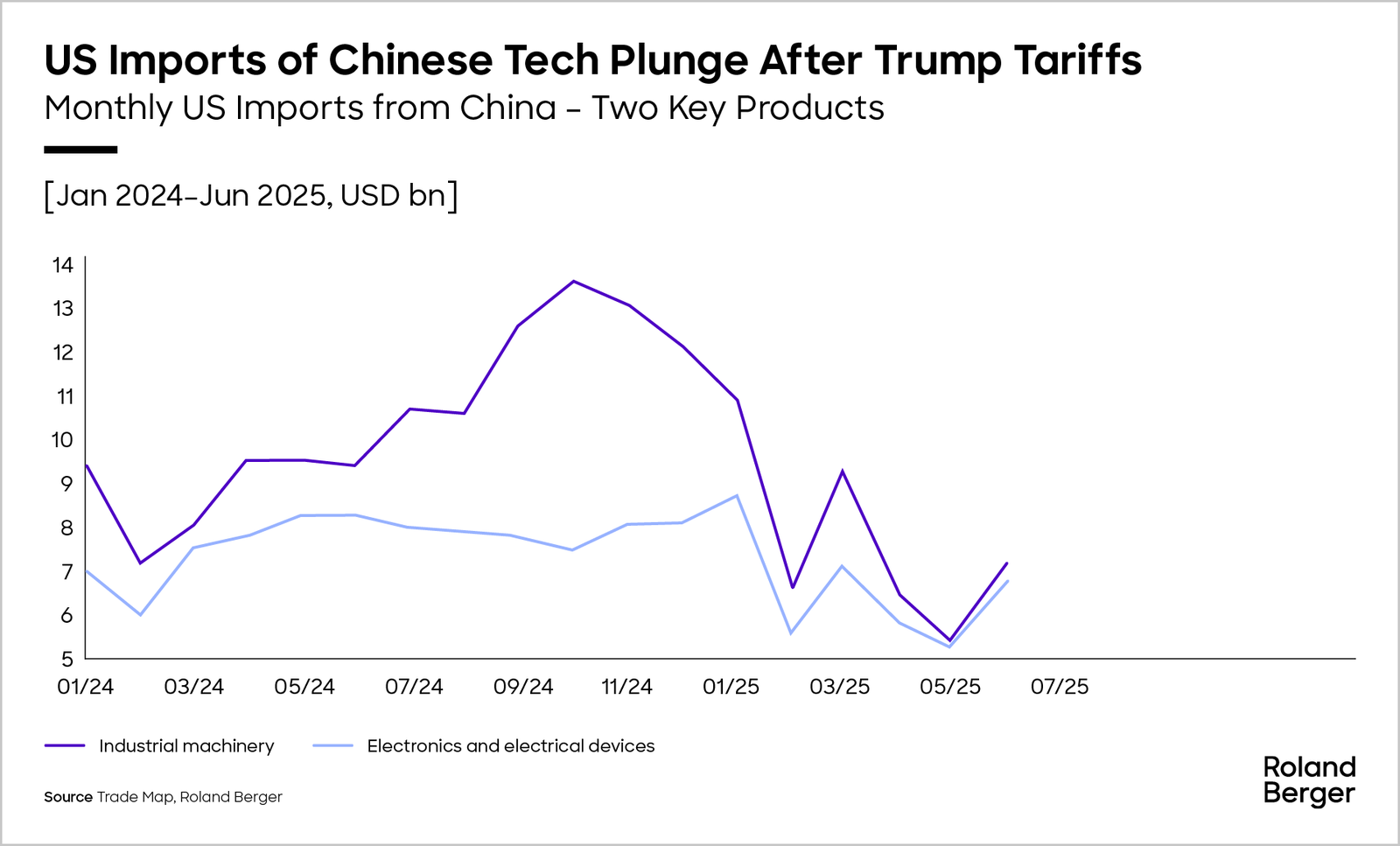
While China’s total export volumes are holding up, sector-specific pressure suggests that some Chinese firms are beginning to feel the pinch. The data reveals a marked decline in US imports of electronics and industrial machinery from China beginning in early 2025, coinciding with heightened trade frictions. Imports of electronics and industrial machinery fell by more than 60% in June compared to January 2025, reversing the late-2024 inventory build-up, which had been particularly strong in electronic equipment.