Why tail spend remains a blind spot
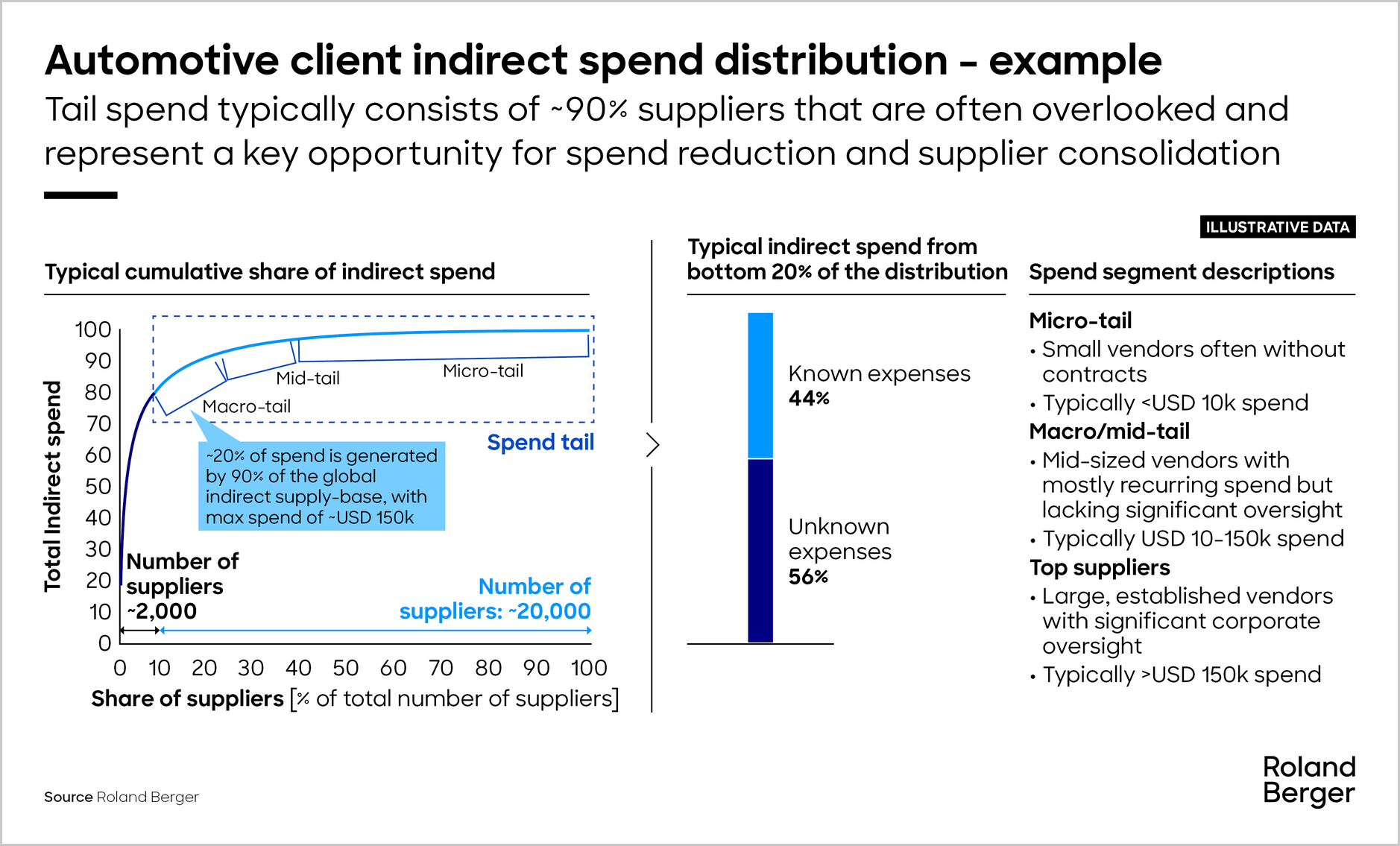
Tail spend often escapes scrutiny because internal teams naturally focus on strategic suppliers—those tied to mission‑critical operations, regulated environments, or large contract values. In contrast, tail suppliers tend to be dispersed across business units, purchased outside formal sourcing processes, and owned by no single stakeholder.
As a result, organizations commonly face:
- Duplicative or redundant purchases
- Inefficient renewals and auto‑extensions
- Unclear accountability for supplier relationships
- Missed consolidation opportunities
- Inconsistent pricing across regions or business units
Traditional approaches rely on manual reviews, periodic sourcing waves, and spreadsheet‑based analyses. These methods struggle to scale given poor data quality, inconsistent taxonomies, and the sheer volume of tail suppliers involved. The outcome is persistent leakage—spend that could otherwise be reinvested in higher‑value, strategic initiatives.
Tail spend optimization: A fast, effective path to savings
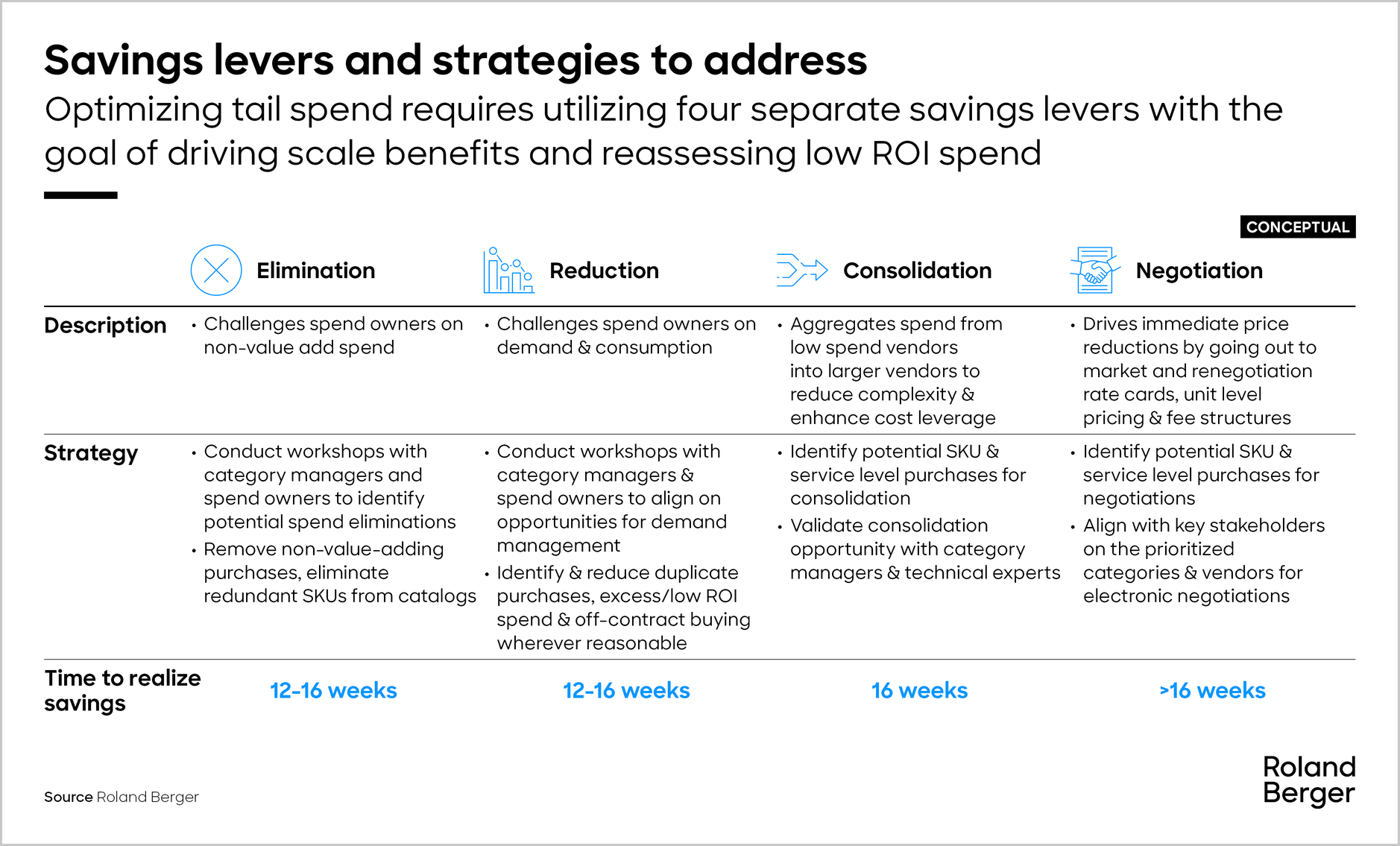
Despite its complexity, tail spend is one of the fastest levers organizations can pull to drive meaningful financial impact. Well‑designed tail spend optimization programs typically generate 13–25% in savings, often within as little as 10 weeks, delivering faster returns than many large‑scale sourcing transformations.
At the core of these programs are four value levers, applied differently depending on the maturity and concentration of each tail segment. AI fundamentally enhances the execution of each lever.
1. Elimination
For micro‑tail suppliers, elimination is often the most powerful lever. AI identifies ownerless, redundant, low‑value, or non‑recurring spend that can be removed with minimal operational risk. By surfacing purchases that provide little to no business value—or that duplicate existing agreements—organizations can rapidly cut unnecessary costs.
2. Reduction
Beyond outright elimination, AI uncovers opportunities to reduce demand by analyzing frequency, volume, and category misuse at the line‑item level. This enables procurement teams to challenge over‑consumption, improve demand discipline, and reduce spend without disrupting core
operations
.
3. Consolidation
Mid‑ and macro‑tail suppliers benefit most from consolidation. AI clusters like purchases across suppliers, even when they appear under different descriptions or vendor names. These clusters reveal opportunities to rationalize supplier bases, aggregate volumes, align pricing, and simplify administration—often unlocking immediate negotiating leverage.
4. Negotiation
AI‑enabled negotiation tools allow
procurement
teams to execute negotiations at scale, engaging hundreds of suppliers simultaneously within predefined governance frameworks. This dramatically reduces cycle time while ensuring consistency, compliance, and market‑aligned outcomes across renewals and competitive events.
Savings potential varies by category, with indirect areas such as IT (15–20%), professional services (15–20%), HR services (14–18%), and planning and research (14–18%) often offering the highest returns. Across categories, organizations typically capture 11–16% of total tail spend savings.