Focusing on the merits of sustainable ecotourism
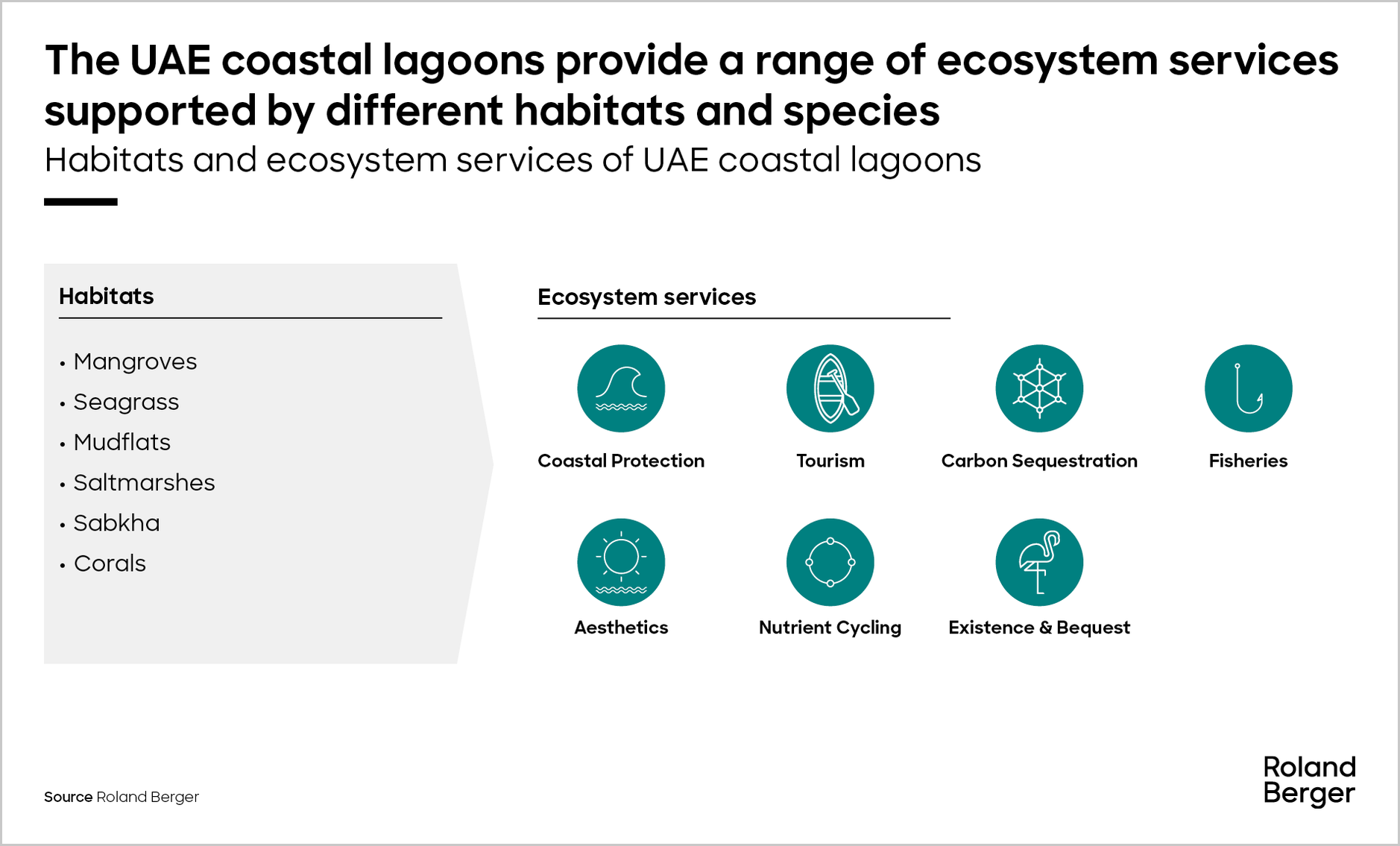
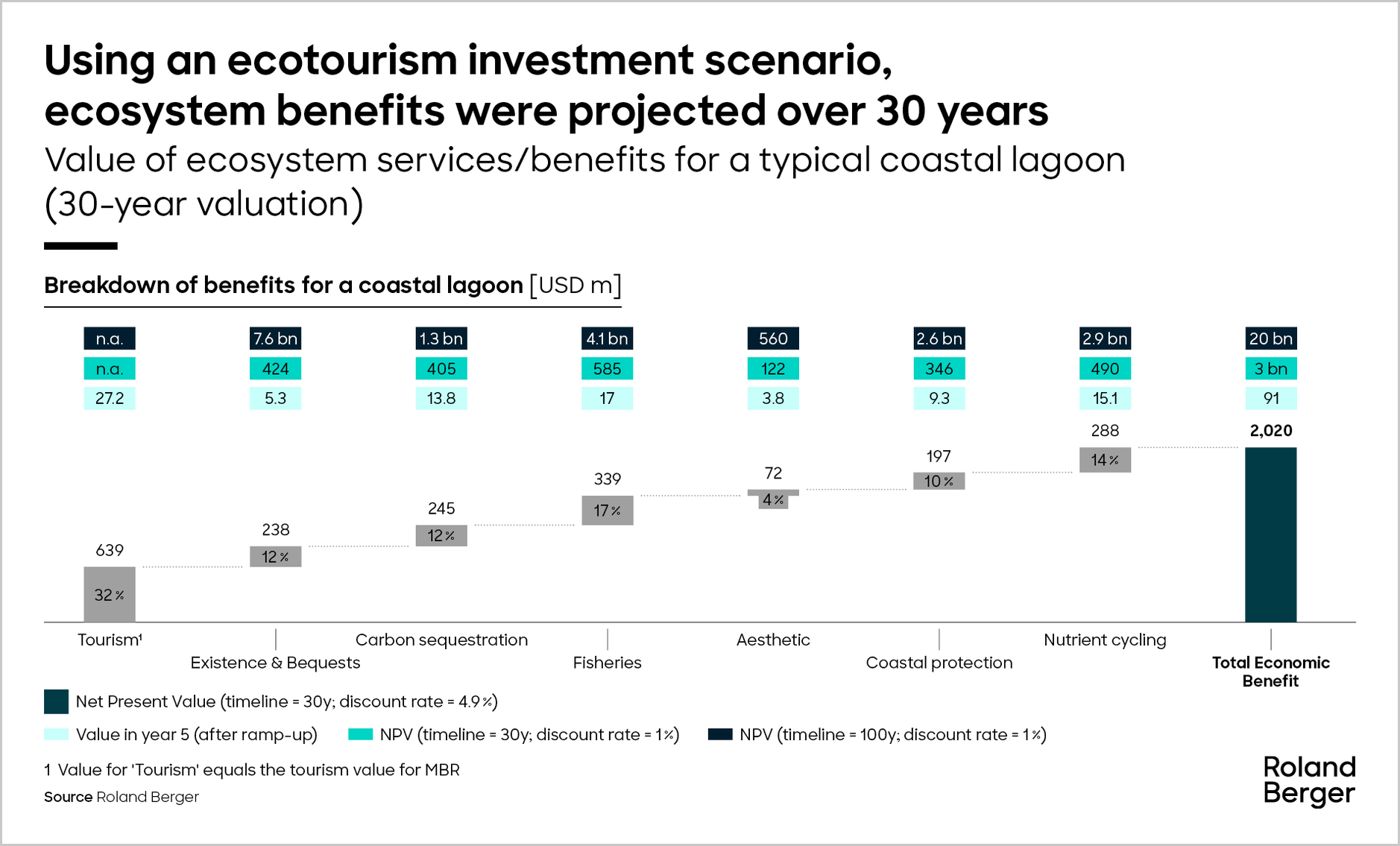
The economic model developed by Roland Berger consisted of developing valuation scenarios - including an ecotourism investment scenario in a well-managed and conserved area - that can achieve an increase in ecosystem services over time (as opposed to the other scenarios, including an inaction scenario as well as an urbanization scenario). The ecotourism investment scenario developed factors in the importance of conserving the natural area (i.e., protecting and sustainably managing natural ecosystems) and the development of sustainable ecotourism opportunities (i.e., developments and activities that do not harm existing natural ecosystems). Conservation and responsible travel must go hand-in-hand to achieve a positive impact on ecosystem services.
Recognizing the high intrinsic and tangible value of ecosystem services also increases the attractiveness of nature-positive ecotourism projects (including green infrastructure and conservation activities) against traditional development projects that deplete ecosystems and corresponding natural capital over time. The idea is, therefore, to demonstrate the economic potential of conservation and ecotourism and kickstart conversations with sustainability-focused investors.
Nature-positive and regenerative tourism, activities and practices that contribute to the restoration and rehabilitation of ecosystems while also providing economic benefits to local communities, are on a rising trajectory globally, and those who practice them are willing to pay more; ecotourism has emerged as one of the most important drivers of the global tourism market, valued at an estimated $200 billion in 2022 and making up nearly 10 percent of this vital economic sector. Ecotourism is projected to continue to grow at a rate of 12.9 percent annually during the next decade. The Chumbe Island private nature reserve in Zanzibar and the Basata Ecolodge on the Red Sea in Egypt are two stellar examples of success stories. Both projects have succeeded in adopting a high-value, low-volume approach and have developed an ecotourism offering that allows tourists and biodiversity to coexist in harmony.
This trend is also seen in the UAE, where there has been an increasing interest in nature-based tourism experiences. Ecotourism initiatives are consequently gaining traction across the emirates with new nature retreats on the rise, such as Casa Mikoko at the Mangrove Reserve in Umm Al Quwain, which offers eco-friendly stays, mangrove tours, and activities such as kayaking and kitesurfing, all while emphasizing sustainability and local engagement. Other examples include Dubai’s Hatta, which is being promoted as a destination for nature and ecotourism activities. When it comes to coastal ecotourism, the Khor Kalba Mangrove Centre in Sharjah is setting a strong example, offering tourists visits to the oldest mangrove forest in the UAE, with trees up to 8 meters tall.
The UAE is well positioned to further capitalize on the ecotourism opportunity to protect its coastal and marine ecosystems.