Local vs. global customer focus
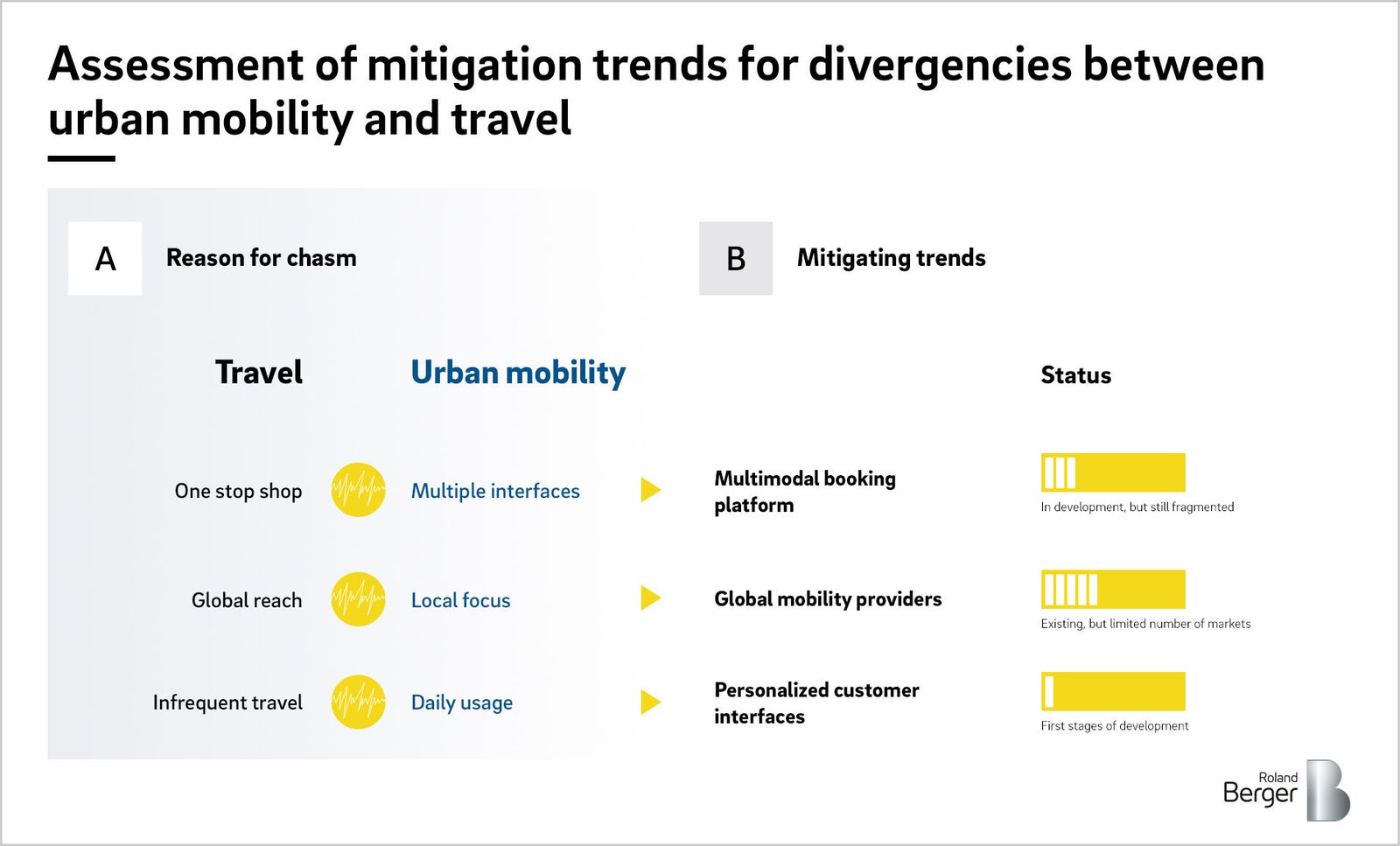
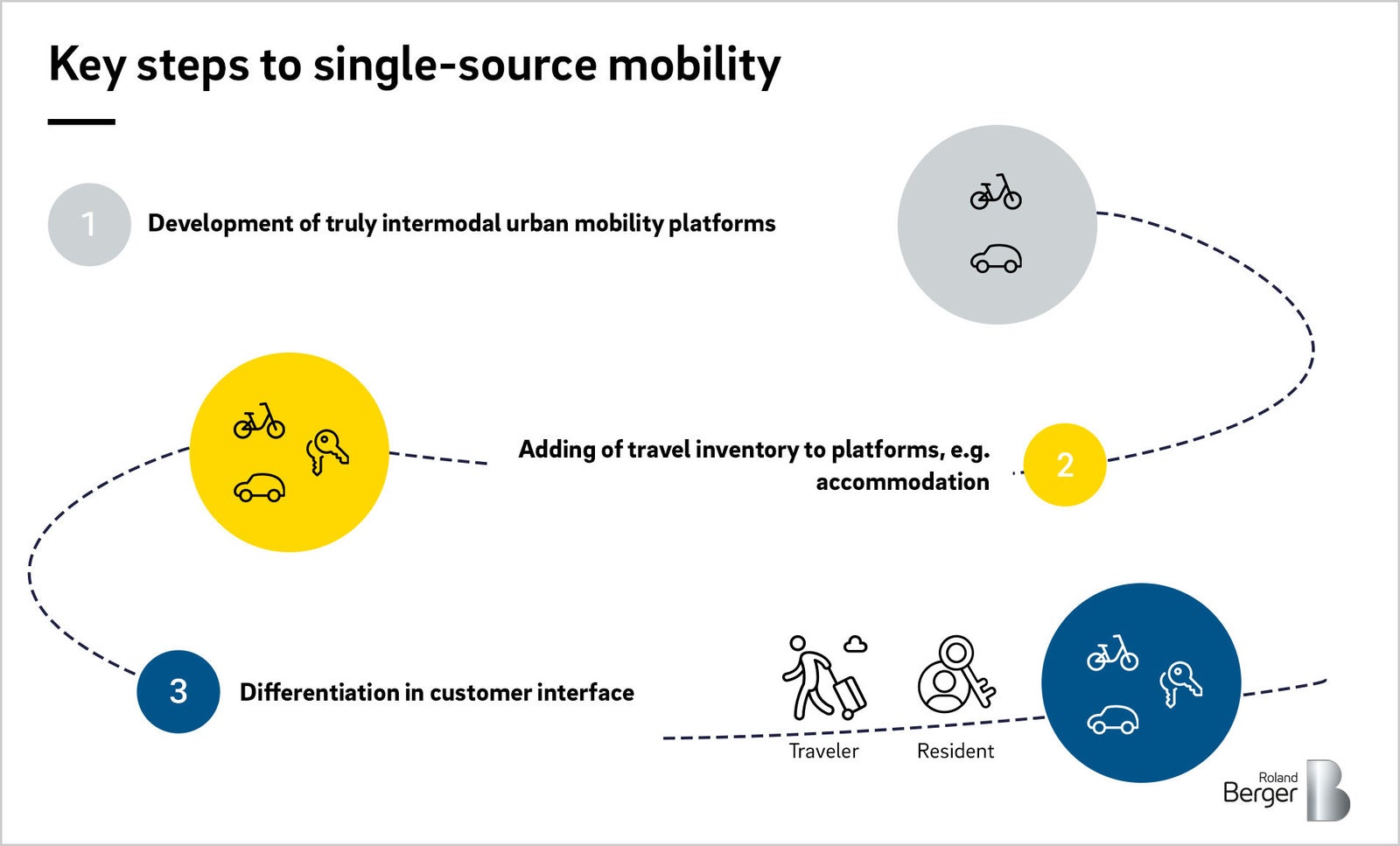
Second, from origin to destination (and vice versa), travel agencies create and sell services to fulfill the needs of travelers. On the other hand, urban mobility providers focus their services on the fulfillment of city-specific needs of residents during their everyday lives. As the last years have shown, urban mobility remains a very city-specific market that requires an abundance of experience in dealing with the respective local circumstances. Consequently, target customers of urban mobility providers and travel agencies differ significantly.
Connecting element for travel and urban mobility: Global urban mobility providers
In contrast to public urban mobility entities, many private urban mobility providers, e.g. renowned ride-hailing and car-sharing platforms, are increasingly operating globally. Through their international expansion, private urban mobility providers enable customers to use their services not only as residents at home, but also as travelers in other cities. This helps create a truly global customer experience.
Frequent vs. infrequent use of services
Third, whereas travelers tend to travel only a few times per year to a respective city, urban residents rely on urban mobility services in their daily lives. Therefore, expectations on type, amount, and level of detail of relevant information strongly differs between residents and travelers.
The connecting element for travel and urban mobility: Travel agencies as customizer
In a world with global mobility booking platforms that integrate, urban mobility, long distance transport, accommodation, and experiences, the purpose of the travel agent seems questionable. However, as pointed out in Roland Berger's
article about smart travel assistants (2019)
, the future of travel agents lies not in providing inventory and process handling, but rather in knowing and advising the customer. In the interplay between travel and urban mobility, this role is of even higher importance. The core customer of rising global mobility booking platforms will likely be the frequent urban user simply because of the larger size of this market. In Munich, for example, over 722 million passengers used the public transport (MVV) while only 8.3 million travelers visited the city in 2018 (Munich Municipality).
Thus, customer experience and service of these platforms will focus on urban mobility products. Tourist-related inventory for the infrequent user, e.g. long-distance transport and accommodation, will be less emphasized. Therefore, the task of the travel agency will be to close the gap between the needs of the tourist and the offering of the mobility platforms. Even the provision of a tourist-oriented front-end which uses the entire backend of the mobility booking platform could be conceivable.