SG&A functions play to AI’s strengths. Finance,
HR
and procurement, for example, often involve repetitive, time-intensive processes that draw on large data sets. Current AI tools, such as robotic process automation (RPA) and natural language processing (NLP; used in chatbots), are designed to streamline such data-based processes, increasing efficiencies and freeing up resources for more value-adding activities.
So why aren’t all businesses using AI tools to improve their SG&A performance? Roland Berger undertook a cross-industry survey to find out. Involving 75 European SG&A decision-makers, it aimed to better understand the current state of AI adoption in SG&A, identify key challenges and success factors, and uncover what differentiates top performers from underperformers. The results also enabled us to develop a customized approach to smooth the implementation of AI in SG&A and maximize results.
What we found
SG&A expenses typically equate to around a quarter of total revenue. Managing them effectively can therefore help to improve profitability, enhance efficiency, support growth and – because they offer valuable data insights – make better, more informed decisions. Our survey found that AI’s potential here has already been recognized – 80% of companies have already begun implementing the technology in SG&A functions. Most aim to use it to unlock additional productivity potential and save costs through
efficiency gains
, for example, by reducing manual workloads or improving customer service experiences.
IT functions were thought to have the highest potential for efficiency gains, with increases of 33% expected. AI applications in IT include automated helpdesk support (using agents and chatbots, for example), predictive maintenance and enhanced cybersecurity measures. Marketing and sales was another key target area.
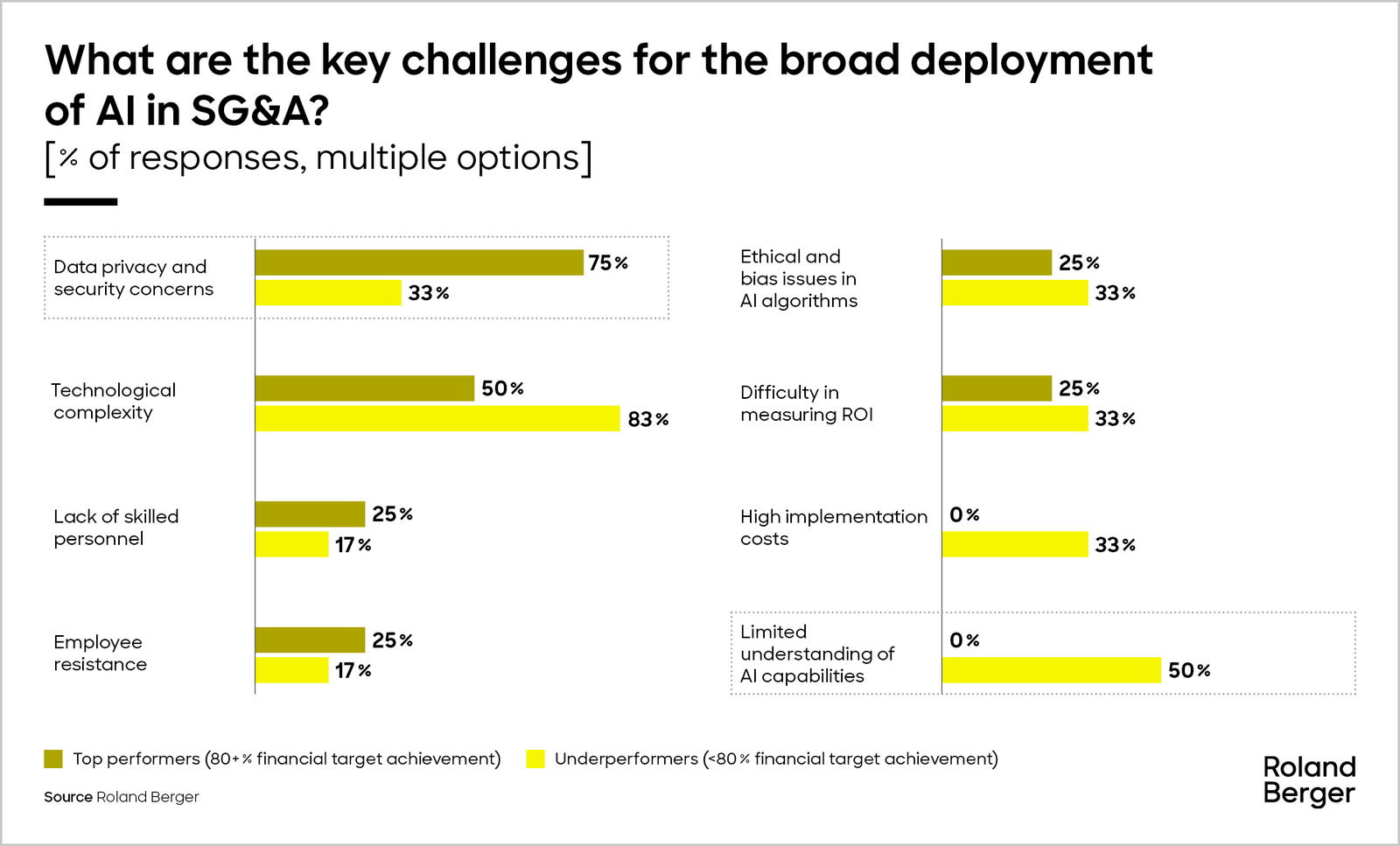
However, just ~40% of respondents who have identified initiatives say their company has successfully completed its AI initiatives or are close to completion. Of these, 60% have not achieved their financial and operational targets. Common reasons for not meeting targets include underestimating the complexity of AI integration and overestimating the short-term benefits. Respondents at companies that failed to meet set goals often cited poor alignment between AI initiatives and overall business strategy as the key reason behind suboptimal results. Successful initiatives often involved a phased rollout.