Power density
The training of LLMs often uses distributed training techniques, such as data parallelism and model parallelism, which coordinate computation across thousands of GPUs. This approach generates a substantial volume of traffic within the data center, as servers housing these GPUs frequently exchange model parameters - including weights and gradients - to maintain synchronization and ensure coherent learning.
Traditional CPU data center architectures were primarily designed and optimized to handle traffic between end users and the servers within the data center. However, the emergence of GPUs has required a fundamental shift in focus, prioritizing and optimizing in-building communication to effectively support the demands of distributed training workloads for LLMs.
Even seemingly minor delays in data transfers - often referred to as tail latency, which represents the latency experienced by the slowest data packets in a system - can have a disproportionately large impact on the overall efficiency of AI training jobs. These small delays can compound over time, leading to significant increases in job completion times and reduced effective utilization of valuable GPU resources, as some nodes must wait for straggling packets before synchronization can occur.
Given the inherent sensitivity of
AI
and machine learning (ML) algorithms, especially in the context of training large-scale models like LLMs, data center architectures are often designed with the primary goal of keeping GPU servers in close physical proximity to minimize communication delays and optimize training efficiency. Estimates suggest that a significant portion of the total time required to train these large-scale AI models can be directly attributed to network latency, highlighting the critical importance of minimizing these delays through careful data center design and layout.
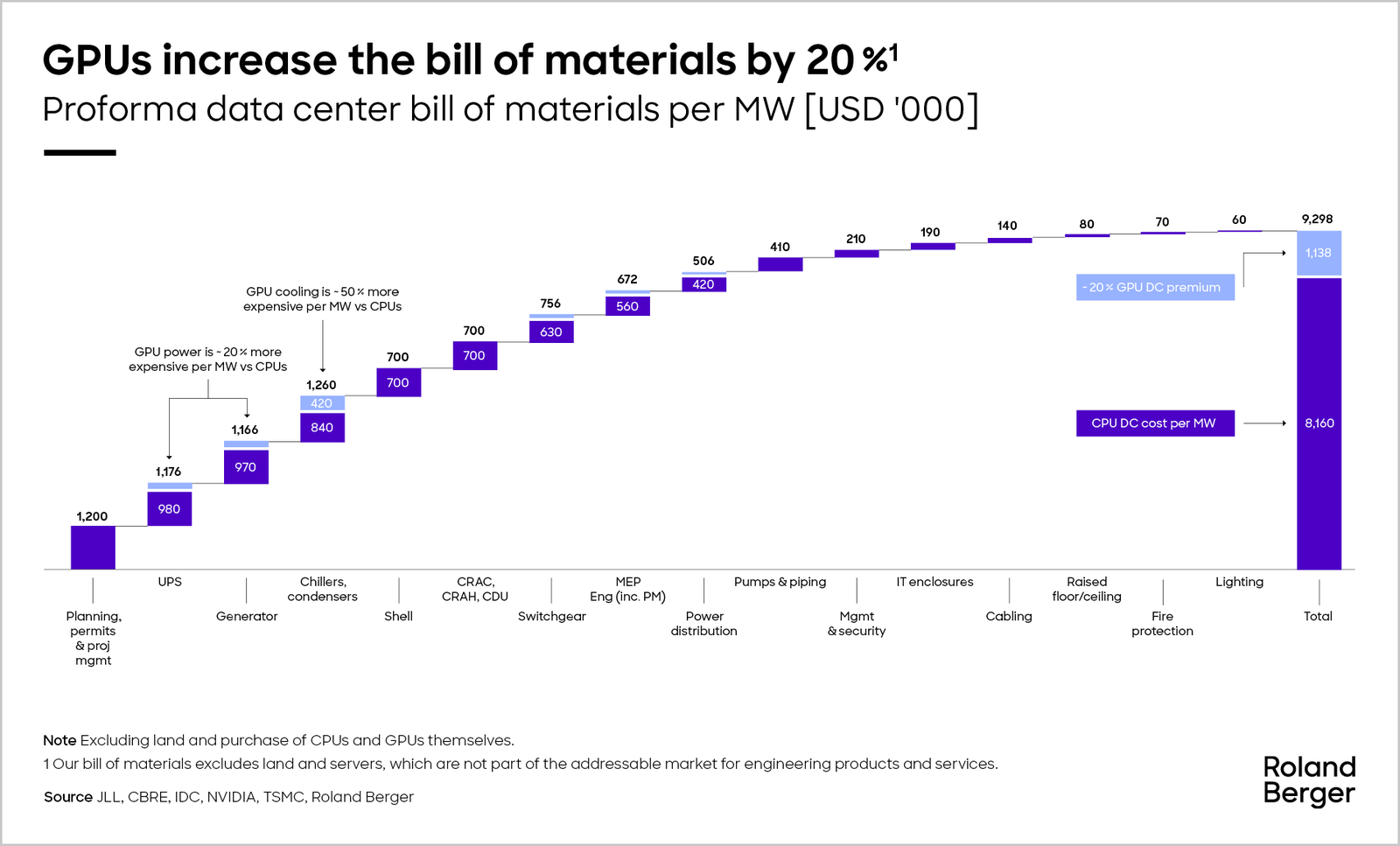
This is not a technical side note — it explains why increasing rack density is inevitable. While CPU racks have typically operated at around 7 kW, growing roughly 10% per year, GPU racks are already approaching 250 kW. NVIDIA’s roadmap even envisions 1,000 kW (or 1 MW) in a single rack. This shift renders traditional CPU cooling technologies insufficient and opens the door to disruptive innovations such as liquid cooling.