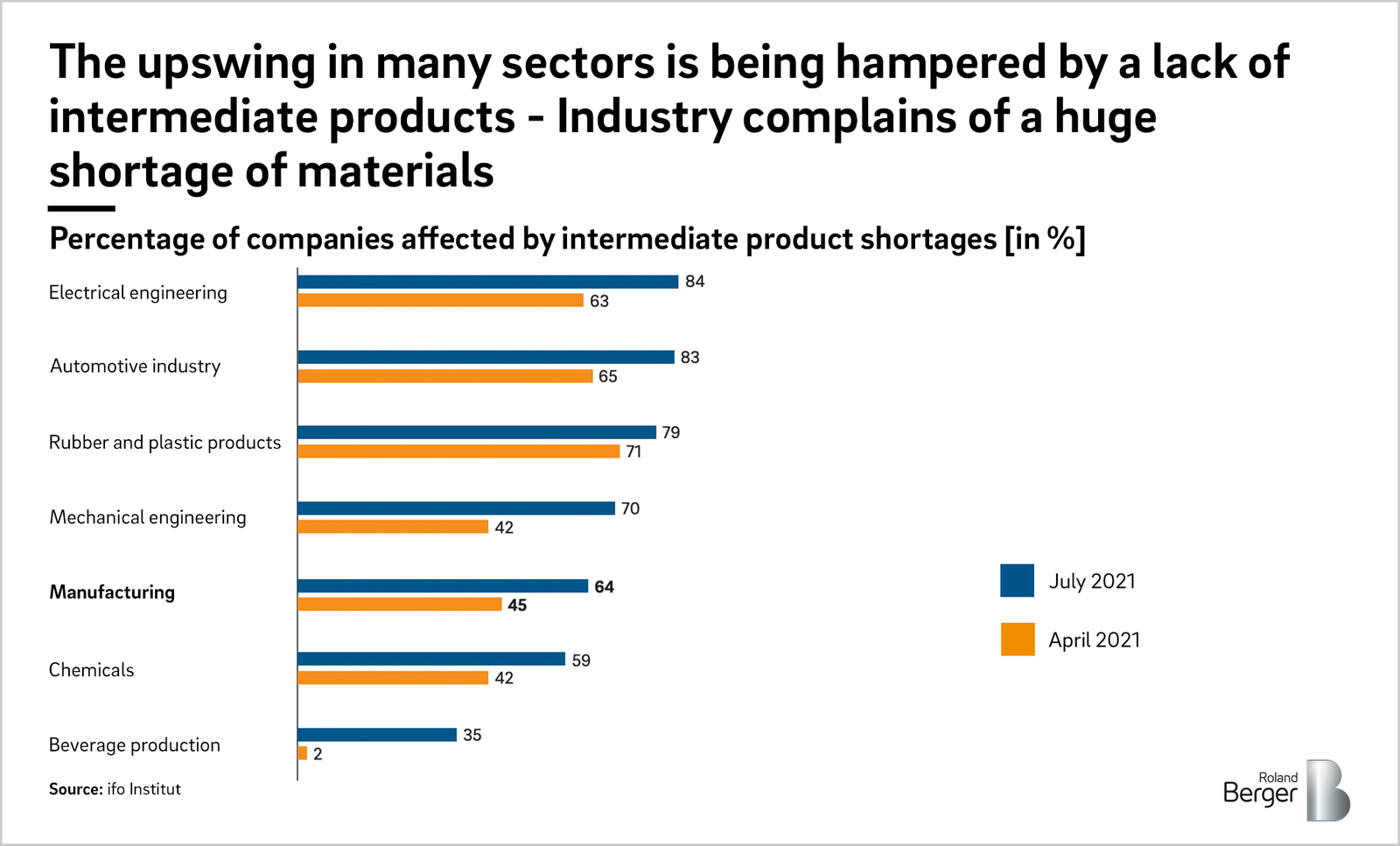
The shortage of intermediate products is already feeding through into rising producer prices, with the cost of these products increasing by 12.7% year on year.
Energy prices
too are up by 16.9% on average, partially because of base effects and the newly introduced CO2 tax. Given that producer prices are generally seen as an early indicator of the trend in inflation, economists fear that at least a portion of price hikes in the coming months will filter through into consumer prices, causing the inflation rate to increase further – despite the fact that consumer prices have already risen faster than at any time in the past 30 years. The year-on-year inflation rate in July stood at 3.8%.
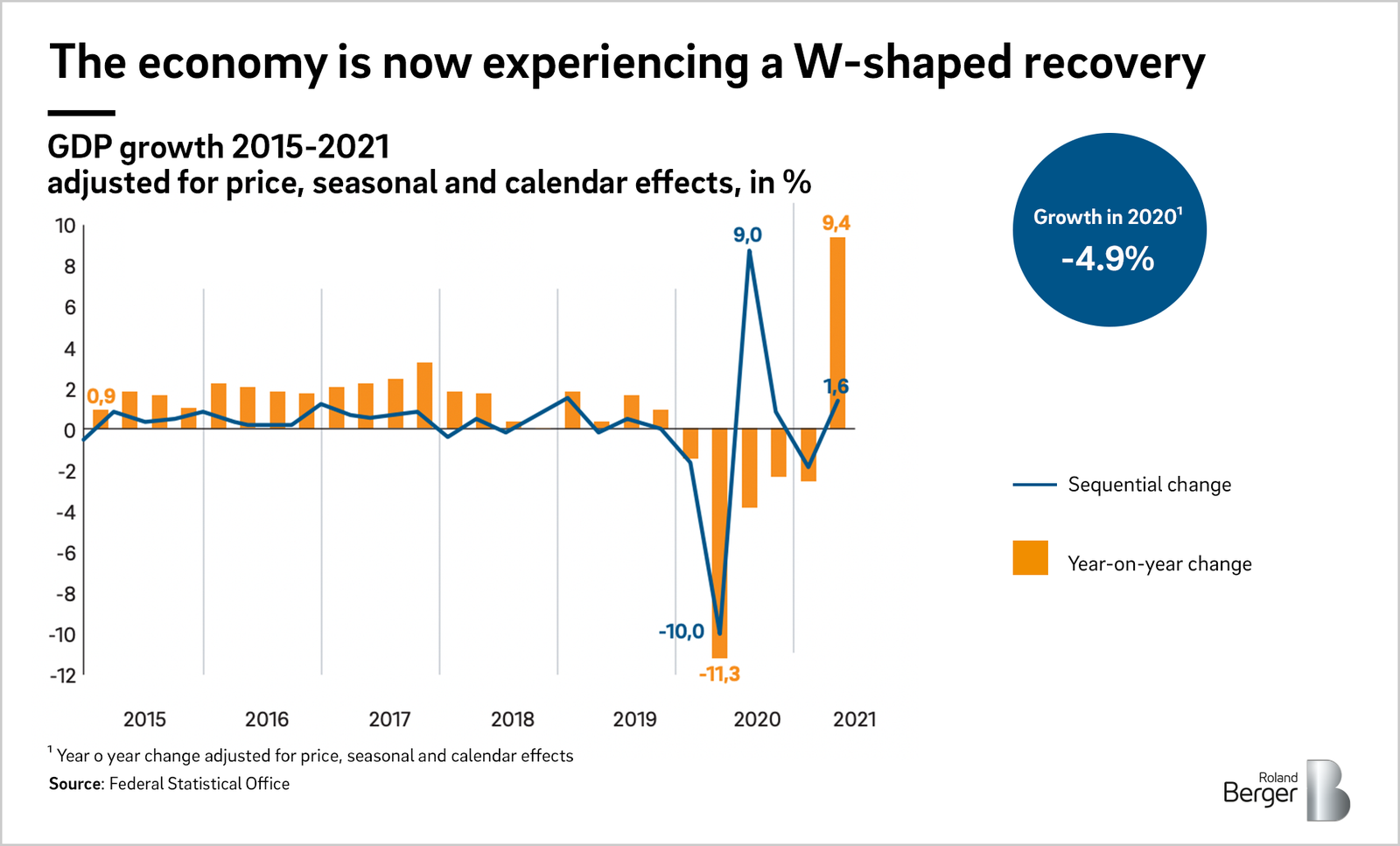
The good news is that, despite all the restrictions, the German economy could return to pre-crisis levels as early as the third quarter – especially if, in the context of measures to control infection, existing economic restrictions are lifted as expected by the end of the third quarter. If that happens, there is theoretically no reason why the
retail
and service sectors should not recover. Private consumption spending would once again be the mainstay of projected growth.
The bottom line is that we see the upswing on a shaky foundation. Whether and to what extent the economy does recover largely depends on what happens with the pandemic going forward. It thus comes as no surprise to find this uncertainty mirrored in the widely varying forecasts put forward by economic institutions. Pessimistic estimates put economic growth this year at just 2.7%, whereas the more optimistic forecasts point to growth of 4.0%. On average, the respondent economists anticipate GDP growth of 3.3%.