So, what makes you different from similar startups?
The Cree USP is made up of a combination of three factors that allows construction projects to benefit from green finance demand for carbon-neutral buildings on a large scale. First, sustainable hybrid timber buildings, or “green buildings” for green funds. Secondly, they must be built in a modular repetitive manner, meaning they must be scalable, minimizing the labor (COVID-19), time, and money required. Thirdly, they must have a positive impact on the network. This can be done in many ways, for example, sharing the knowledge and information gained via the completion of a job, to the network and other partners in order to better enhance and facilitate the skills and growth of the community as a whole.
How did you come up with the idea for your company?
While I was busy driving the RSRG rail business forward, I was invited to a discussion about sustainable building practices with Alois Flatz — the creator of the Sustainable Asset Management Index —, and Professor Friedrich Schmidt-Bleek, founder of Factor 10. Factor 10 was a social and economic policy program that aimed to reduce resource consumption in industrialized countries tenfold, over the next 30 to 50 years. Professor Schmidt-Bleek used to always say, “Rail is not more sustainable than a Transrapid”. His enthusiasm fired me up and we got into a discussion about the impact of construction as a whole — this discussion was to change my life. “You need to see what’s behind a material,” he explained to me. He then introduced his concept of the ‘ecological rucksack’. “What does it take to produce one ton of building material? One ton of steel requires 8 tons of natural resources, one ton of aluminum requires 28 tons, and one ton of copper requires 400 tons of natural resources.” He would always challenge me: “How can you reduce the resources you use by a factor of 10?”
This type of thinking led to an architectural firm in Vienna becoming interested in collaborating on a research project with me. They wanted to know whether it would be technically possible to build an 8-story building from wood, fully-compliant with safety standards. Although I easily proved that it was possible, I wasn’t satisfied: “What about 30 stories, 100 meters? Can we build that high with wood?”
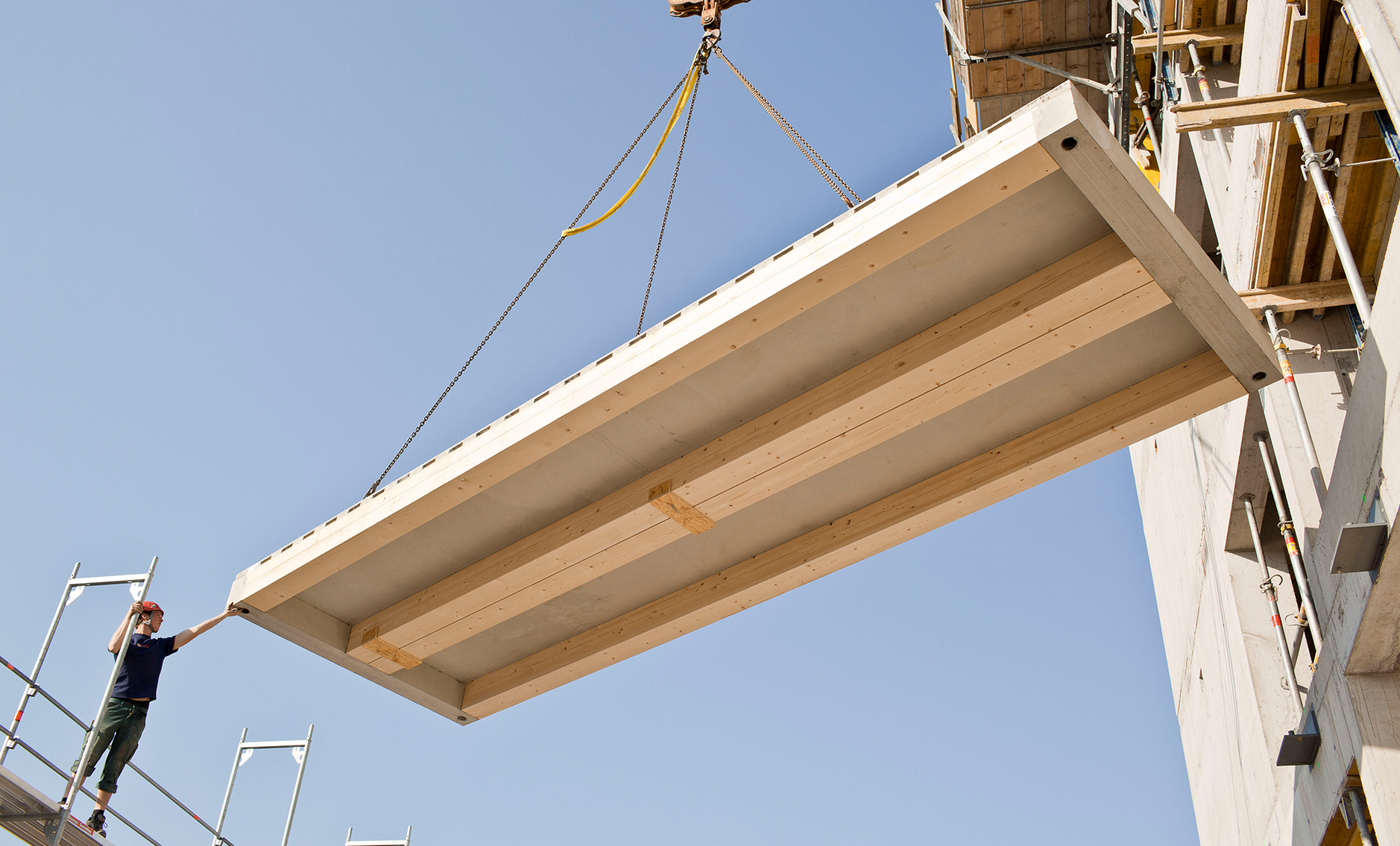
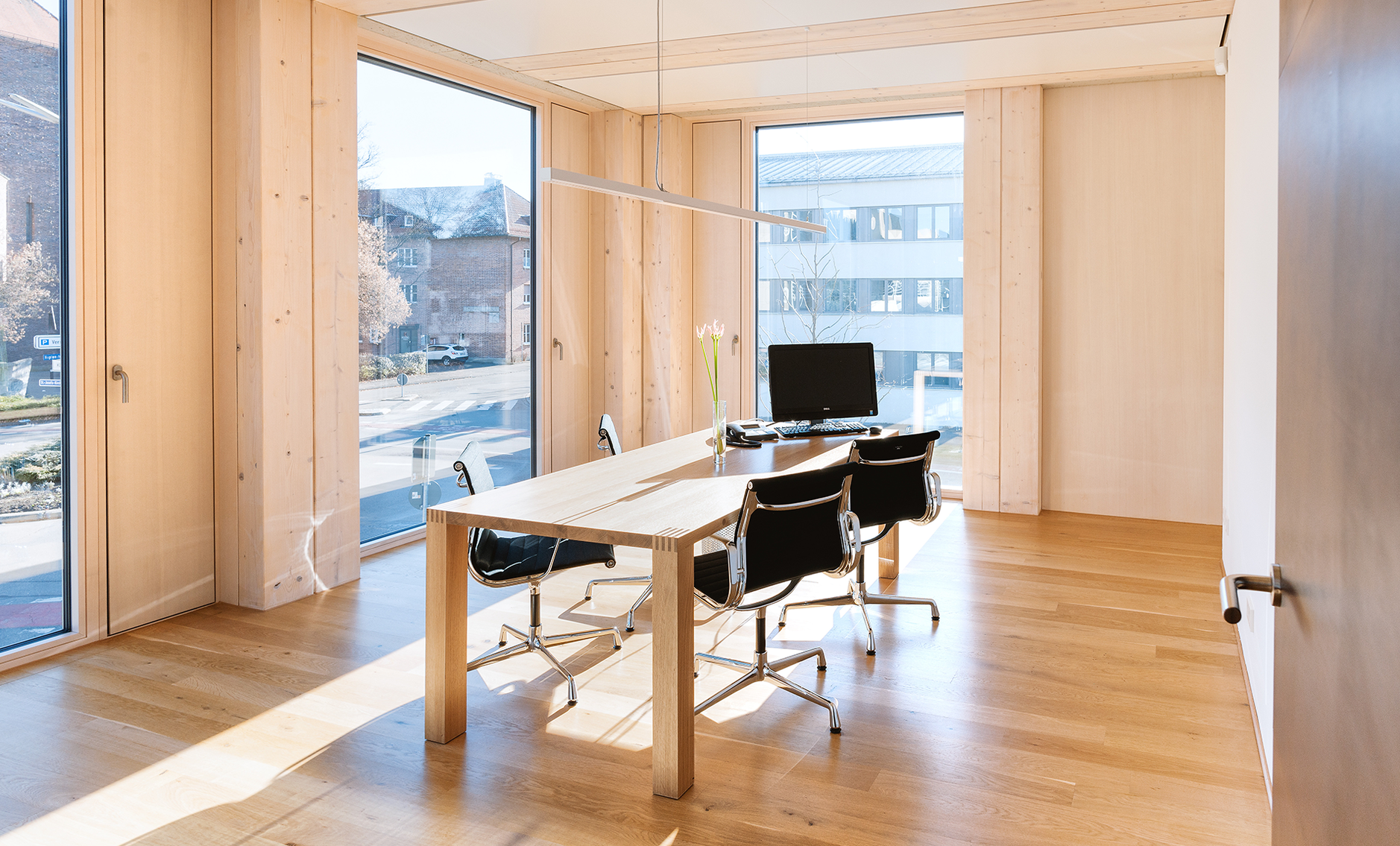
The first sustainable building designed and built with the Cree platform was Cree LCT One. The hybrid-timber, LifeCycle Tower One, was erected in only 8 days, and featured many advantages: 500 sqm of airtight/weatherproof material could be assembled, per day, with only 5 workers and 1 crane operator; CO2 emissions were reduced by roughly 80%; the visual appearance is that of structural wood, perfect for sound insulation, and replicating a natural environment; and natural fire installation, complete with a 2-hour resistance rating, is located between every floor; finally, the building fulfills all building certification programs, allowing for maximum building sizes and heights.