So what must companies do to be a winner in this transformation?
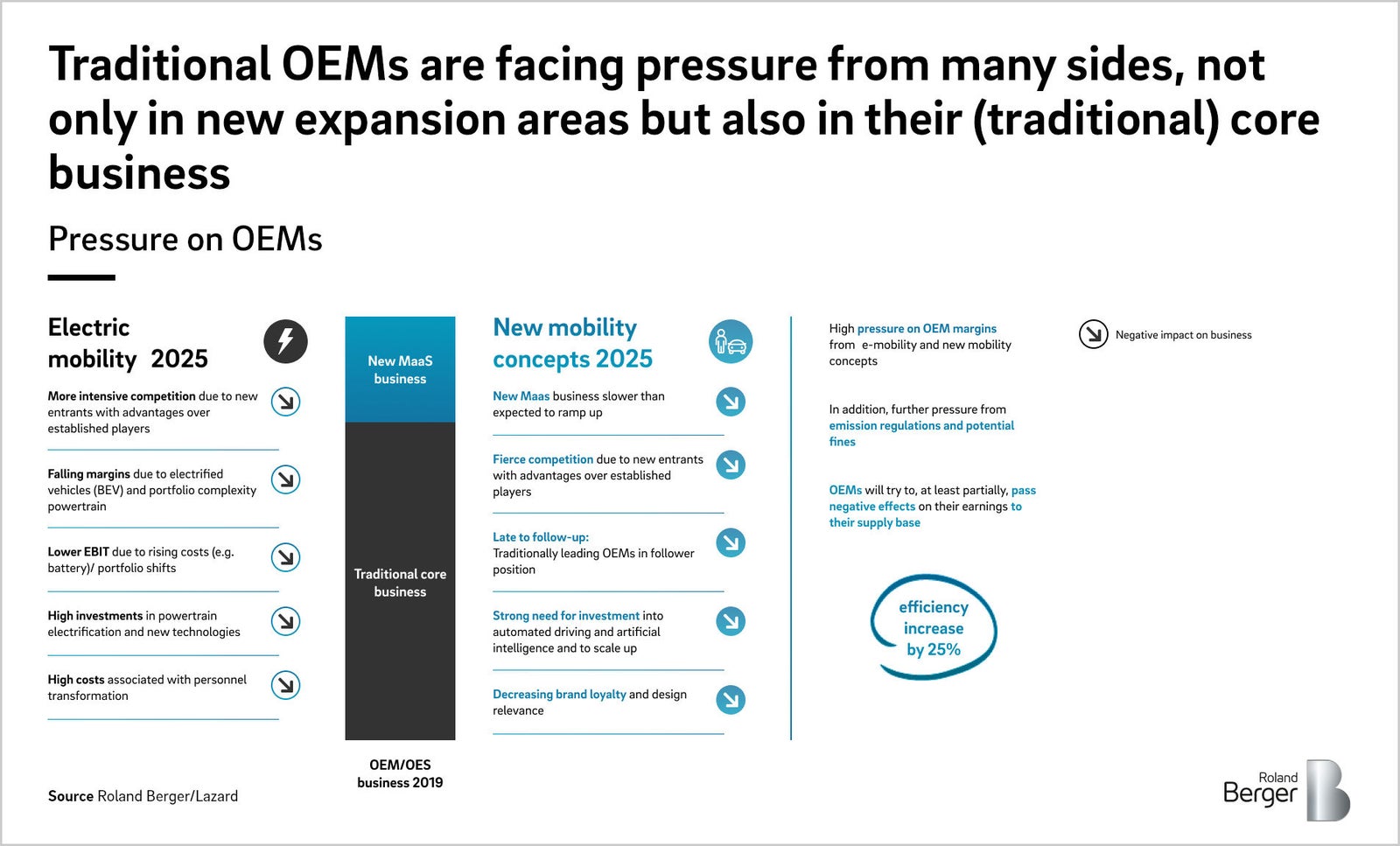
Even though the mobility transformation certainly does not spell the end of Europe's most important sector of industry, it may well hit companies hard. So they need to take fast and decisive action. There is no one-size-fits-all solution, because every company is coming at it from a different starting point. But there are certain approaches that we recommend for all. These include performance programs specially focused on the transformation – the radical change that will be required calls for deliberate steps to navigate the challenge, and these need to be backed by all of the company's stakeholders. Without a radical rethink of current structures, core competencies, product portfolios, complex decision-making structures and production capacities, and without intensifying efforts to digitalize their business, OEMs and OESs will find it hard to survive the growing pressure on margins in the coming years. Industry players also need to be building up targeted expertise in areas that promise success in the future, such as the digitalization space. To do that they will need people with the right skill set – and this is a factor that will become ever more important going forward, so it needs to be incorporated in companies' strategic plans. That said, it's not always necessary for every company to have every skill in-house: when it comes to developing new and profitable business models, it often makes more sense to engage in partnerships or risk capital investments, partly for the opportunity to exploit the innovative power of startups. And finally, clear communication is important in getting the workforce on board and feeling good about the transformation. As is so often the case, the right leadership is the key to success, as it's management that creates the right culture within the company to support future-oriented ways of thinking and acting within the organization.