What niche are most of your clients coming from?
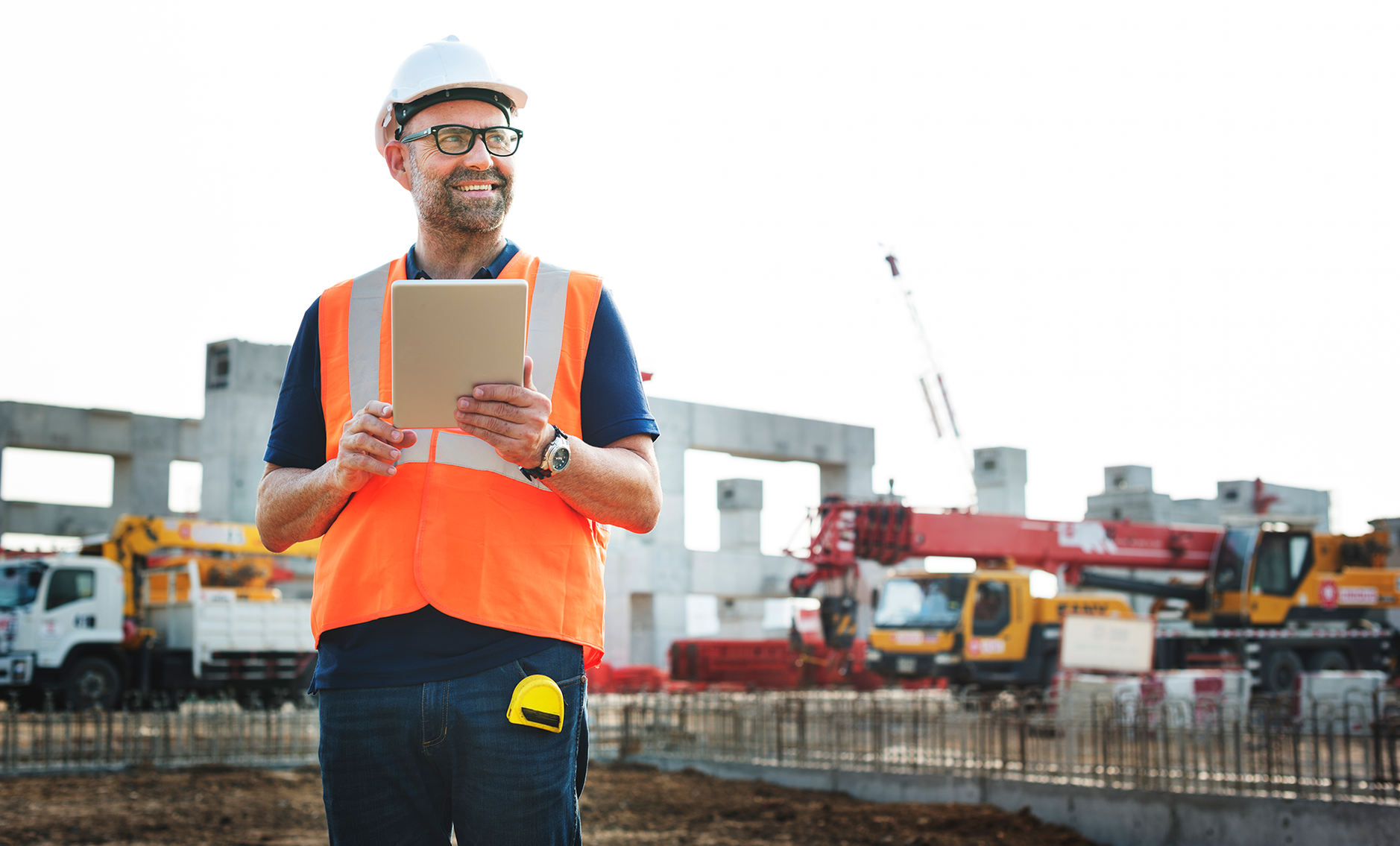
The bulk of our clients are construction companies.
Startups often have a harder time securing funding than established brands. How have you navigated the funding process? Do you think it’s more difficult for startups in the construction industry as compared to other spheres?
I cannot separate our sector from others in regard to the funding process. We are focused on value creation for our users and the subsequent market opportunity. Strategically, we are big believers of business outcomes, resulting from the horizontal data extraction and computation in our industry, which then again benefit multiple stakeholders or buying centers.
Our shareholders have actively shaped transitions in other markets and can apply the overall trend of convergence to daily challenges we are facing. I don’t believe that Corrux, or similar market companions, are only being fed out of the ConstructionTech money pot.
The difficulty going forward, in my opinion, will revolve around making it clear that we need to continuously invest in finding innovation for our construction industry, even in times when a slight downturn might affect construction volume. Especially during downturns, however, the gains presented from such investments will be imperative to the industry in weathering the storm.
How do you see the construction industry looking in 2025?
By 2025, I expect there to be many strides forward, in terms of accuracy, efficiency, and safety – all from using and analyzing readily available data. I expect to see our solution providing greater transparency to companies and governments during the bidding process. That means that companies will have a better idea of and greater accuracy in determining what a job will cost, while governments will see greater reductions in cost-overruns.
Machines working on the job site will be more capable of getting the job done with less fuel and within less time. Machine downtime will see a sizable drop as machines run more efficiently, idle only when necessary and are well maintained.
All these factors provide the foremen and the drivers insights into their machines that was not previously available. Drivers will have a greater overview of the processes a machine goes through; for example, a tunnel-boring machine or even a jack hammer attachment on an excavator. These insights, detailing how far a crew can push machines and the breaking points, will greatly increase safety on-site.
What is the role of digitalization in the construction industry, e.g. to improve productivity, to increase safety or to offer entirely new building solutions?
Digitalization is not just some buzzword. It describes the process of making previously manual processes more automated, and the concept is pervasive in almost every facet of life, business and industry. In terms of the digitalization race, the construction industry is a straggler, far behind almost all other industries. The potential of digitalization in the industry, however, is immense, and the keyword here is data. Data and its analysis will inform companies prior, during and even after a job.
Foremen can be expected to make better decisions on site and to be more confident in achieving not just targeted outcomes, but overarching goals in a timely manner. Improved productivity is sure to improve the bottom line, while also reducing the entirety of the job’s duration.
Regarding new solutions, data insights into process could unlock an entire world of improvement, so it would stand to reason that such data could lead to new solutions. Performance metrics from machines could inform how well each works with a certain material, while having the ability to push a drill for example to its limit without breaking could lead to stronger foundations and structures.
What do you see as the key trends in this context?
Construction data aiding in improved resource consumption, increased project safety and overall project delivery and quality to be improved. Data from job sites will then provide useful and actionable insight to banks, and insurers, as well as material providers.
What is your company vision for the next 5 years?
In 5 years, the construction industry will have made significant leaps to full digitalization. The increased margins and greater efficiencies will reinforce the industry’s stability, even during unstable economic times or downturns. In the big picture, more construction companies - big and small - will prove to be more financially solid and few bankruptcies will occur.
In the next half decade, we will be the leading digital solution provider for the construction industry, with a considerable share of the German market and having already broken into other international markets. Ideally, we would like to use our positioning to make inroads into other mobile heavy machinery industries, such as mining, tunneling, and more.
As a startup, what is your next goal?
Our next goal is to build up our brand as a reliable and competent partner, as well as a great company to work for. We put a huge amount of emphasis on making our users AND our colleagues happy. An excellent company culture of openness and trust allows us to attract top talent while motivating our teams to provide the best service possible.
What partners do you need to achieve these goals?
As far as partners go, we are certainly on a good path. We have excellent access within the sector and our current partners play very sizable roles in the construction industry. Banks and insurance companies also have an interest in seeing more productive and efficient job sites. Getting those two industries on board to see our solution as a reliable indicator is a huge leap forward in achieving our goals.
What investments are necessary for your clients to get started working with your solution?
Many of our clients have up-and-running asset managers and much of the initial investment has already been made.
Our pricing is based on a per-machine monthly fee. To get started, a new client must consider its fleet size, its potential data and the type of analysis. On the hardware side, which is included in the monthly cost, we use trackers to gather various bits of data, regardless of OEM and model.
How has COVID-19 impacted your company and how are you responding to it?
We have seen a great amount of
mitigation strategies in the construction industry
, revolving around adopting new processes and digital methodologies in response to the paradigm shift brought upon by COVID-19. This makes us as a company hopeful. First statistics, amongst others by the Bundesverband Deutscher Startups, have labelled our sector as the "least affected" by this crisis. We are in close contact with all of our customers and new prospects alike to identify what needs to be done to prepare for potential cause and effect, even after COVID recedes. That being said, we aren’t unscathed and have taken measures to assess the health of our clients, lend support and shore up the health of our company. On the personnel side, we have put special emphasis on keeping the team healthy and sane with exercise and nutrition tips, as well as 1-on-1s with colleagues to provide a venting partner and solve personal and work hurdles together.
Following COVID-19, work from home (WFH) is likely to play a more central role in our daily work life. How do you see this impacting Corrux and your relationship with employees and customers?
Although WFH was part of our ways of working before, going 100% remote has proven to be a useful experiment. Many of our colleagues have demonstrated their ability to stay on task and deliver, and those who themselves were skeptical realized that they, too, can perform very well in isolation or with the distractions of a family.
Given that we saw the writing on the wall before the lockdown, much of the credit for this success should go to one of our colleagues, who prepped the team with helpful tips and tricks. Additionally, we have continued to try to foster a family-friendly environment, by taking enjoyment in the sometimes unintentional disruption by a colleague’s kid.
Our relationship as a team has remained strong as we instituted weekly kick-offs and all-hands meetings Mondays and Fridays, while much of our work requires close collaboration and communication. We also have emphasized cross-departmental video chats and a daily coffee hour to allow colleagues to shoot the breeze and blow off steam while staying connected. Similarly, we're getting to know our customers from an entirely different side. Now, kids and pets may be part of a workshop and help us to connect on an even more informal level.