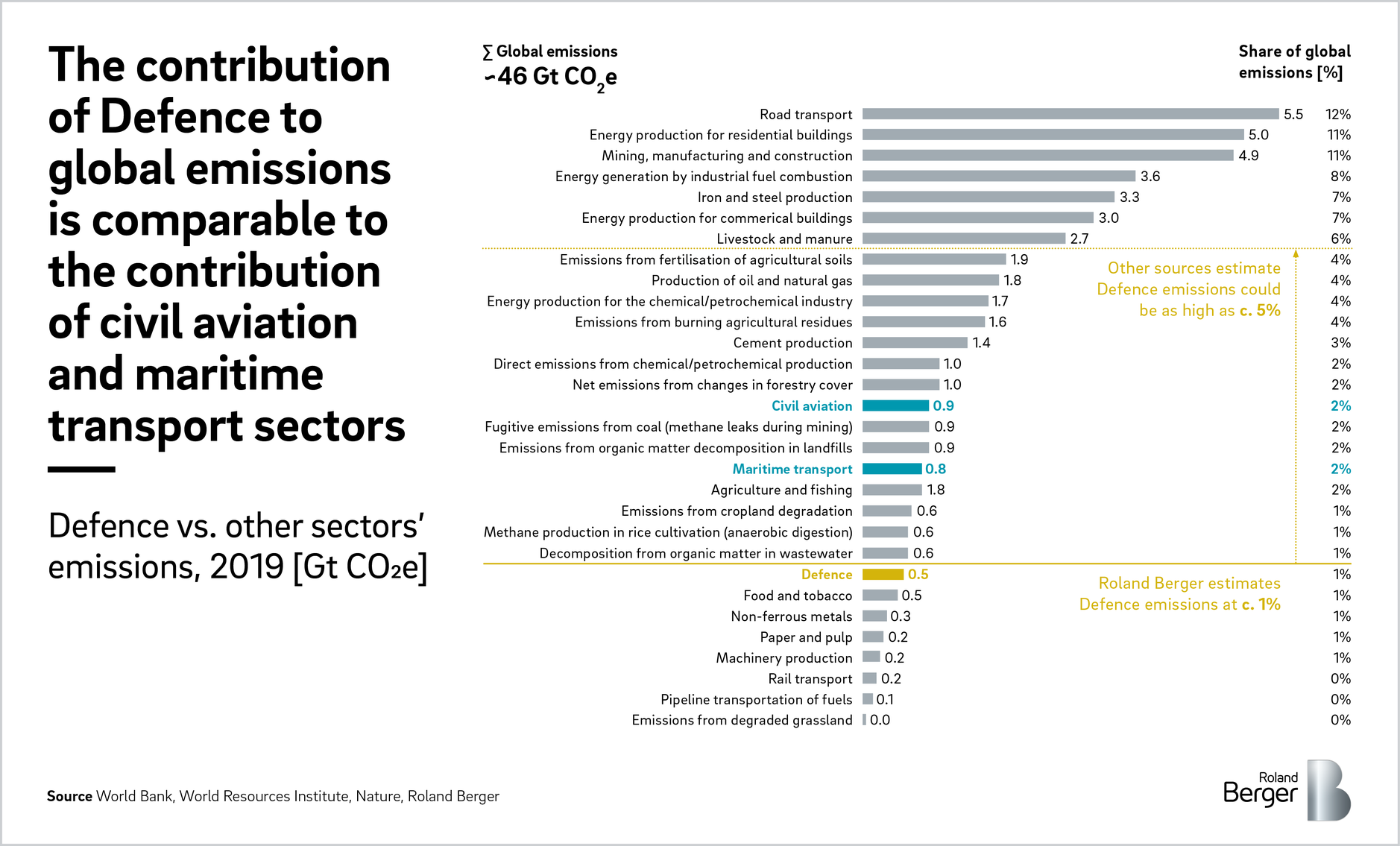

Between 1% and 5% of global CO2 equivalent emissions are estimated to come from Military and Defence industry activities—this is according to recent studies by different stakeholder groups.
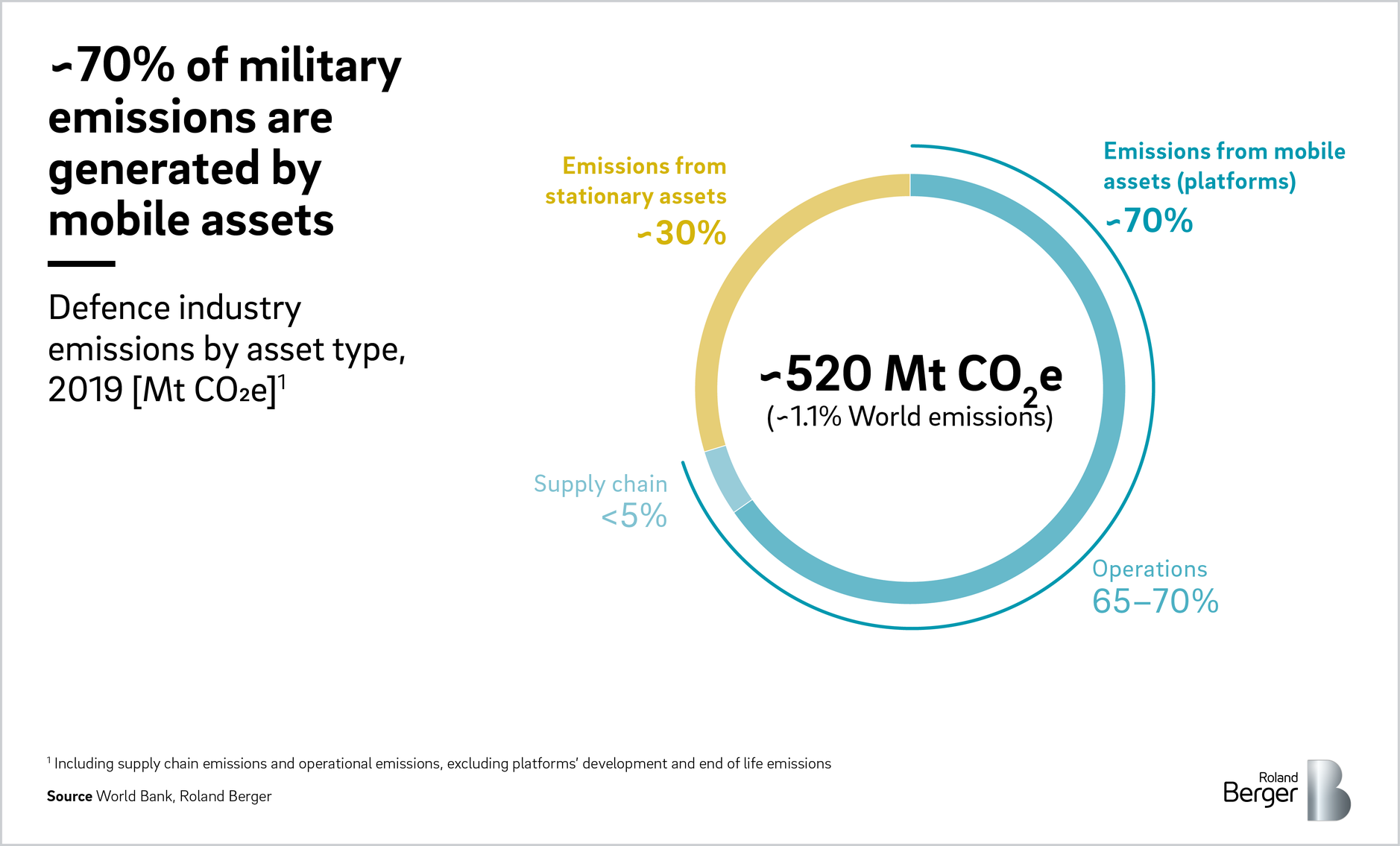
At Roland Berger, our calculations suggest that the Defence sector releases to the atmosphere emissions on the order of 500 megatons to 1 gigaton of CO2 equivalent annually, implying that it contributes between 1% and 2% of global anthropogenic emissions. Of this sum, approximately 65–70% stems from the operation of military platforms and ~30% from stationary assets, with the remaining share coming from the supply chain for military equipment. Part of these emissions are sequestered by the vast amounts of land owned by the military.
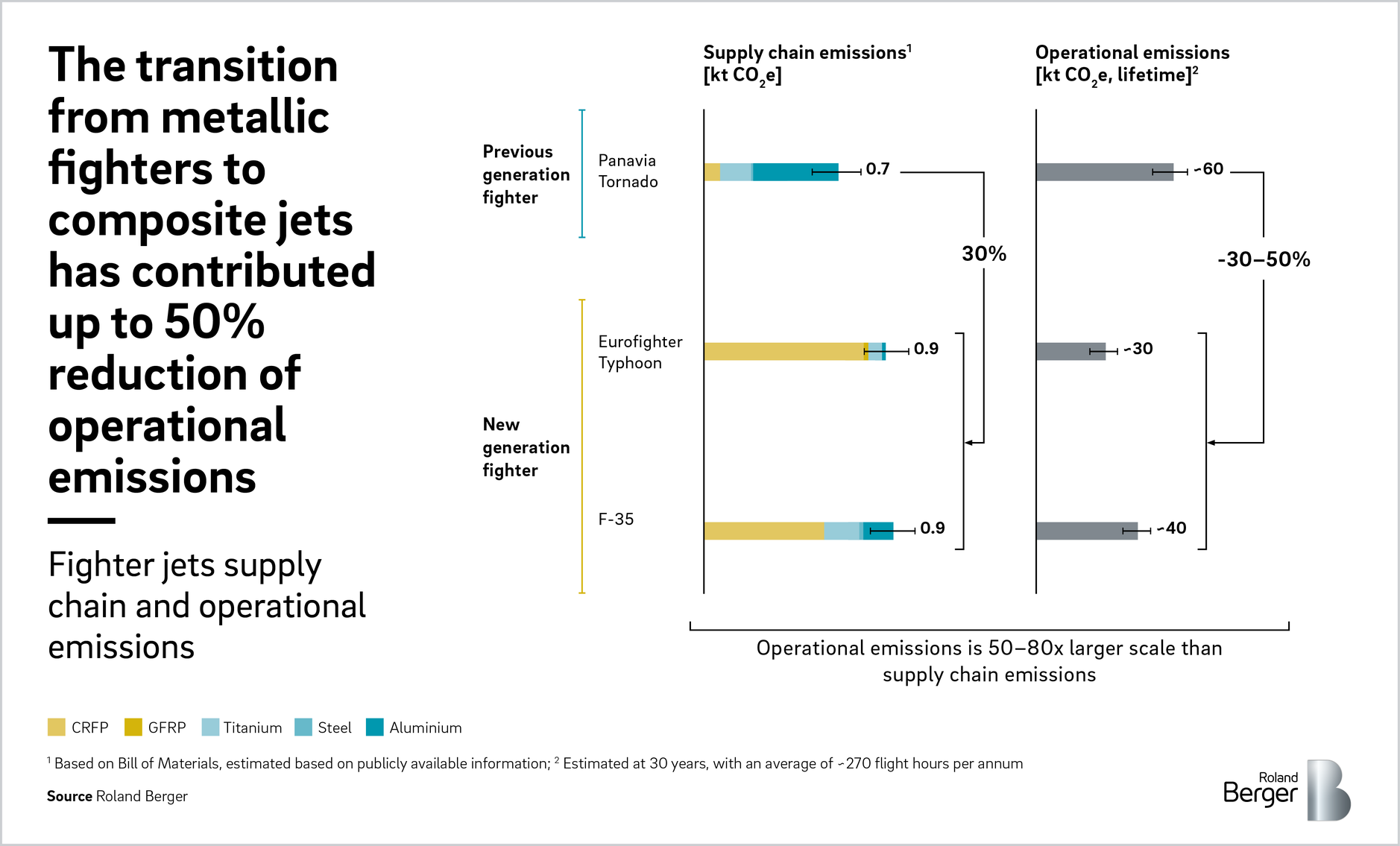
In this study we investigate how emissions from assets owned by the Defence sector—both mobile and stationary—aggregate to produce the overall footprint and emissions profile of militaries, based on the mix of assets owned by armies, air forces, and navies. Then we break down emissions from air, sea, and land platforms to identify the contributions of supply chain (~3%) and operations (~97%), showing that the number of active platforms, and how they are used, are the main drivers of military emissions.