The recognition that carbon capture and storage (CCS) will play a pivotal role in the world's battle against global warming, has come with the increasing concerns and awareness around climate change.
If we were to optimistically assume that anthropogenic emissions decline from ~36 Gt CO2 per annum (as of 2021) to net zero by 2050, the resulting cumulative emissions will likely overshoot our remaining 1.5°C carbon budget. Hence, negative emissions (enabled by carbon capture) are an absolute necessity. Accordingly, it is no surprise that carbon captureis increasingly featured in several net zero pathways formulated byorganisations such as IEA, IPCC, DNV, etc. The UK's outlook is similarly bullish about CCS, with the Sixth Carbon Budget (6CB) targeting acapture capacity of >100 Mt CO2 by 2050 under most scenarios, with the vast majority attributed to greenhouse gas (GHG) removals.
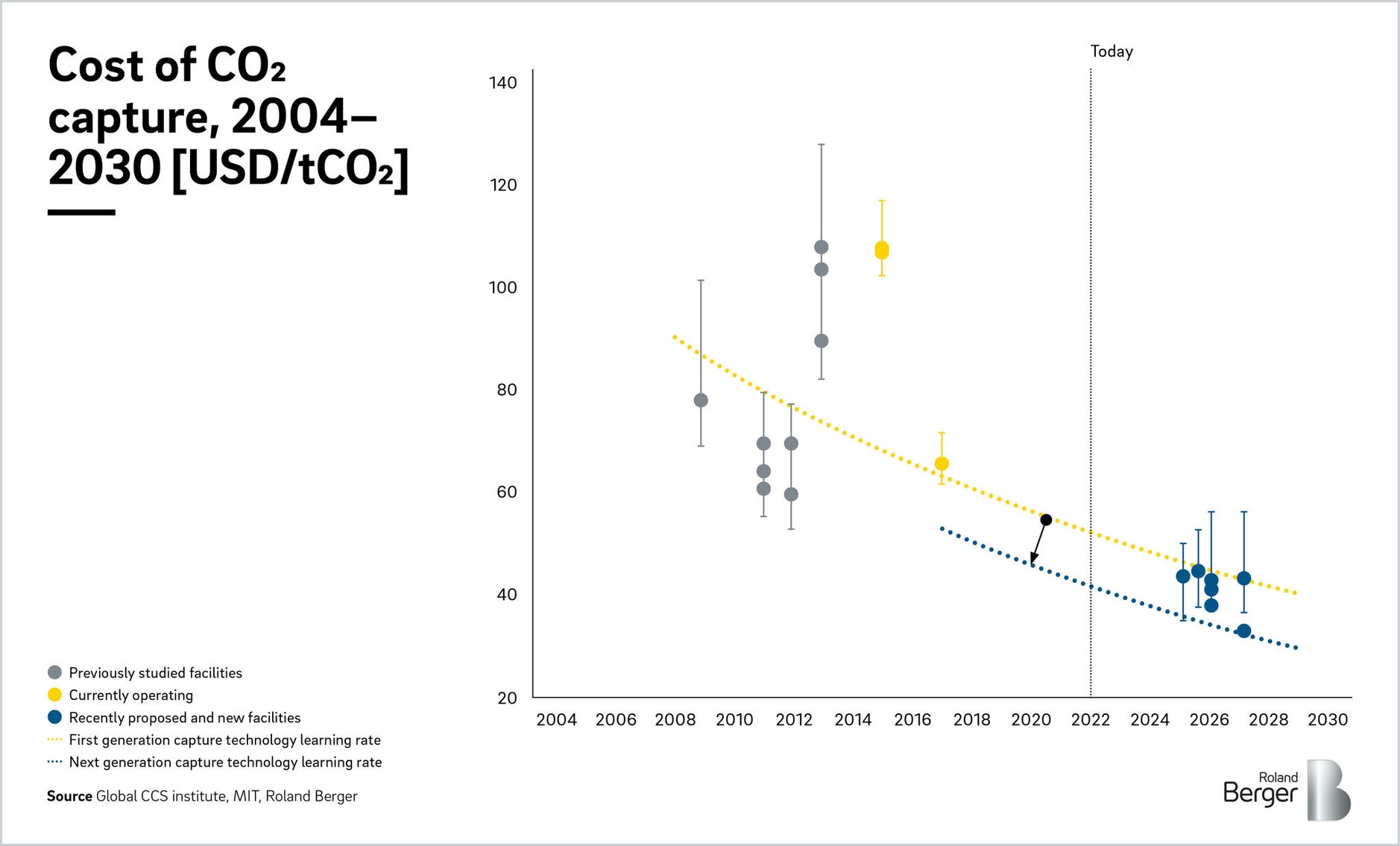
The adoption of carbon capture is accelerating — with the cost of capture decreasing and increased funding being committed to CCS projects. Governments and regulatory bodies are also playing an important role to help drive CCS. For instance, in the UK, there is the flagship CCS Infrastructure Fund which is designed to provide GBP 1 billion in capital expenditure support, as well as business models for various aspects of the CCS value chain. In the US, the recently announced Inflation Reduction Act increased the 45Q tax credit from USD 50 to USD 85 per metric tonne of CO2 sequestered. The CCS landscape is becoming increasingly complex, dynamic, and rife with opportunities. Accordingly, it seems prudent now more than ever to observe this evolution and assess how the UK can position itself as a global leader.
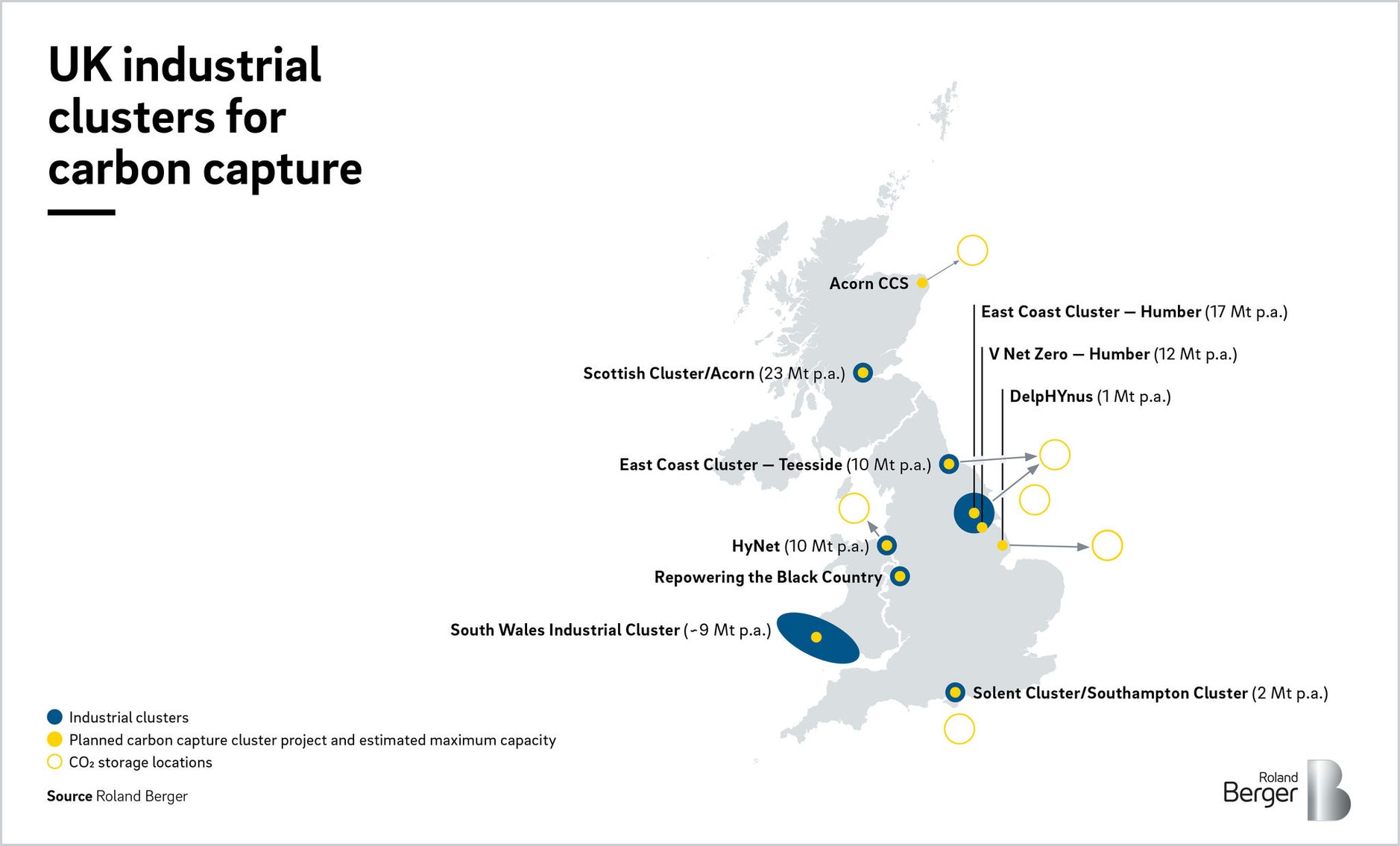
In this article, we attempt to do this by providing the reader with a brief introduction to CCS (including bioenergy with carbon capture and storage (BECCS)), summarising the UK’s approach to drive CCS as an integral component of its net zero ambition, and sharing observations and takeaways from our conversations with key stakeholders — cluster participants, technology providers, power/utility companies, and independent project developers.
The UK has made a good start with its cluster strategy, regulatory approach, and business models. And, as the world grapples with increasing macro uncertainty, geopolitics, and concerns around energy security and affordability, it is imperative to maintain momentum to stay ahead in the global race for CCS leadership.