For decades, the human resources (HR) function has been perceived by outsiders as a more or less administrative department. HR dealt with job adverts, sick leave and maternity pay. This was always wrong, but today this view is completely outdated.
Several trends are driving a major shift in HR. Primarily,
digitalization
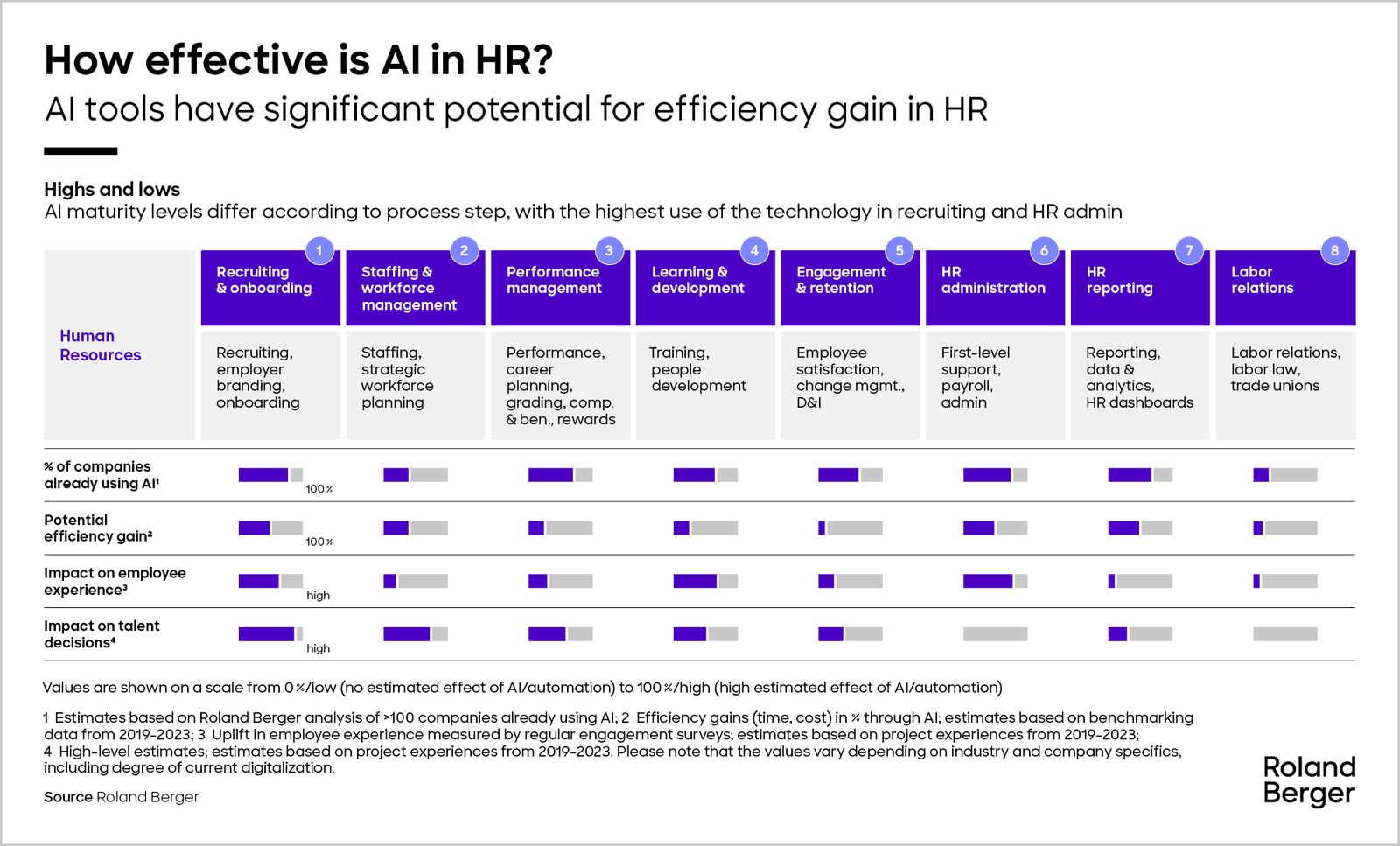
is fundamentally changing its role. New technologies and automated solutions – especially those based on (generative) artificial intelligence – are transforming HR from a transactional into a strategic function offering value-add services.
At the same time, talent is becoming scarcer. As demographics and in-demand skills change, companies must work harder to secure the best people amongst fierce competition. They are also having to adapt to modern perspectives of the workplace. Today’s workers now often expect more flexible, employee-oriented employers, for example. Lastly, macro-economic uncertainty is requiring flexible adjustments of workforces. While dealing with these challenges, HR must continue to provide necessary functions and capabilities.
As a result, companies must adjust and redefine the future of work. Two points will be key to these changes. First, HR needs to transform as a function, becoming smarter and more efficient. Second, HR must support the
transformation
of business, providing the right people and culture.
AI has an important part to play in this transformation. In our report “AI in human resources: Mastering the transformation of HR – From transactional to strategic”, we assess AI’s role in effecting the change.