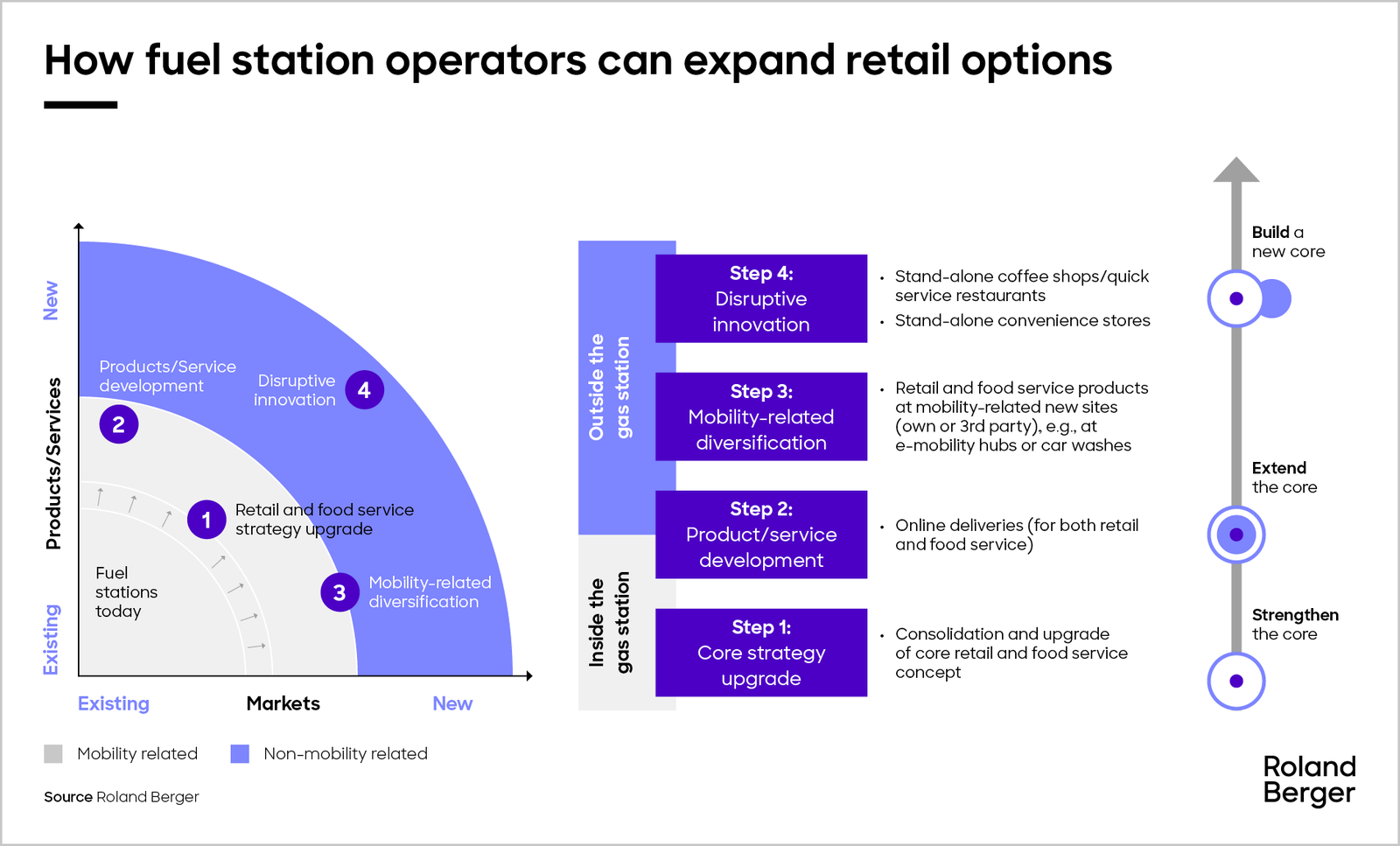
The transition strategy presents a major challenge. Replacing lost fossil fuel sales with biofuel or electricity sales is theoretically possible, but only to a limited extent, especially at existing fuel stations. Meanwhile, the non-fuel retail margin, historically the industry's lifeline, is becoming increasingly misaligned with customer expectations and market dynamics.
It isn’t just vehicles – traditional convenience store categories are also undergoing significant change. Cigarettes and carbonated drinks – historically accounting for over half of fuel station retail sales – are declining at a category level. And food service offerings at fuel stations have failed to keep up with the rapidly changing food service landscape and shifting consumer expectations. Meanwhile, ancillary services such as mobile top-ups are increasingly digitalized, reducing footfall and revenues for fuel station operators.
The infrastructure that once defined modern road travel is increasingly at risk of losing relevance.
Consumer expectations reshape convenience
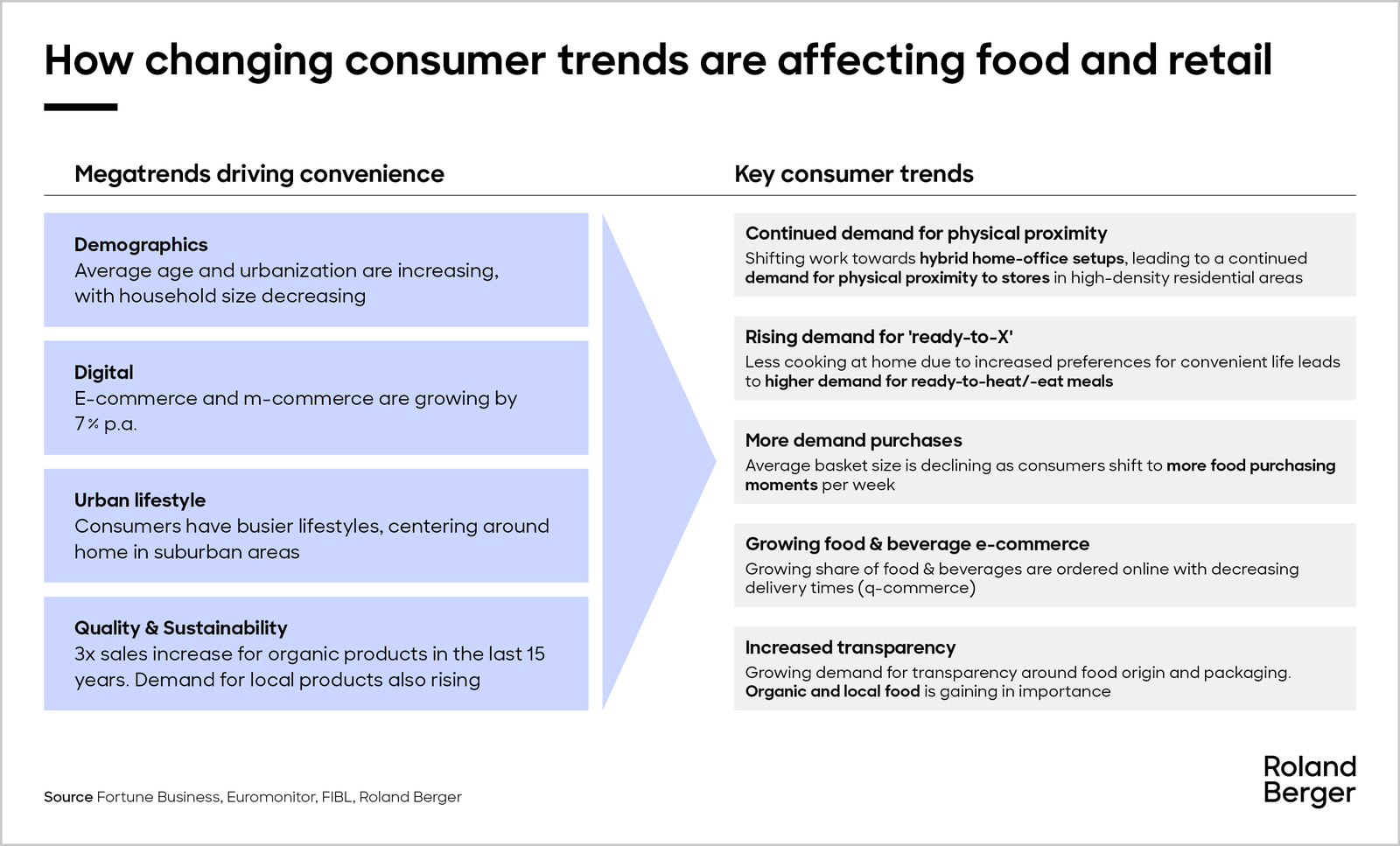
Motorists and non-motorists alike are living increasingly hectic, time-constrained lifestyles and their demand for convenience-oriented products and services continues to rise.
The key
consumer trends
reshaping this landscape are clear: sustained demand for physical proximity, growing appetite for ready-to-eat and ready-to-heat meals, increased online ordering and food delivery options, and increasing emphasis on food provenance and sustainability.