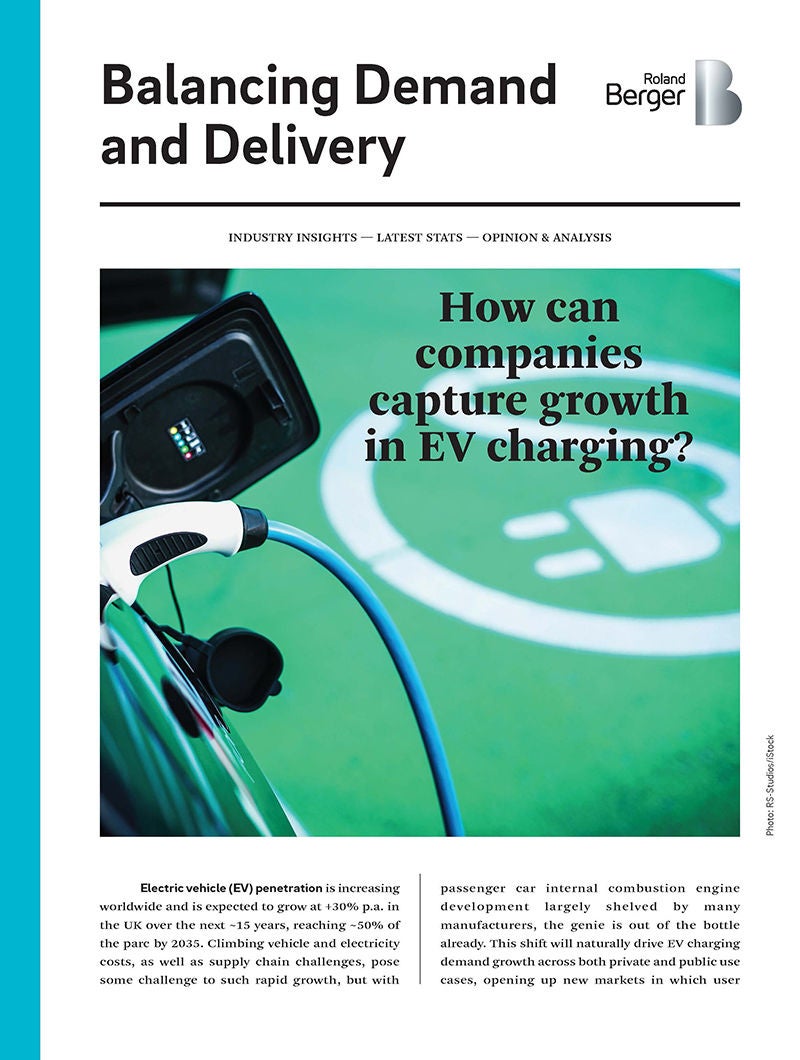

Electric vehicle (EV) penetration is increasing worldwide and is expected to grow at +30% p.a. in the UK over the next ~15 years, reaching ~50% of the parc by 2035. Climbing vehicle and electricity costs, as well as supply chain challenges, pose some challenge to such rapid growth, but with passenger car internal combustion engine development largely shelved by many manufacturers, the genie is out of the bottle already. This shift will naturally drive EV charging demand growth across both private and public use cases, opening up new markets in which user behaviours will continue to evolve as more vehicle owners adopt EVs, battery capacities increase, and access to different charging options evolve.
The expected roll-out of public EV charging services (EVCS) does not just represent substitution of the fuel forecourt market, but a fundamental recutting of the petrol, electricity network, leisure, retail, and real estate markets — a revolution with potential to transform, amongst others, retail patterns, electricity grid operations, and the use of land for vehicle parking. Landowners and operators must therefore capitalise on the increasing demand for, and accessibility of, EV charging and reap returns from their assets as part of the electric mobility revolution.