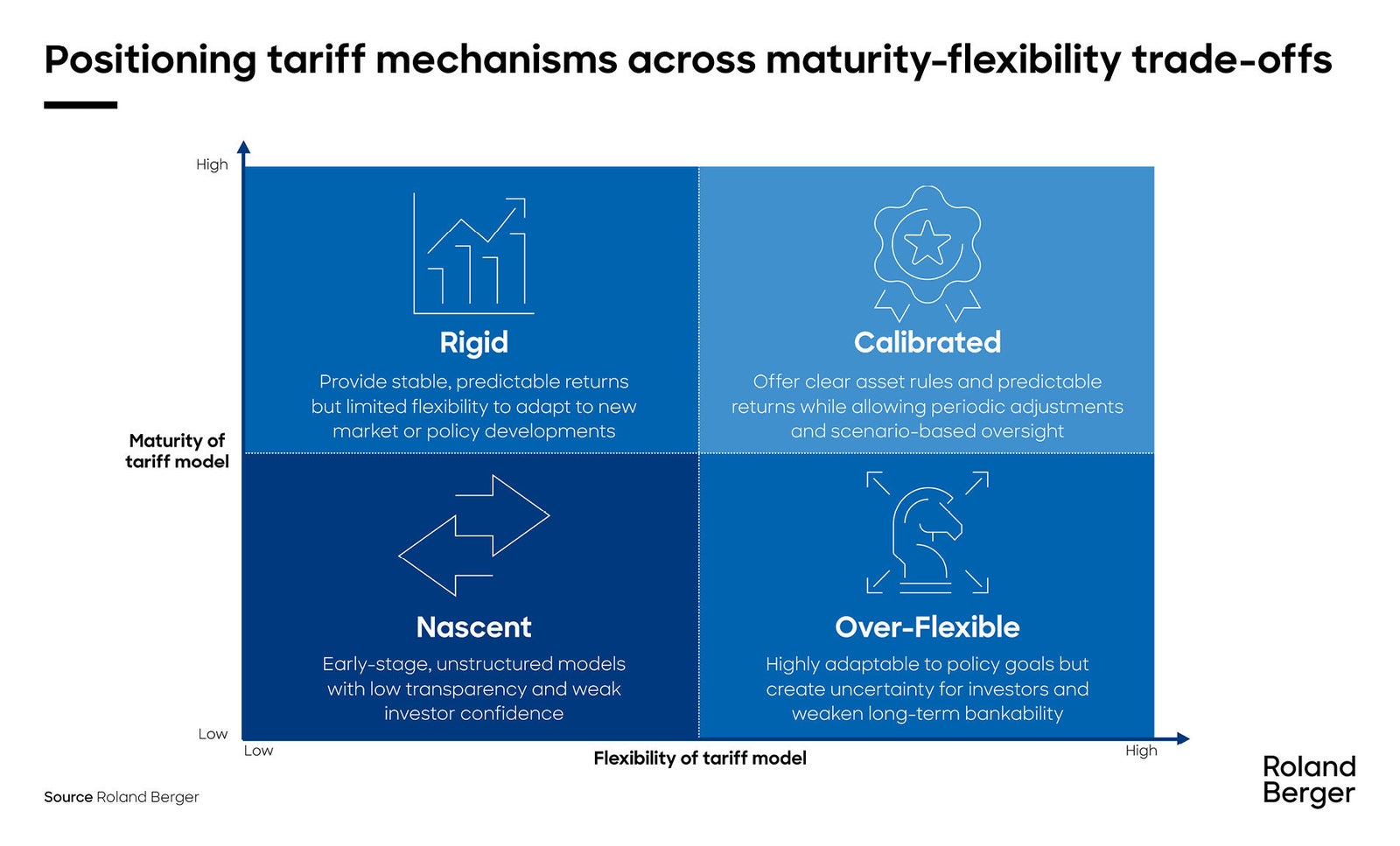
Tariff design for utility services across the Middle East has long grappled with a core tension: keeping services affordable for consumers while ensuring they remain financially viable for operators and attractive to investors. Utilities deliver essential services such as electricity, water and gas among other sectors, which shape public welfare and competitiveness, making affordability a political and social priority. At the same time, these services are capital-intensive and require predictable returns to justify upfront financing and continued private participation. If tariffs are set too low, utilities struggle to maintain quality or expand networks; if set too high, public resistance and underutilization can follow. The regulatory task is clear: recover costs, drive productivity and protect vulnerable customers. This is particularly important in emerging markets where infrastructure gaps are large and budgets are often constrained.


Study
Designing pricing frameworks that enable investment
A comprehensive guide to tariff setting for utility services in the Middle East, highlighting the balance between affordability, financial viability, and investment attraction. The report outlines historical challenges, regulatory evolution, and Roland Berger’s holistic, scenario-based approach to designing effective, transparent, and investable tariff frameworks.
Published January 2026. Available in