Private Equity Outlook 2025: Insights from CEE & SEE
Nearly half of CEE and SEE participants expect a favorable economic outlook in 2025. While optimism has slightly declined compared to last year, when sentiment was even stronger, it remains higher than in WE.
There are notable differences among geographies – Optimism is strong in the Central Europe and the Adria regions, while Poland shows cautious optimism. In contrast, Romania is more pessimistic, experiencing the most significant shift from last year’s high optimism.
Deal flow
PE deal volume continued to decline in 2024, in most EU countries, albeit at a lower rate vs. the previous years. CEE/SEE PE .activity has been more resilient than in the rest of Europe, with a steady deal count.
Poland's PE deal count remained stable in 2024; Romania has seen a consistent upward trend in PE activity in recent years; Adria and Central Europe regions have shown more volatility in the last years.
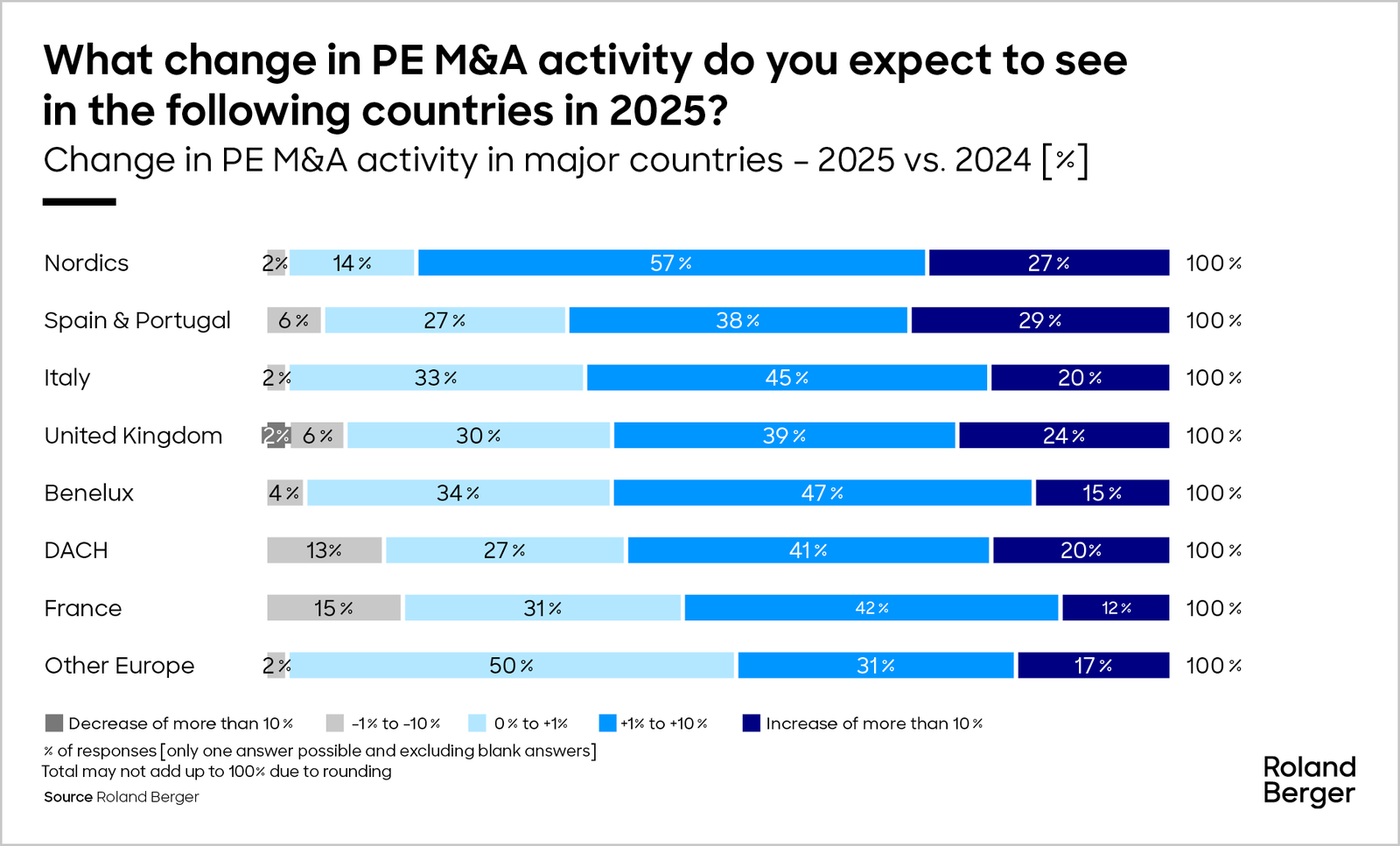
PE funds across Europe are optimistic about the potential deal flow in 2025. In WE, nearly all participants expect an increase in PE-driven transactions, while in CEE/ SEE, 66% of respondents share this outlook.
However, there are some differences among CEE/ SEE geographies regarding this year's PE deal flow prospects: Adria and Central Europe regions are most optimistic, while Poland and Romania have a fairly balanced outlook. Various factors will drive PE activity in the region in 2025: In the Adria region, Central Europe, and Romania, geopolitical and economic considerations will play the most important role. In Poland, target attractiveness and valuation levels will have the biggest impact. Most study respondents anticipate that targets available this year will be more attractive than in 2024.
Portoflio structure
In 2024, Business Services & Logistics, Technology, Software & Digital Solutions, and Consumer Goods & Retail sectors accounted for the largest number of PE deals in CEE/ SEE. Consumer Good & Retail sector with the highest year-over-year increase in the number of PE deals in the region. Technology, Software & Digital Solutions and Pharma & Healthcare sectors are expected to generate the most M&A deals with PE involvement in CEE/ SEE in 2025, consistent with the sentiment from last year. Some differences in sector priorities vs. WE - Consumer Goods & Retail higher on the CEE/ SEE agenda, while Industrial Goods & Engineering, Infrastructure, Business Services & Logistics and Energy, Utilities & Recycling are receiving more attention from PE investors in WE.
PE cycle
CEE/ SEE and WE PE funds are in slightly different cycle phases. In 2025, regional PE funds will primarily focus on fundraising, making new investments, and developing portfolio companies – In WE, PE funds will place less importance on fundraising and emphasize more divesting existing assets. Some differences between geographies – Strong focus on fundraising and making new investments in Adria region. Central Europe and Romania. On the other hand, many Polish funds will prioritize exits this year. At the same time, fundraising is anticipated to be the biggest challenge in 2025 across CEE/ SEE, driven by economic and geopolitical uncertainty, heightened competition, and a limited no. of institutional investors.
Value creation
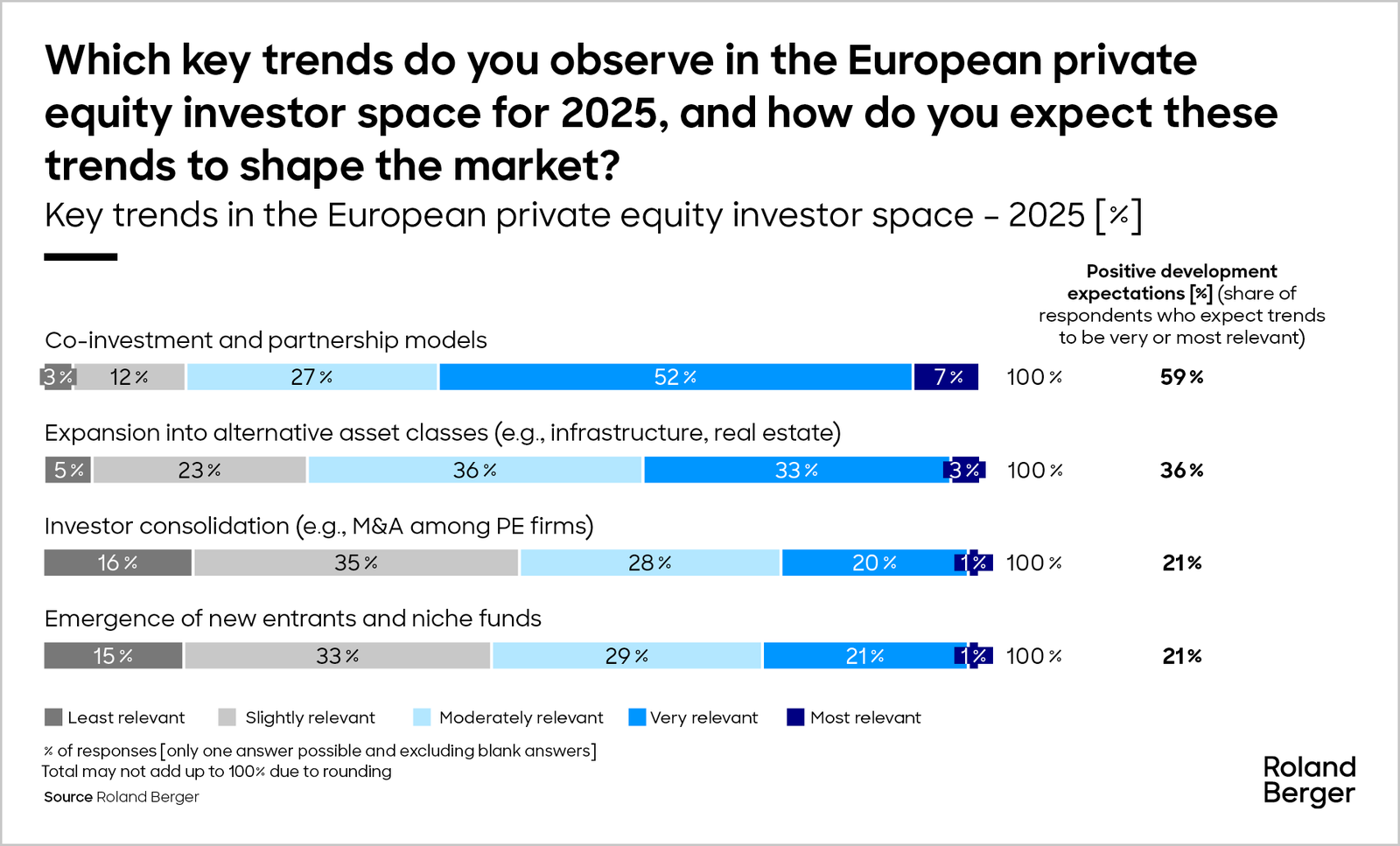
Add-on acquisitions are expected to be a key driver for value creation going forward, across Europe. In CEE/ SEE, PEs will also focus on improving the efficiency of portfolio companies, with most respondents targeting cost reduction, working capital optimization, CAPEX efficiency, and cycle resilience. ESG, which ranked in top three value creation measures in 2024 in CEE/ SEE and WE, has dropped to the bottom of the ranking in 2025.
AI/Innovation
AI is predicted to yield the greatest benefits for PE firms in creating value for portfolio companies, deal sourcing and supporting the due diligence processes.