Multiple Scenarios
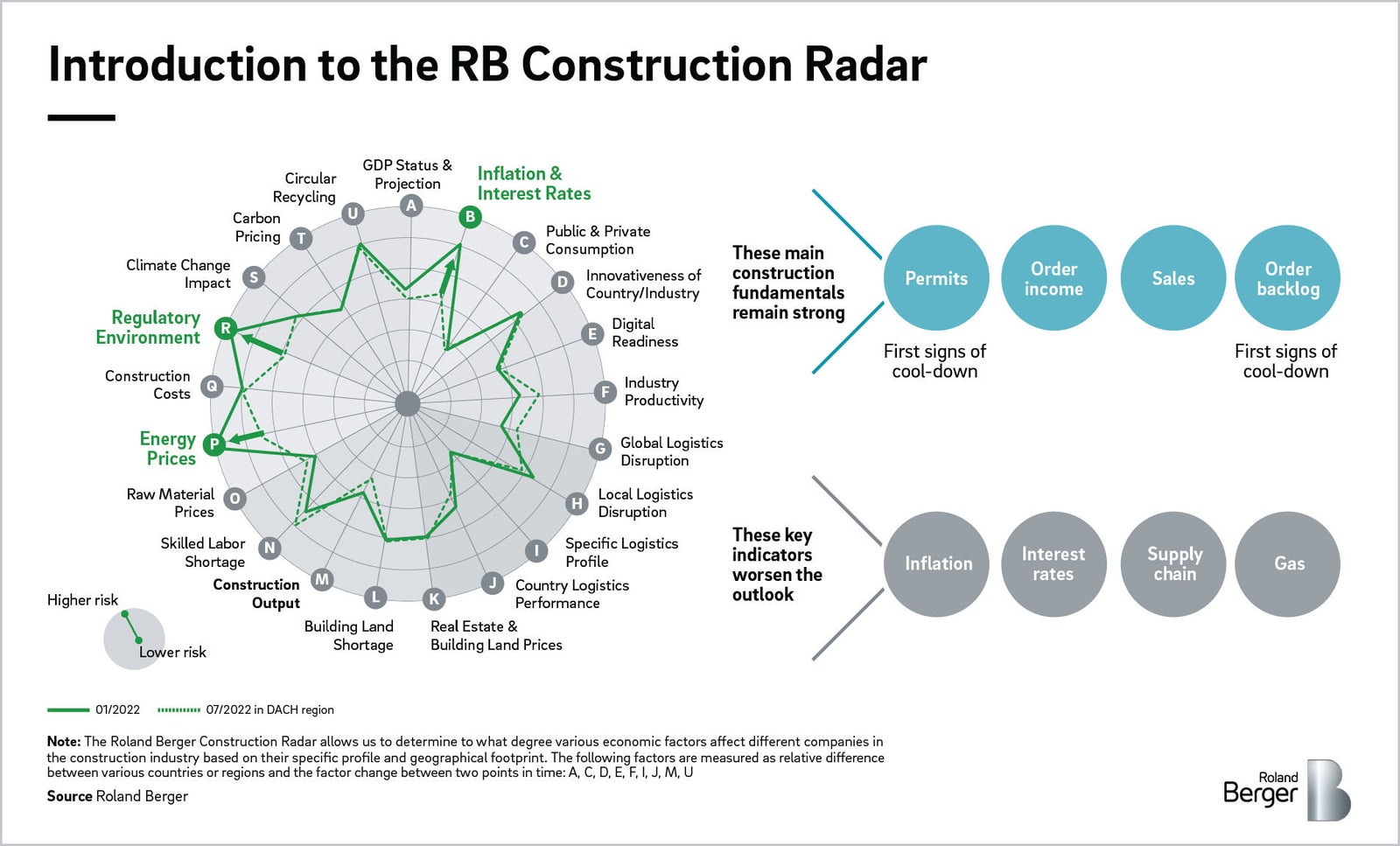
To understand the impact of the described factors and changes on the DACH construction industry in the mid-term, Roland Berger has modelled three scenarios (base-, worst- and best case). The models take into account impacts on a) the various construction segments i.e., new built, renovation and b) on the various players along the constructionvalue chain i.e., from developers, over various manufacturers to the construction companies.
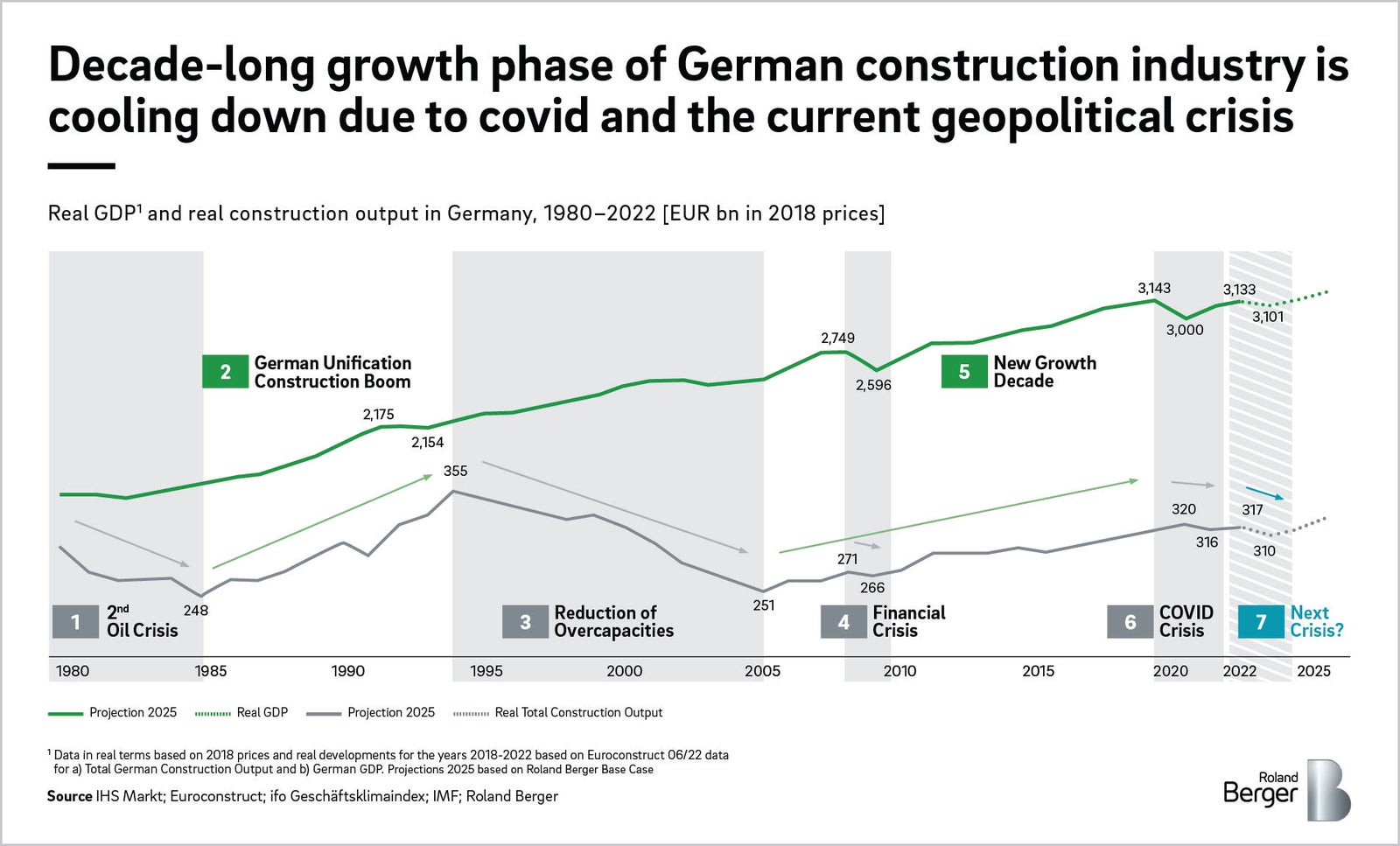
Depending on the scenario, we do not expect normalization until 2024 at the earliest, and potentially as late as 2026 depending on the severity. While supply disruptions and material prices are likely to be only short-term challenges and normalizing until 2024, energy and gas prices as well as interest rates and inflation will likely remain a concern for DACH and Central Europe in the mid-term through 2026. Either way, both supply and demand will be significantly shocked.
In every scenario, we believe the entire construction industry will be negatively affected in 2023. Residential and new construction segments will suffer the most and DACH material suppliers will likely be forced to limit their production. In a worst case scenario, this segment could see negative order income development of below -6% in 2023 and between -3 to -6% in 2024.
While there is no single measure that will overcome DACH construction challenges, increasing efficiencies and becoming more resilient, as well as investing into digitalization and innovation can improve your immediateand
long-term prospects
.
For more information, including detailed responses for affected companies, download our "Roland Berger Construction Radar – Iimpacts on DACH region". For specific questions related to your DACH construction challenges, please contact us — we are here to help and bring decades of experience in the construction, building materials, and real estate industries.