The off-highway sector is just beginning its journey toward decarbonization, with electric powertrains a major focus. Some of the industry’s smaller tools are well suited to electrification, but there are numerous obstacles to overcome if it is to make significant progress, such as achieving production scale, advancing battery technologies, and installing charging infrastructure.
This new report, from Roland Berger and Off-Highway Research, synthesizes off-highway industry views on decarbonization from across the globe and identifies specific types of machinery and regions on which to focus sustainability efforts. Reducing emissions in the off-highway sector won’t be easy, but targeting these areas could yield the most impactful results.
Off-highway decarbonization: The global picture
While the drive toward e-mobility in on-highway transport has been underway for some time, the off-highway industry is just beginning its decarbonization journey. There are four main reasons behind this shift, which we explore in more detail below: internal sustainability initiatives among value chain participants; evolving government regulations and incentives; improved operator experience; and total cost of ownership (TCO) benefits.
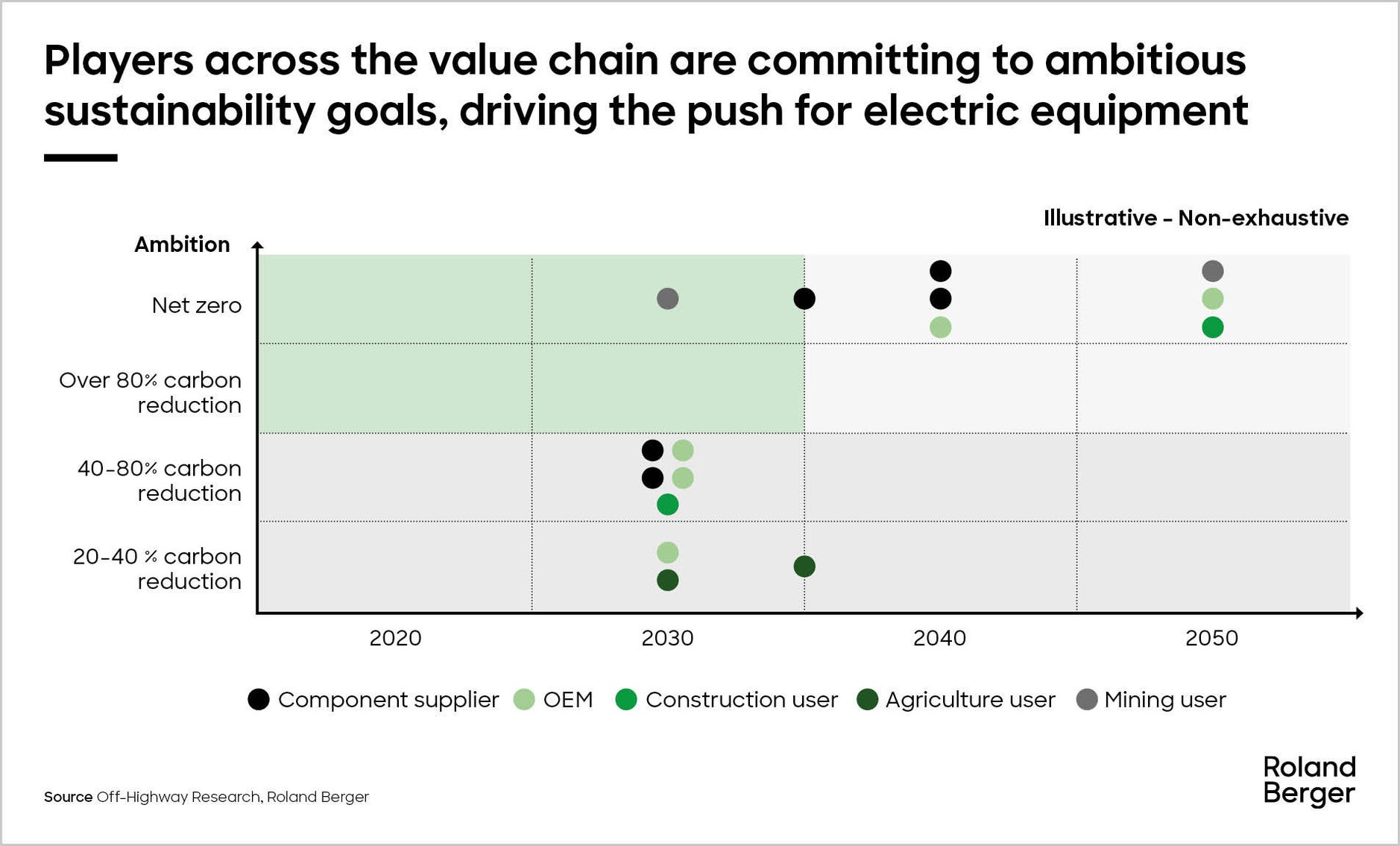
Much like the on-highway sector, key players across the off-highway value chain are now committing to improve environmental sustainability. From suppliers to OEMs to end-customers, some of the industry’s biggest companies have pledged to significantly reduce emissions, or in some cases, reach net zero by 2040 or 2050.
These commitments are largely driven by changes in both government regulations and consumer demands. Customers are increasingly looking to support sustainable businesses with concrete goals to reduce emissions. Green credentials can bring brands significant advantages.