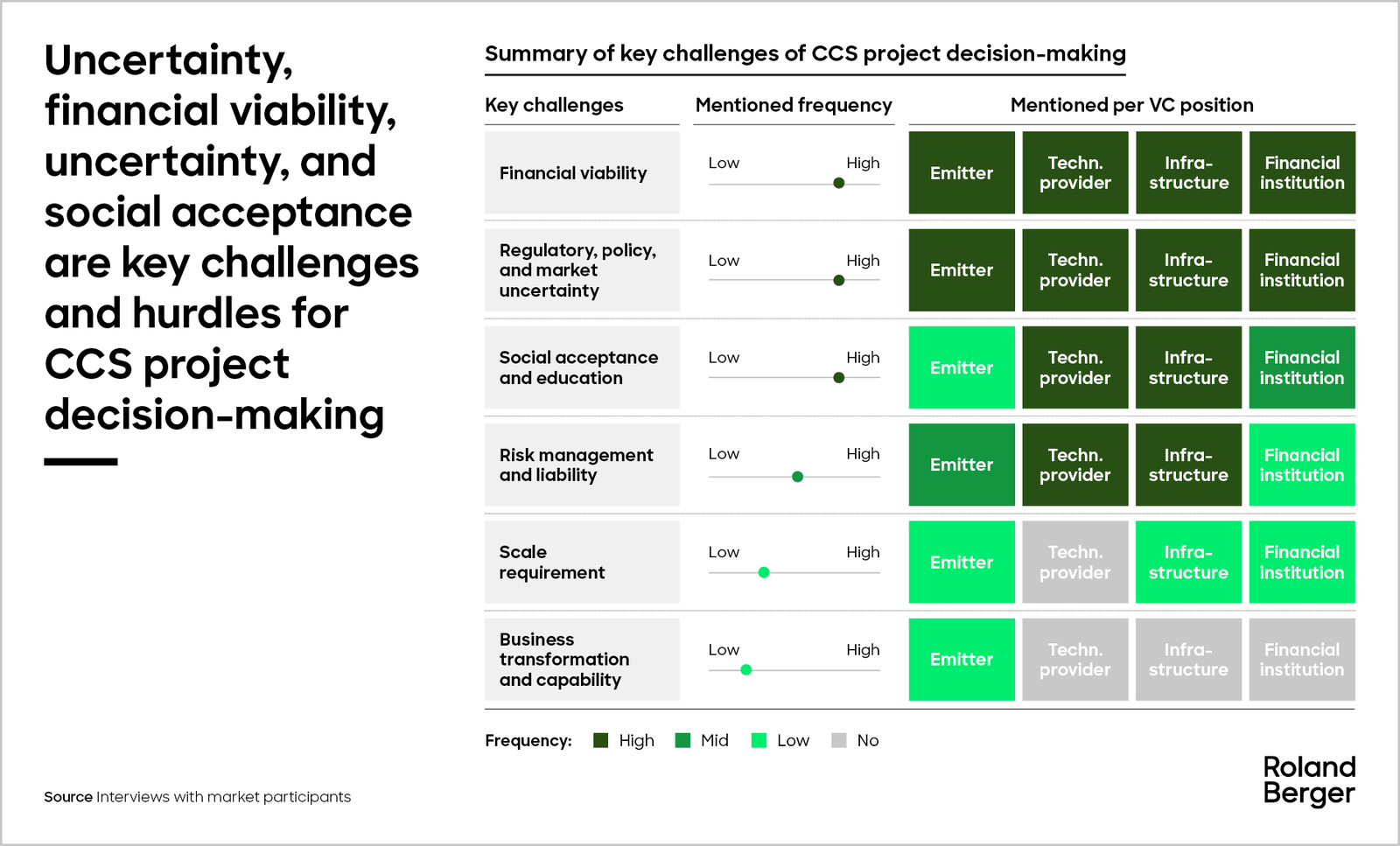
Interviews with industry leaders across the CCS value chain – including emitters, technology providers, infrastructure operators, and financial institutions - revealed three unanimous concerns: persistent financial viability challenges, unclear liability frameworks that make projects unbankable, and low social acceptance compared to other climate technologies. The ultimate insight: CCS is less a sole technical challenge than an orchestration challenge, requiring synchronization across companies, regulators, financial institutions, infrastructure operators, countries, and communities - each with fundamentally different incentives, capabilities, and constraints.
The window of opportunity for CCS
The next decade represents a unique period where early movers will capture advantages that cannot be replicated later. Costs are declining but remain high enough that green premiums provide meaningful revenue, carbon prices are rising but infrastructure is still being established, and an emerging group of customers is willing to pay for differentiation before decarbonized products become commoditized expectations.
For instance,
low-carbon cement
currently commands 5-10% price premiums, while net-zero cement achieves 20-30% premiums. But this premium window will not remain open indefinitely. As markets mature and more competitors deploy CCS, decarbonized products will go from differentiated premium offerings to commodity expectations. Companies that move now will establish customer relationships, develop technical expertise, and secure advantageous infrastructure access while capturing premium pricing.
CCS economics are improving - but context matters
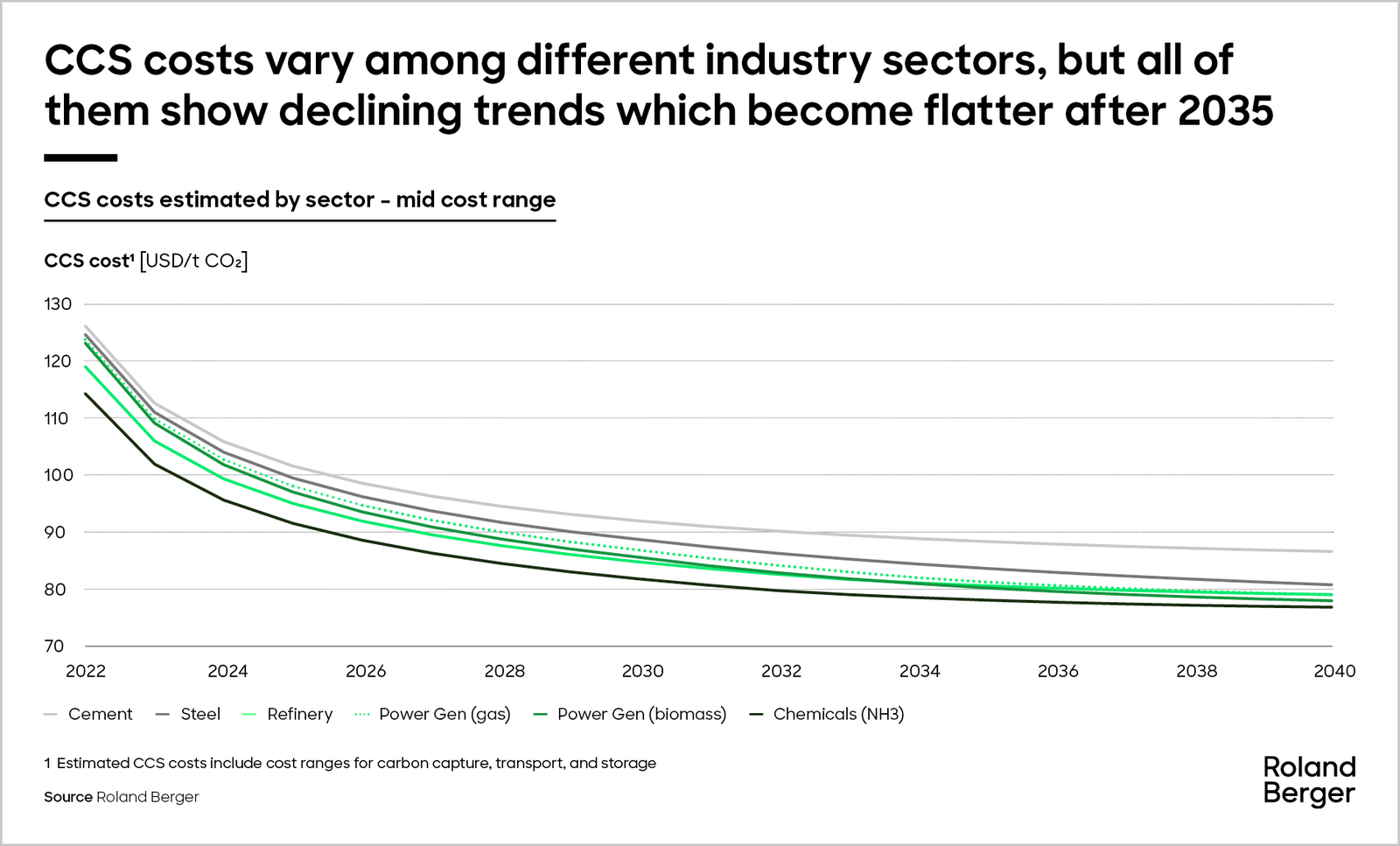
The economics of CCS are improving gradually, with costs declining toward carbon price breakeven across multiple sectors - but the details vary dramatically by geography, sector, and strategic choices.
Energy consumption represents approximately 70% of CCS operating costs, with the amine reboiler - which regenerates the chemical solvent absorbing CO₂ - consuming roughly two-thirds of energy-related expenses. This energy intensity creates sharp cost differentials across countries and fundamentally shapes the geography of CCS competitiveness.
Our analysis across 42 countries examining three energy sourcing scenarios reveals dramatic variation: heat pump technology enables CCS viability in 35 countries by 2040, compared to just six countries using electric resistance heaters. The choice between waste heat integration, electric heating, or heat pumps can determine whether a project achieves viability in the 2020s, 2030s, or not at all.
Sectoral variation is equally pronounced. Chemicals and ammonia production enjoy substantially lower baseline costs—often 40-50 USD per ton—because their processes naturally generate higher CO₂ concentrations. In ammonia production, CO₂ concentration can reach 99%, compared to just 15-20% in cement or 3-5% in
natural gas power generation.
This difference translates directly into energy requirements and economics, creating a natural hierarchy of sectoral readiness.