Operations in the past and today’s challenges
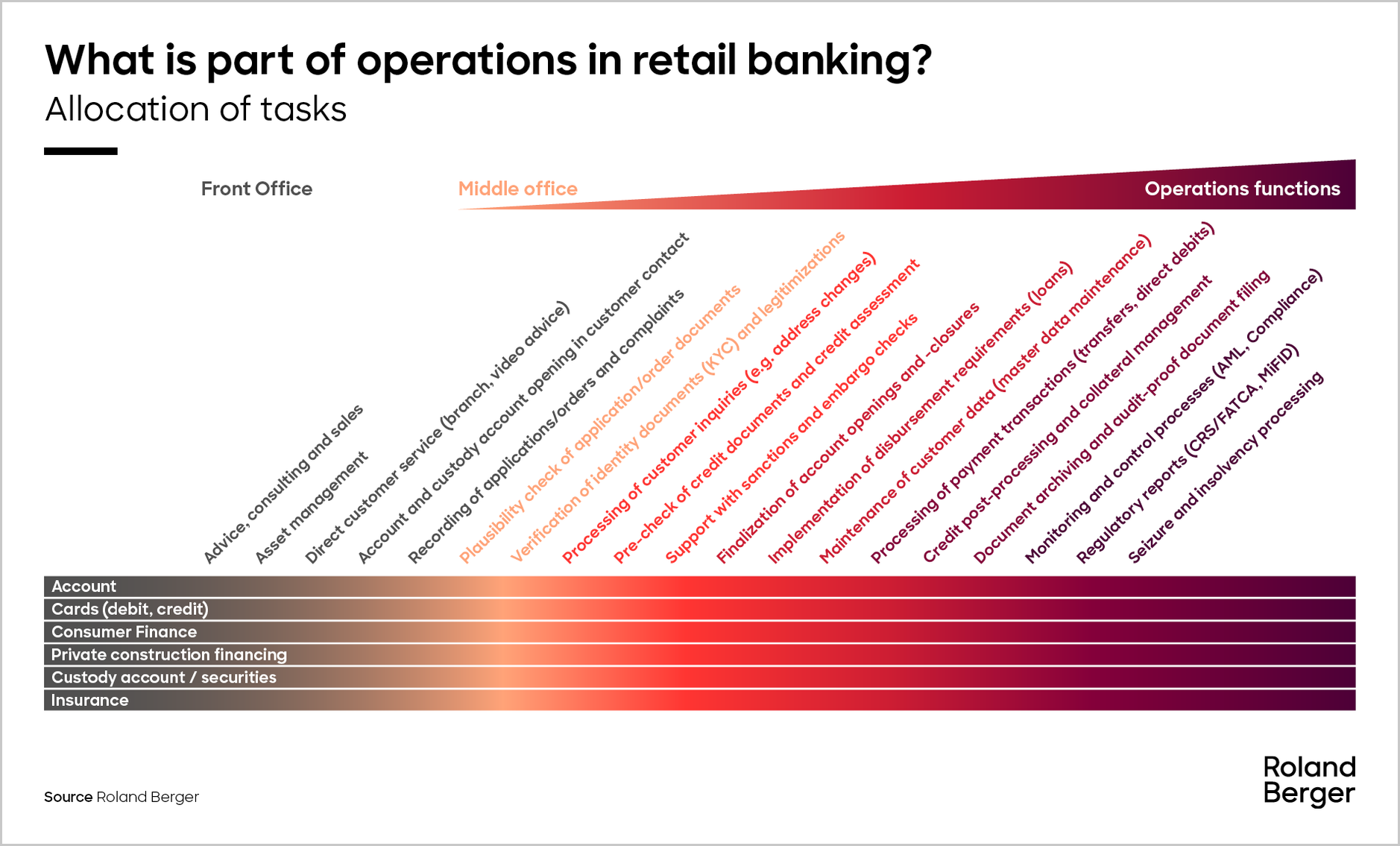
Traditionally, banking operations – especially in retail banking – were strictly separated from customer-facing functions such as sales, advisory or product management. Organized as back-office units, operations focused on transaction and payment processing, settlement, compliance, and risk mitigation.
The primary objectives of retail operations were efficiency, accuracy, and stability – delivering services reliably but with little direct interaction with customers. As such, operations functions played only a limited role in shaping the customer experience and were often perceived more as support functions or cost centres rather than sources of value or innovation.
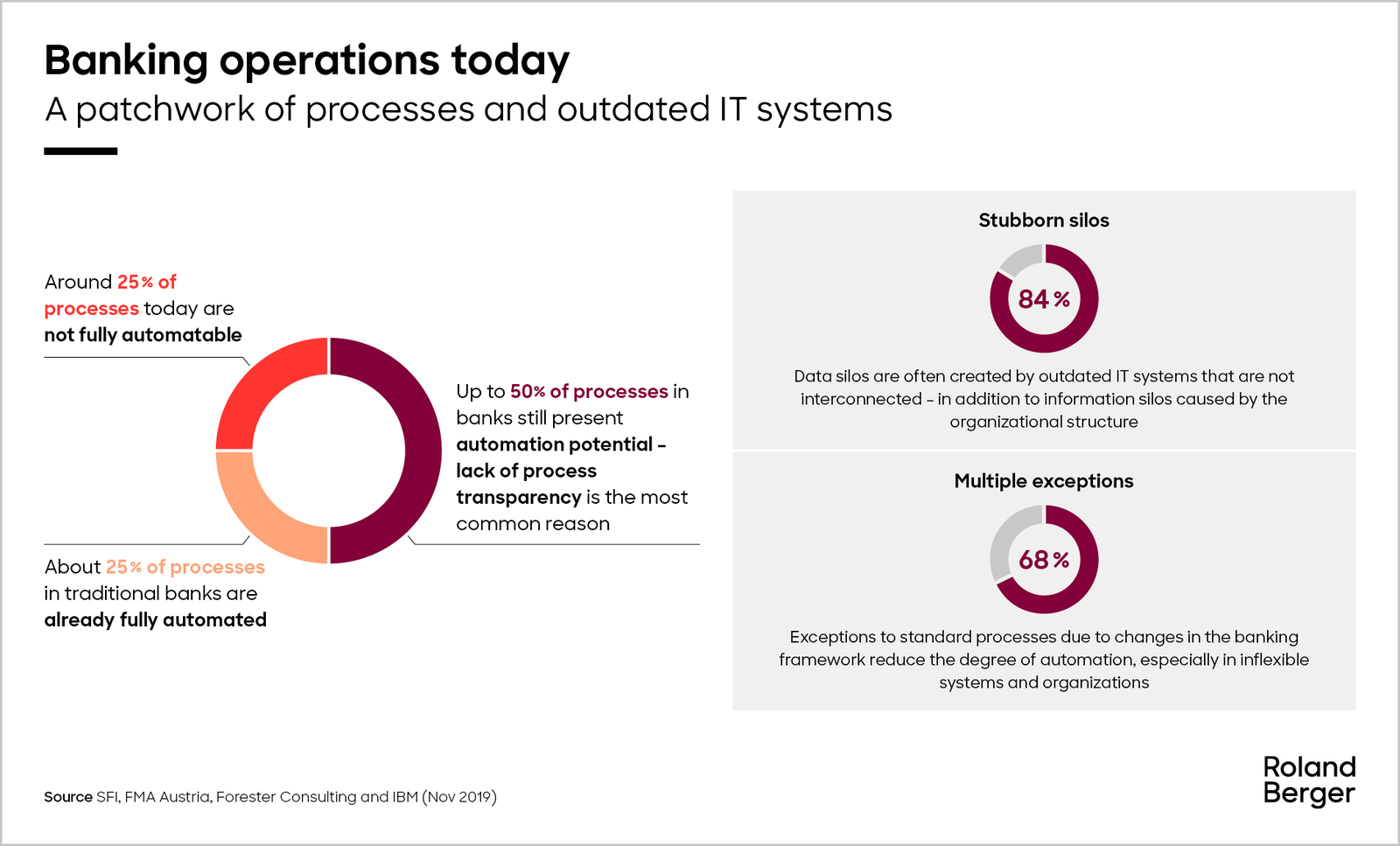
This clear organizational separation led to siloed processes, fragmented accountability, and frequent handovers between departments and functions. End-to-end process thinking was rare, and customer journeys were often disjointed as a result. In many banks, operations evolved over decades around specific products or business lines, resulting in a patchwork of legacy systems and manual workarounds. This product-focused orientation of systems – shaped by market and market-follow functions – stands in contrast to the broader customer-segment-based setup of operations functions and tasks. The lack of integration and exchange between front and back office became increasingly problematic as digital technologies advanced and customer expectations shifted towards faster, seamless, and personalised services.
At the same time, growing regulatory requirements and rising cost pressures placed additional demands on operations functions. These historical structures – while robust in the past – have become constraints for many banks today, limiting their ability to respond quickly to change, implement large-scale innovation, and deliver the consistent high service quality that modern customers expect.
To stay competitive long term, banks will need to take advantage of the opportunities brought by modern technologies and automate their operational processes from start to finish. To learn more about a path to more efficiency and innovation in banking operations, please download a copy of the article.