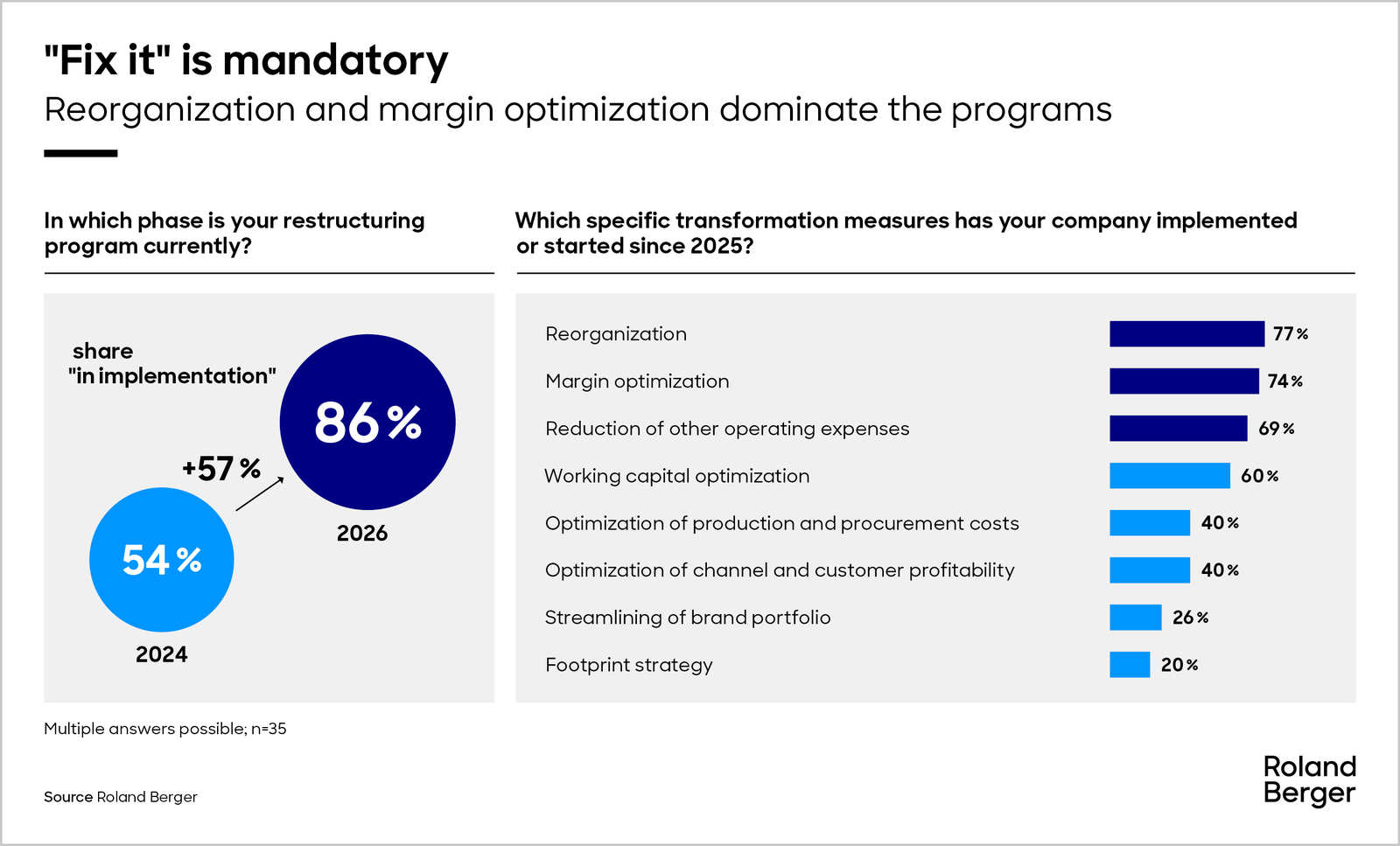
CFOs are now co-piloting the transformation
Today's CFOs are responsible for far more than just the company's reporting, financial statements, and financing. They safeguard liquidity, weigh up strategic options, steer transformation programs, and provide transparency over business consequences.
Even though traditional restructuring programs remain the foundation of any transformation, it's now crucial to evolve the business model end to end. That's because the future of a fashion or lifestyle business will be determined by factors way beyond any cost-cutting measures.
The CFO has three key tasks in this process:
They must secure liquidity, limit risks to profitability, and maintain the company's ability to raise capital. At the same time, they must effectively prioritize programs, make progress measurable, and manage implementation across the business. And finally, they must evaluate strategic options, improve capital allocation, and never stop asking whether the business model is fit for the future. The winners of this industry realignment will not necessarily be those who cut costs the most, but rather those who are faster than their competitors at deciding which brand propositions, products, channels, and capabilities are going to be relevant to create value for their customers.