Our approach to resilient supply chains
Resilient supply chains aim to mitigate against all these challenges. They must stabilize by minimizing the impact of disruptions; increase flexibility to adapt to changing market conditions; improve visibility; enhance collaboration between all parties; and find the sweet spot between acceptable risks and costs.
In the full report, we outline a cyclical, scenario-based approach to resilient supply chains that fulfils all these requirements. It provides the basis for a supply-chain strategy built around stability, flexibility and contingencies – and based on “no regret moves”.
In addition, we present a series of risk containment measures that can be targeted at particular risk types. These include financial hedging, long-term agreements to secure supplies and investments in technology. Secondary risks, such as skills shortages and IP risks, are also considered.
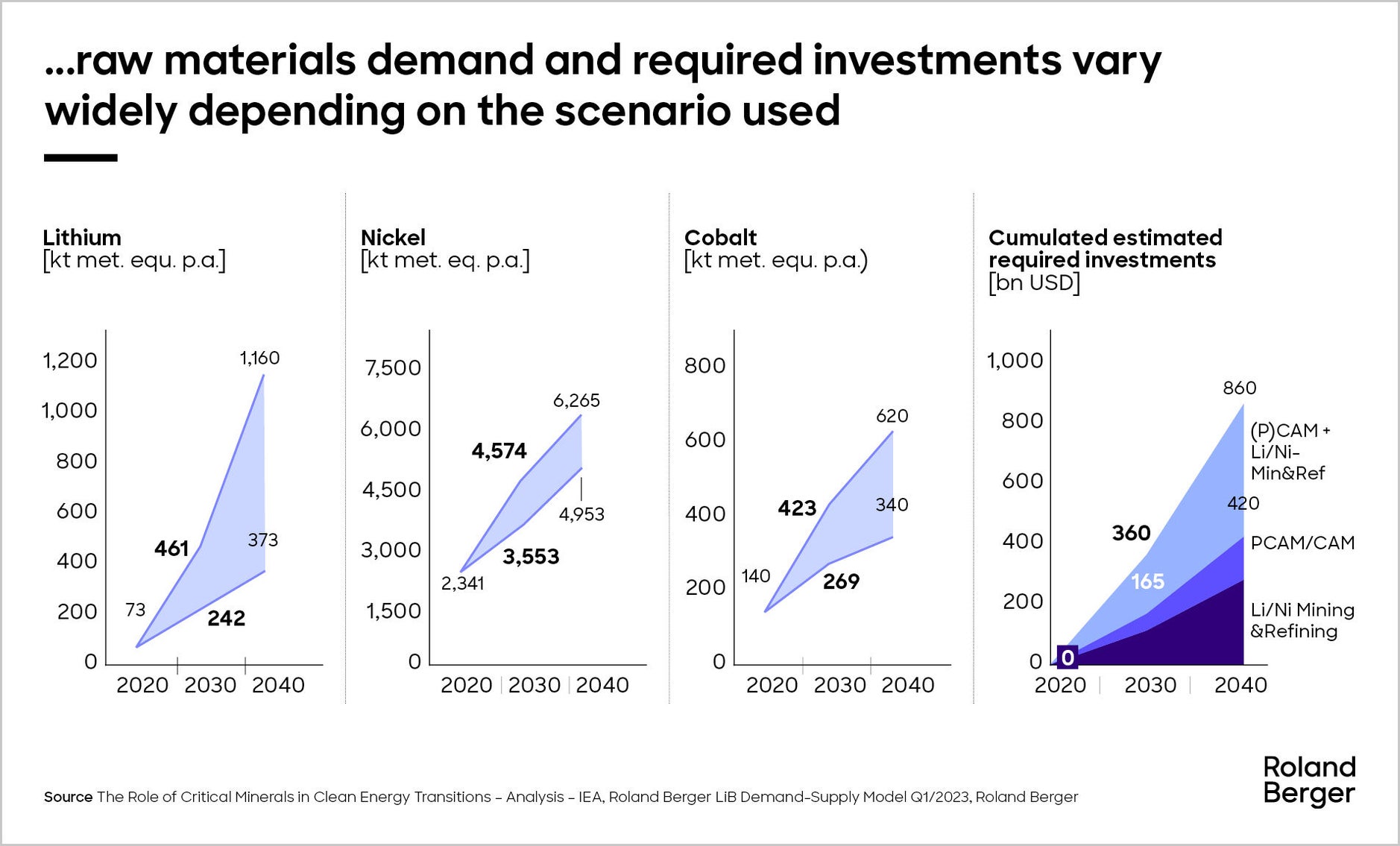
Finally, we outline the five key success factors of resilient supply chains, from defining the “sweet spot” of acceptable costs and risks to ensuring a competitive edge. With roughly half of the projected processed lithium and nickel supply for 2025 reserved by early 2023, it is imperative that raw material players move quickly to implement them.
For more information, please download the full report or speak to one of our experts. We look forward to hearing from you.