The core value proposition of a merger often lies in the synergies it creates. But it is not enough that these synergies exist in theory – they need to be identified and realized, too. That is easier said than done: CEOs often find it challenging to navigate the post-merger integration (PMI) process. Drawing on our wide experience supporting clients in different sectors, regions and regulatory systems along their PMI journey, we present 15 of the commonest challenges and how to avoid them.

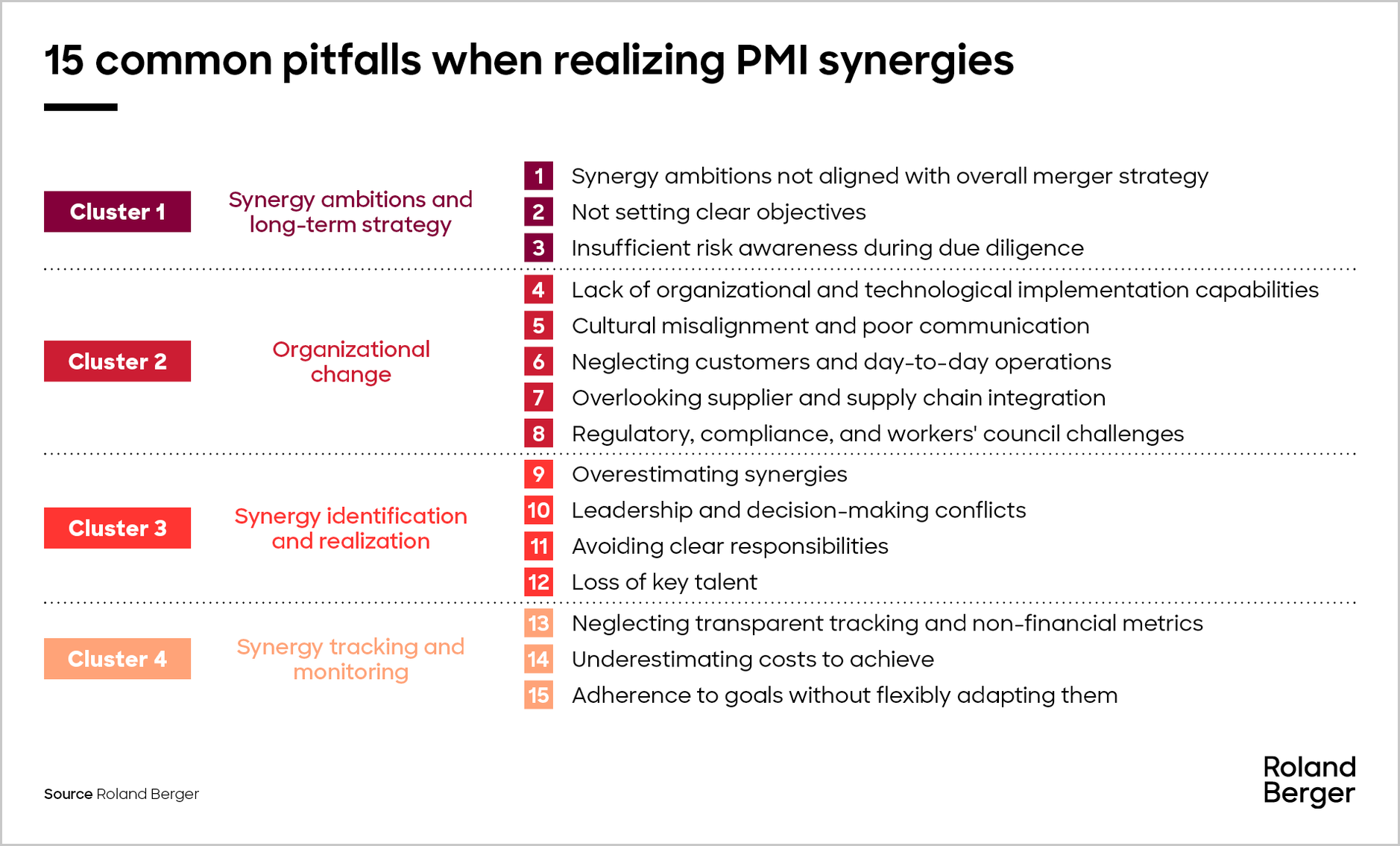

Aligning synergy ambitions with the overall corporate strategy during PMI enhances clarity and focus across all levels of the organization.
Patrick Heinemann
Senior Partner
Stuttgart Office, Central Europe